Introduction: A Journey Back to the Roots
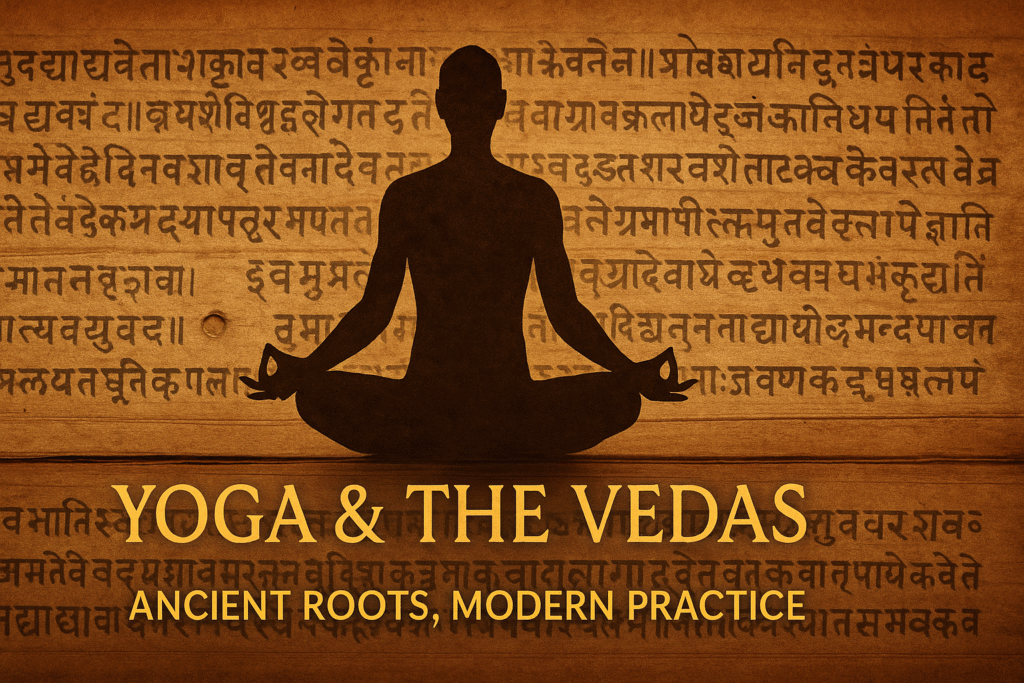
Have you ever wondered where yoga truly comes from? Sure, most of us know yoga as a modern fitness trend, a way to de-stress, or even a spiritual practice. But if we trace its lineage back far enough, we arrive at one of the world’s most ancient and profound sources of wisdom: the Vedas.
The Vedas are not just old texts gathering dust on a library shelf. They are living treasures of philosophy, spirituality, and practical life guidance. And yoga—in its truest, deepest sense—is woven right into their fabric.
In this article, we’ll explore how yoga and the Vedas are intertwined, what that means for your practice today, and how understanding this connection can deepen both your mind and your mat work.
What Are the Vedas?
The Vedas are the oldest scriptures of ancient India, believed to be over 3,000 years old. There are four main Vedas:
- Rigveda – Hymns praising the forces of nature and divine beings.
- Samaveda – Melodic chants and mantras used in rituals.
- Yajurveda – Ritual instructions and ceremonial details.
- Atharvaveda – Everyday wisdom, healing, and philosophy.
These texts aren’t just religious; they’re a blend of spiritual insight, cosmic exploration, and guidance for living in harmony with nature.
How Yoga Emerged from Vedic Wisdom
When we think of yoga, our minds often go straight to postures (asanas). But in the Vedic tradition, yoga was never just about physical movement. The Vedas emphasize union — the literal meaning of the Sanskrit word yoga. Union with what? With the self, with the divine, with truth.
In the Vedas, we see yoga in three main ways:
- Karma Yoga (Path of Action): Performing one’s duties selflessly.
- Jnana Yoga (Path of Knowledge): Seeking truth through study and contemplation.
- Bhakti Yoga (Path of Devotion): Surrendering to a higher power through love and worship.
The physical aspects we practice today evolved later, but the philosophical roots remain embedded in these ancient teachings.
The Philosophical Bridge: From Vedas to Yoga Sutras
After the Vedic period, the wisdom of the Vedas was distilled and expanded in the Upanishads and later codified in Patanjali’s Yoga Sutras. Patanjali provided the eightfold path (Ashtanga Yoga), which can be seen as a practical roadmap to the union described in the Vedas.
For example:
- The Vedic call for truth aligns with Satya (truthfulness) in Patanjali’s path.
- The emphasis on discipline in rituals mirrors Tapas (austerity).
- The meditative hymns of the Samaveda echo in Dhyana (meditation).
Why This Connection Matters Today
Understanding yoga’s Vedic roots can transform your practice:
- Depth Over Fitness: You begin to see yoga not just as exercise, but as a complete life philosophy.
- Mind-Body-Spirit Harmony: Vedic wisdom integrates the physical, mental, and spiritual, making your practice more holistic.
- Cultural Respect: Acknowledging yoga’s origins honors its heritage and deepens our appreciation.
Practical Ways to Integrate Vedic Wisdom into Your Yoga Practice
- Chant a Vedic Mantra before starting practice (e.g., the Gayatri Mantra from the Rigveda).
- Read a Verse from the Upanishads for reflection.
- Meditate on Union, not just flexibility.
- Practice Gratitude — a core Vedic value.
Final Thoughts: Yoga as a Living Vedic Legacy
Yoga isn’t just a modern lifestyle trend; it’s a living thread that stretches back thousands of years to the sacred wisdom of the Vedas. By remembering and honoring this connection, we can make our practice not only healthier for our bodies but richer for our souls.
So next time you step onto your mat, take a moment to remember: every stretch, breath, and stillness is part of a dialogue that began in the dawn of human civilization.