
A quieter place for timeless wisdom
Ancient wisdom,
made clear.
Read sacred mantras, devotional hymns, and every verse of the Bhagavad Gita—with original text, pronunciation, meaning, and context for everyday life.
Explore the tradition
Choose your path
Begin wherever you feel drawn. Every guide pairs the original text with a clear, respectful explanation.
 01
Mantras
Sacred chants with clear pronunciation, meaning, benefits, and practice guidance.
Explore collection → 02
Aarti & Chalisa
Beloved devotional hymns with complete lyrics and accessible meanings.
Explore collection → 03
Bhagavad Gita
All 700 shlokas, chapter by chapter, with Sanskrit and life-centered explanations.
Explore collection →Popular mantras
Begin a daily practice
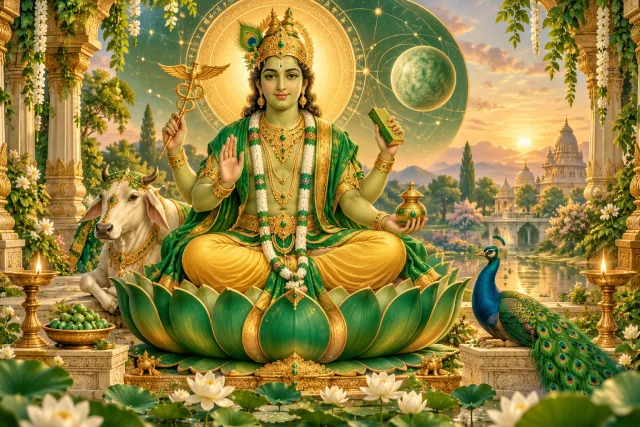
Budh Mantra (Om Braam Breem Braum Sah Budhaya Namah)
Om Braam Breem Braum Sah Budhaya Namah, the Budh (Mercury) mantra — Sanskrit text, meaning, benefits, and how to chant it correctly.
Read more →
Chandra Mantra (Om Shraam Shreem Shraum Sah Chandraya Namah)
Om Shraam Shreem Shraum Sah Chandraya Namah, the Chandra (Moon) mantra — Sanskrit text, meaning, benefits, and how to chant it correctly.
Read more →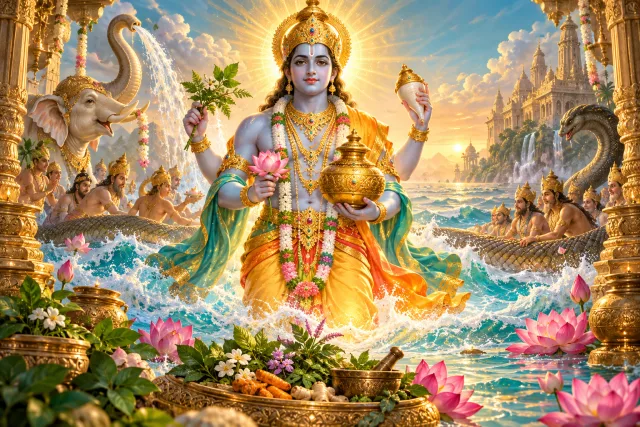
Dhanvantari Mantra (Om Dhanvantaraye Namah)
Om Dhanvantaraye Namah, the mantra for the god of Ayurveda and healing — Sanskrit text, meaning, benefits for health, and how to chant it correctly.
Read more →Wisdom to carry with you
One verse.
A lifelong practice.
Return to the Gita slowly—one shloka, one reflection, one clear step at a time.
Explore all 18 chapters →Bhagavad Gita 2.47
कर्मण्येवाधिकारस्ते मा फलेषु कदाचन। मा कर्मफलहेतुर्भूर्मा ते सङ्गोऽस्त्वकर्मणि॥
You have a right to perform your prescribed duty, but you are never entitled to the fruits of your actions. Never consider yourself the cause of the results of your activities, and never be attached to inaction.
Read meaning & commentary ↗For prayer & devotion
Beloved hymns
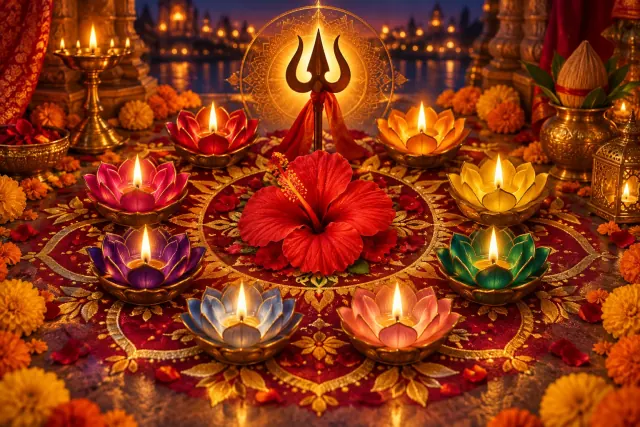
Durga Chalisa
The Durga Chalisa is one of the most widely recited hymns to the Divine Mother, chanted daily by many devotees and especially throughout Navratri, the nine-night festival dedicated to Durga's nine forms. It is traditionally recited on Tuesdays and Fridays as well.
Read more →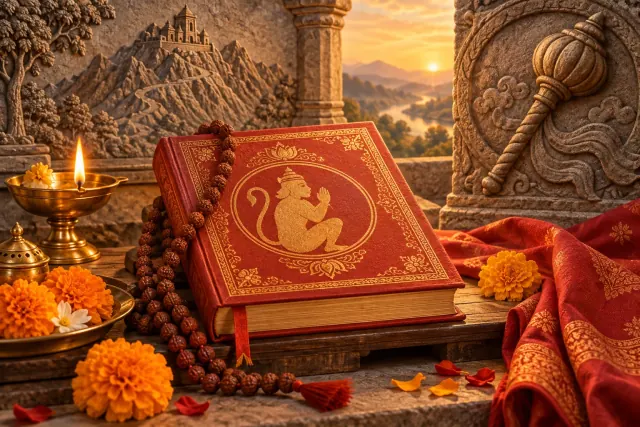
Hanuman Chalisa
The Hanuman Chalisa is one of the most widely recited hymns in Hinduism, believed to invoke Hanuman's protection, remove obstacles, and instill courage and devotion. It is traditionally recited on Tuesdays and Saturdays, Hanuman's designated days, though many devotees recite it daily as part of their morning routine.
Read more →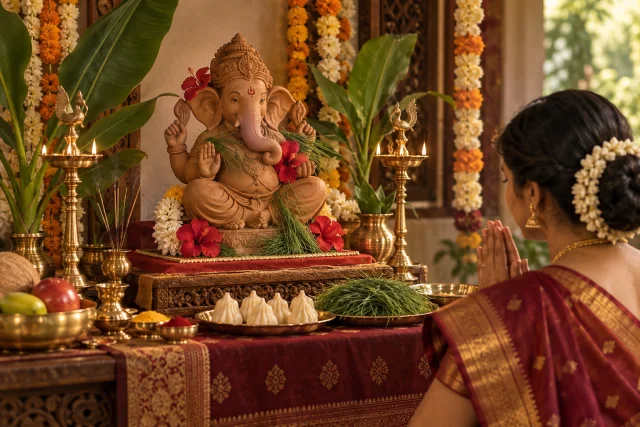
Jai Ganesh Deva Aarti
This is the most widely sung aarti for Lord Ganesha, performed at the close of daily Ganesha puja and especially during Ganesh Chaturthi, when it is sung by families and communities gathered around the Ganesha idol each evening throughout the festival.
Read more →Learn & reflect
Stories for the curious

Abhimanyu: Arjuna's Son, the Chakravyuha and His Last Stand
Abhimanyu was the teenage son of Arjuna who entered the deadly chakravyuha formation knowing he could not get out. Here is his story, what the chakravyuha was, and why his death changed the war.
Read more →Agastya: The Sage Born from a Pot, His Legends and Legacy
Agastya, the short sage born from a water pot, is one of the most powerful rishis of Hindu tradition. Here are his legends, from the Vindhya mountain to the Ramayana, and why the Tamil south honours him as its founding sage.
Read more →
Ahoi Ashtami 2026: Date, Puja Muhurat, Vrat Vidhi and Katha
Ahoi Ashtami 2026 falls on 1 November, three days after Karwa Chauth. Here is the date, the evening puja window, the story of Ahoi Mata and how the fast is kept.
Read more →Read in your language
ज्ञान, अपनी भाषा में
Explore mantras and the Bhagavad Gita in Hindi—with the same thoughtful explanations.