Stories of celebrations that once lit up India but now live only in memory
When we think of Indian festivals, our minds leap to Diwali lamps, Holi colours, and Ganesh Chaturthi processions. But behind the curtain of history, there lies a lost world of celebrations — festivals that once filled streets with music, laughter, and the fragrance of fresh flowers… but have now vanished, like footprints washed away by the tide.
Let’s journey back in time — to a land of moonlit gatherings, royal processions, and sacred rituals that the modern world has forgotten.
1. Indra Mahotsav – The Festival That Commanded the Skies ☁️⚡
Centuries ago, before monsoon was “just weather,” it was a blessing. Farmers, kings, and traders depended on it. And to ensure good rains, the grand Indra Mahotsav was held in honour of Lord Indra — the rain-bringer.
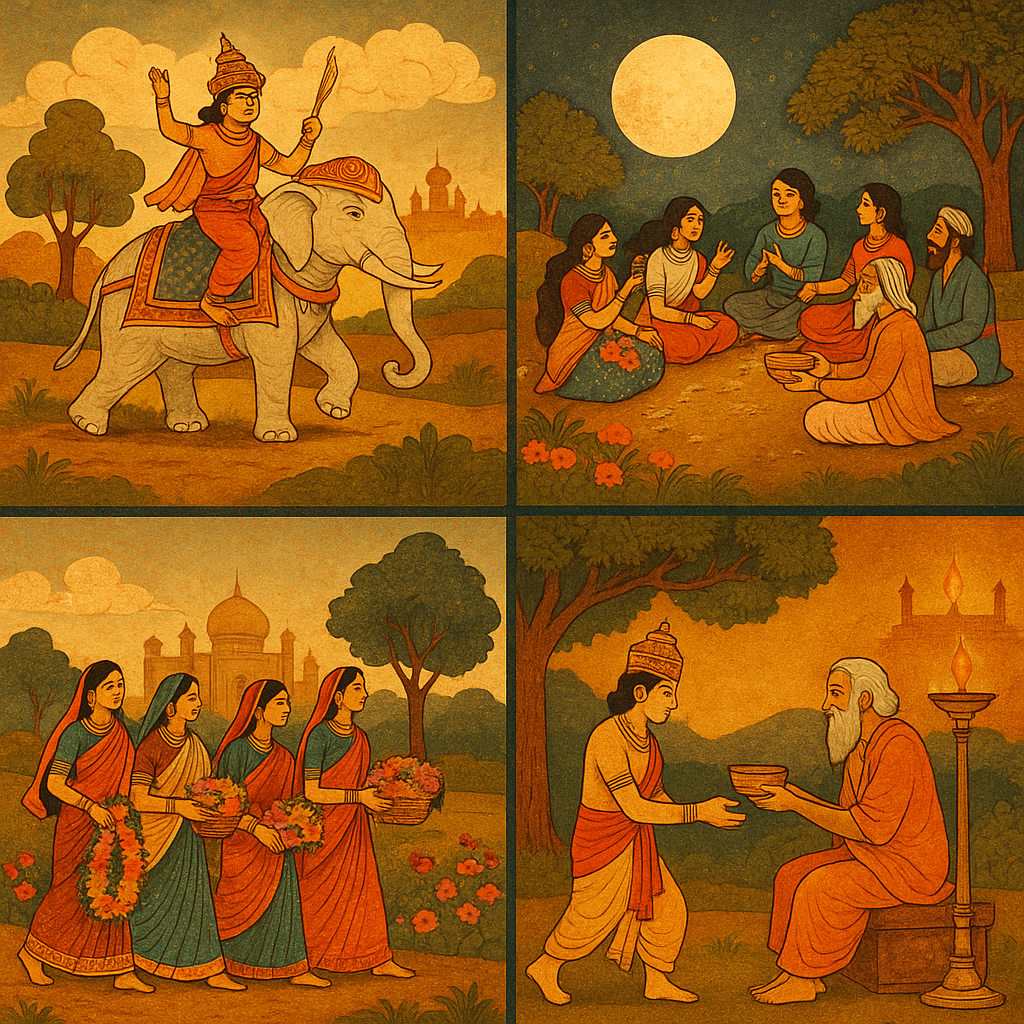
The Harshacharita (7th century) describes streets decorated with flags, elephants parading with gold canopies, and plays retelling Indra’s battles with demons. Farmers brought the first cut of their harvest to the king’s court, singing monsoon songs.
What happened? With changing religious focus and urban life drifting away from agricultural rhythms, the festival quietly disappeared — except in a few villages where elders still recall “Indra Puja” in the rainy season.
2. Kaumudi Mahotsav – India’s Forgotten Moon Festival 🌕🎶
Imagine an entire town gathering on the first night of the bright fortnight in Ashwin, just to sit under the full moon. There’s music in the air, children running barefoot, women wearing white and silver, poets reciting verses while the smell of cardamom and jaggery drifts from sweet stalls.
That was Kaumudi Mahotsav — literally, “The Festival of Moonlight.” It was a post-harvest celebration of leisure, love, and poetry. The Sanskrit play Kaumudi-Mahotsava by Rajasekhara (10th century) is proof of its cultural significance.
Why it vanished: The festival thrived in an era when communities had slow evenings and open courtyards. The fast pace of modern life left no space for moon-gazing nights.
3. Til Sakraat – Winter’s Warm Goodbye ❄️🔥
Once celebrated in Bihar, Jharkhand, and parts of Bengal, Til Sakraat was a festival of warmth, food, and community bonding. On the night before Makar Sankranti, families lit fires and roasted sesame (til) sweets while singing folk songs that chased away winter’s chill.
Men played drums, women sang couplets teasing each other, and children received fistfuls of sweets as blessings.
Today, only a handful of villages remember Til Sakraat — it has been swallowed by the larger and more commercialised Makar Sankranti celebrations.
4. Chaitya Parva – When Pilgrimage Was the Celebration 🪷
In the golden age of Buddhism, Chaitya Parva was a mega-event. Pilgrims from across the subcontinent would walk for weeks to reach famous chaityas (Buddhist prayer halls) during spring.
The days were filled with chanting, dramatic retellings of the Jataka tales, debates on philosophy, and the exchange of rare goods between merchants. These gatherings were as much spiritual as they were cultural.
Today, this tradition survives in bits in Nepal and Sri Lanka, but in India — the land where it began — it’s nearly invisible.
5. Phool Waalon Ki Sair – Flowers for Kings and Saints 🌸
In 19th-century Delhi, the Mughal Emperor Akbar Shah II started Phool Waalon Ki Sair — a festival where giant floral fans (pankhas) were carried in a grand procession from a Hindu temple to a Muslim dargah, symbolising harmony.
The streets of Delhi bloomed with marigold and jasmine garlands, while qawwals and dhol players filled the air with music. It was an annual reminder that faiths can walk together.
Though revived in a smaller form today, the original grandeur and unity of Phool Waalon Ki Sair have faded.
6. Madhuparka – A Royal Welcome Ritual 🍯🥛
In Vedic times, a special reception called Madhuparka was offered to honoured guests — a drink of honey, milk, and curd served in beautifully crafted vessels.
It wasn’t just hospitality — it was a mini-festival in itself, with songs, flower showers, and blessings. The guest was treated like a visiting deity.
With changing lifestyles, this beautiful tradition is now mostly confined to old Sanskrit verses.
7. Vasant Utsav – Spring Without Colours 🌼
Before Holi became a riot of colours, the original Vasant Utsav was about yellow flowers, sweet music, and gentle dances in gardens. The poet Kalidasa describes it as a season “when lovers exchange garlands and bees hum over mango blossoms.”
The loud revelry of Holi overshadowed it, but Shantiniketan in West Bengal still tries to revive its calm beauty.
Why These Festivals Matter 🕰️
When a festival disappears, it’s not just the ritual we lose — it’s a piece of our shared memory. These celebrations carried stories, values, and bonds that shaped communities.
Reviving them doesn’t mean abandoning modern life — it means weaving old joy into new days. Maybe we can’t bring back Indra Mahotsav exactly as it was, but we can host a small neighbourhood monsoon feast. We might not have Kaumudi Mahotsav’s royal moonlit courtyards, but we can gather friends for a night of poetry under the full moon.
Culture survives when it’s lived, not just remembered.