The Crisis Nobody Talks About
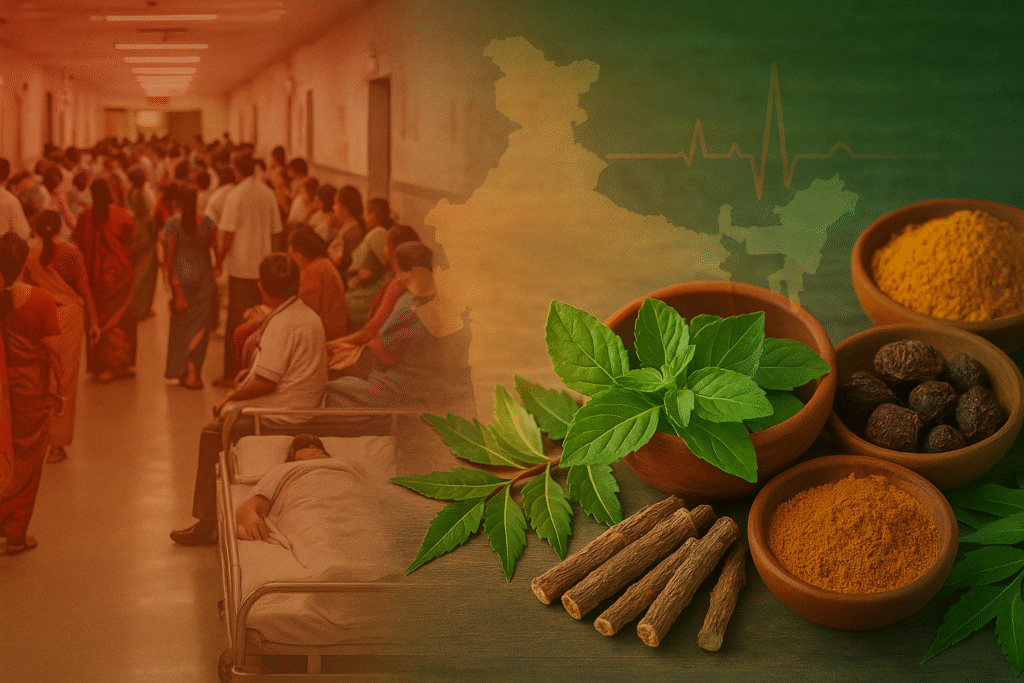
India stands at a critical juncture. We have world-class hospitals in metropolitan cities, an ever-growing pharmaceutical industry, countless doctors and specialists—yet the nation remains chronically sick. This paradox haunted Rajiv Dixit throughout his life.
Dixit was a renowned health freedom activist and Ayurveda researcher who devoted his career to understanding why India’s healthcare system, despite modern advances, fails to keep the population healthy.
In his extensive work, particularly through lectures on “Swadeshi Chikitsa” (Indigenous Medicine), Rajiv Dixit presented data that challenges everything we believe about modern medicine’s effectiveness in India. His analysis wasn’t academic exercise—it was a cry for systemic change, backed by government statistics and ground reality.
This article examines Rajiv Dixit’s most shocking health statistics and explores his thesis: that modern medicine is fundamentally failing India’s masses, and that Ayurvedic principles offer the only sustainable solution.
Shocking Health Statistics of India
India’s Disease Burden: The 85% Reality
According to research presented in Sampoorn Chikitsa, India’s health crisis can be summarized in one devastating statistic:
Out of India’s population of 127 crore (1.27 billion), approximately 85% suffer from some form of physical or mental illness.
This translates to roughly 105 crore people (1.05 billion) who are diseased.
Let that number sink in.
We’re not talking about a small percentage of vulnerable populations. We’re talking about the majority of Indians living with disease as their baseline condition.
What Does This Mean?
This statistic reveals several uncomfortable truths:
- Disease is normalized: In India, being sick is the norm, not the exception
- Health is rare: Only 15% of the population can claim genuine wellness
- Preventive medicine has failed: Modern medicine focuses on treating disease, not preventing it
- The system is reactive: By the time people seek medical help, disease has already established itself
- Vulnerable populations suffer most: The 80% of Indians earning less than ₹20 per day cannot access modern healthcare anyway
The Question Rajiv Dixit Raised
If modern medicine has advanced so far, if we have antibiotics, vaccines, sophisticated diagnostic tools, and trained physicians, how has this situation come to pass?
Dixit’s answer: Modern medicine treats symptoms, not causes. It profits from disease, not from health.
The Doctor-to-Patient Ratio Problem
The Impossible Mathematics
One of Rajiv Dixit’s most compelling arguments relied on simple mathematics. According to India’s Ministry of Health and Family Welfare (data from November 29, 2011):
Doctor-to-Population Ratio: 1 doctor per 2,000 people
Doctor-to-Sick Population Ratio: 1 doctor per 1,600 sick people
The Capacity Crisis
Now consider the capacity constraint:
- Maximum patients per doctor per day: 50 patients
- Actual sick population per doctor: 1,600 people
- Days needed to treat all sick people (if new patients didn’t fall ill): 32 days per doctor
- Reality: New people fall ill every single day
Rajiv Dixit presented this calculation to audiences:
“Even if every doctor in this nation treated 50 patients per day, and did this 365 days a year without rest, they could not treat all the sick people in their care. This is not a failure of doctors. This is a failure of a system that believes modern medicine alone can serve a nation of 1.27 billion people.”
The Cruel Reality
The doctor-patient ratio is so skewed that modern medicine cannot possibly provide universal healthcare in India. This isn’t a failure of individual practitioners—it’s a structural impossibility.
For the vast majority of Indians—especially the rural and urban poor—access to a modern doctor is essentially nonexistent for routine health issues.
Economic Reality: Healthcare Affordability Crisis
The Poverty-Healthcare Intersection
Rajiv Dixit highlighted another crucial statistic that compounds the healthcare crisis:
According to economist Arjun Sen Gupta’s research cited by Dixit:
80% of India’s population earns less than ₹20 per day.
Think about this in context of healthcare costs:
- Average allopathic treatment at a decent private hospital: ₹5,000-₹50,000+ per visit
- Diagnostic tests (blood work, imaging): ₹1,000-₹10,000
- Medicines for chronic conditions: ₹500-₹5,000 per month
- Emergency hospitalization: ₹1-₹10 lakhs
For a person earning ₹20 per day (₹600 per month), a single doctor’s visit represents 25-250 days of income.
The Healthcare Poverty Trap
This creates an impossible situation:
- The poor cannot afford hospitals: Modern healthcare is priced for India’s upper and middle classes
- Preventive care is inaccessible: Regular check-ups and wellness visits are luxury items
- Emergency care means bankruptcy: A single serious illness can bankrupt families
- Chronic disease management is impossible: People cannot afford ongoing treatment
- The sick stay sick: Without treatment access, minor illnesses become chronic conditions
Rajiv Dixit’s Observation
“In a nation where 80% of people earn less than ₹20 daily, modern medicine has become a luxury good for the wealthy, not a healthcare system for the nation.”
This economic reality is often ignored in healthcare policy discussions, but it’s fundamental to understanding why modern medicine fails India’s masses.
Why Modern Medicine Cannot Save India
The Systemic Problems Rajiv Dixit Identified
Through his research and public lectures, Rajiv Dixit outlined why modern medicine is structurally incapable of meeting India’s healthcare needs:
1. Profit-Driven Rather Than Health-Driven
Modern medical systems prioritize:
- Treatment of disease (generates revenue)
- Chronic disease management (ensures repeat business)
- Expensive diagnostic procedures
- Pharmaceutical sales
They do NOT prioritize:
- Disease prevention
- Root cause elimination
- Cost-effective wellness
- Self-care education
2. Reactive Rather Than Preventive
Modern medicine waits for disease to manifest, then treats it. By this time:
- The disease has established itself deeply
- Multiple organs are often affected
- Complications have developed
- Treatment becomes expensive and prolonged
3. Symptom Management Rather Than Cure
Most modern treatments manage symptoms without addressing root causes:
- Hypertension drugs lower blood pressure temporarily
- Diabetes insulin manages blood sugar without addressing metabolic dysfunction
- Antibiotics kill bacteria but don’t strengthen immunity
- Pain killers mask pain without healing the injury
4. Insufficient Infrastructure
As demonstrated by the doctor-to-patient ratio:
- Cannot serve the entire population
- Rural areas completely underserved
- Emergency systems overwhelmed
- Preventive care essentially nonexistent
Understanding Disease Through Ayurveda
The Fundamental Difference: Prevention vs. Treatment
Where modern medicine fails, Ayurveda (as presented in Sampoorn Chikitsa) succeeds: by preventing disease rather than treating it.
Rajiv Dixit emphasized that Ayurveda is the only medical system offering a guarantee of health, not just disease treatment.
The Ayurvedic Principle
In Ayurveda, the definition of health is not simply “absence of disease.” Rather:
True health means maintaining perfect balance of the three doshas (Vata, Pitta, and Kapha) within the body.
When this balance is maintained, disease cannot develop. This is prevention at its most fundamental level.
Root Causes of Illness According to Sampoorn Chikitsa
Why People Get Sick: The Eight Primary Causes
Rajiv Dixit identified eight fundamental reasons why people develop disease:
1. Improper Food and Water Consumption
Eating and drinking without following natural laws creates imbalances:
- Wrong food combinations
- Eating at wrong times
- Eating foods unsuitable for one’s constitution
- Eating contaminated or adulterated food
This single cause generates:
- 80 types of Vata disorders
- 40 types of Pitta disorders
- 20 types of Kapha disorders
2. Ignoring Seasonal and Daily Dietary Guidelines
Each season requires specific dietary adjustments. Ignoring this causes disease accumulation.
3. Eating Incompatible Foods
Certain food combinations are inherently harmful:
- Milk with non-vegetarian items
- Fruit with cooked meals
- Multiple heating processes affecting nutrient integrity
4. Consuming Refined Oils and Refined Salt
- Refined oil removes all nutrients
- Refined salt lacks essential minerals
- These create nutritional deficiencies masquerading as health
5. Adulterated Food Products
- Milk adulteration
- Pesticide-laden vegetables
- Chemically-treated grains
- Toxin accumulation in the body
6. Suppressing Natural Urges
The body has 14 natural urges that should never be suppressed:
- Hunger and thirst
- Defecation and urination
- Sneezing and coughing
- Yawning and crying
- Hiccupping and belching
- Laughing and sweating
Suppressing these creates deep-seated diseases.
7. Cultivating Negative Mental States
- Anger and hatred
- Fear and anxiety
- Greed and attachment
- Jealousy and resentment
These create psychosomatic diseases.
8. Sedentary Lifestyle and Stress
- Lack of physical activity
- Mental overwork without rest
- Unbalanced work-life rhythm
- Chronic psychological tension
The Tridosha Theory: Prevention Over Cure
Understanding the Three Doshas
According to Ayurveda, three fundamental energies govern all bodily functions:
Vata (Air Element)
- Governs movement, circulation, and nervous function
- Location: Below the navel to the feet
- Period: Age 50 onwards
- Imbalance causes: 80 types of disorders including arthritis, paralysis, tremors
Pitta (Fire Element)
- Governs metabolism, digestion, and transformation
- Location: Navel to chest
- Period: Age 14-50 years
- Imbalance causes: 40 types of disorders including ulcers, inflammation, fever
Kapha (Earth-Water Element)
- Governs structure, immunity, and lubrication
- Location: Chest to head
- Period: Birth to age 14
- Imbalance causes: 20 types of disorders including congestion, mucus conditions, weight gain
The Prevention Principle
As long as these three doshas remain in perfect balance, disease cannot occur.
The moment they become imbalanced (vitiated), disease begins. This imbalance is the earliest stage—before symptoms appear, before modern diagnostic tests can detect anything.
Ayurveda focuses on:
- Recognizing early dosha imbalance
- Correcting it immediately through diet and lifestyle
- Preventing disease manifestation altogether
Modern medicine only acts once disease has manifested into symptoms.
Rajiv Dixit’s Swadeshi Chikitsa Solution
The Philosophy Behind Swadeshi Chikitsa
In 2007, Rajiv Dixit delivered seven days of lectures in Chennai on healthcare. The purpose was revolutionary:
“How can every individual heal themselves without a doctor, without allopathic medicines, without Ayurvedic or homeopathic medicines?”
The answer: Swadeshi Chikitsa (Indigenous Self-Care)
Core Principles of Swadeshi Chikitsa
- Inexpensive: Uses household items and natural remedies
- Accessible: Requires no specialists or complex infrastructure
- Permanent: Heals diseases at their root, not just symptoms
- Side-effect free: Uses only natural, safe materials
- Empowering: Shifts responsibility from doctors to individuals
Why This Approach Works
Modern medicine created a paradigm where:
- Doctors are gatekeepers of health
- People are passive recipients of treatment
- Dependency on external experts is normalized
Swadeshi Chikitsa reverses this:
- Each person becomes their own healer
- Understanding cause becomes more important than taking pills
- Prevention replaces treatment as the primary focus
Practical Implementation: Daily Health Protocols
The Foundational Daily Routine (Dincharya)
According to Sampoorn Chikitsa, following these daily protocols prevents 90% of diseases:
Morning Routine
Upon Waking (Before Mouth Washing)
- Drink 1-2 glasses of lukewarm water
- Do NOT brush teeth first
- During the night, Lysozyme (natural antibiotic) accumulates in the mouth
- This water flushes the digestive system and kills harmful bacteria
Timing: Take water slowly, sipping gradually
Dosage: 1-2 glasses, or as your conscience guides
Breakfast (2-3 hours after sunrise)
- Eat full, satisfying meal
- Choose your favorite foods
- Eat only when naturally hungry (genuine hunger, not habit)
Mid-Day Meal
- Eat 1/3 less than breakfast
- If breakfast was 3 rotis, eat 2 for lunch
- Rest for 20-40 minutes after lunch (lying on right side)
- Light sleep is acceptable
Why: Pitta (digestive fire) is strongest midday. Digestion is most efficient.
Evening Routine After Dinner
- Walk at least 500 steps
- NO sleeping immediately after eating
- Wait minimum 3-4 hours before bed
Why: Prevents abdominal disorders, hernia, piles, prostate issues
Dinner Timing
- Complete dinner before sunset
- 2-3 hours before sleep
- Lighter than lunch
- Never eat heavily at night
Sleep Protocol
- Sleep 6-7 hours minimum
- Head facing east or north (ideal)
- Never sleep with head covered or wearing socks
- Best sleep time: 10 PM to 4 AM
Weekly Protocol: Fasting
Scientific Basis of Fasting:
When stomach is empty for 24 hours:
- Body temperature drops 2-3 degrees Celsius
- Harmful bacteria growth reduces significantly
- Digestive system performs self-cleaning
- Metabolic efficiency increases
Recommended Fasting Schedule:
- Fast 1-2 days per week
- Especially during monsoon season
- Keep stomach empty for 24 hours
- Can consume water and herbal teas
Timeline for Health Transformation
Stage 1: Weeks 1-4 (Initial Adaptation)
What to expect:
- Adjustment to new eating patterns
- Possible temporary discomfort as body detoxifies
- Improved digestion
- Better sleep quality
Protocols to implement:
- Morning water consumption
- Corrected meal timing
- Proper food combinations
Stage 2: Weeks 5-12 (Visible Changes)
What to expect:
- Increased energy levels
- Mental clarity improvement
- Digestive issues resolve
- Weight stabilization begins
- Skin complexion improves
Protocols to intensify:
- Add weekly fasting
- Incorporate specific disease-prevention protocols
- Begin addressing individual health concerns
Stage 3: Months 4-6 (Disease Resolution)
What to expect:
- Chronic conditions begin resolving
- Medication requirements decrease
- Mental peace and emotional stability
- Significant energy increase
Protocols based on specific conditions:
- Continue foundational practices
- Add targeted remedies for specific diseases
- Maintain preventive measures
Stage 4: Months 6-12 (Sustained Wellness)
What to expect:
- Complete resolution of most chronic conditions
- Strong immune system
- Maintained energy and vitality
- Prevention becomes automatic
- Total health transformation
Maintenance:
- Continue Dincharya lifelong
- Regular fasting
- Seasonal dietary adjustments
Frequently Asked Questions
Q1: If these methods are so effective, why doesn’t everyone know about them?
A: According to Rajiv Dixit, there’s no financial incentive for these methods to be promoted. Modern medicine profits from disease treatment. Preventive practices profit nobody. Therefore, they remain marginalized despite proven efficacy over thousands of years.
Q2: Can Swadeshi Chikitsa replace allopathic medicine for serious emergencies?
A: Rajiv Dixit’s approach is primarily preventive. For acute emergencies (severe accidents, acute infections), modern medicine’s emergency capabilities are valuable. However, 95% of chronic diseases can be prevented and managed through these methods.
Q3: How can I trust ancient methods when modern science is so advanced?
A: The question isn’t ancient vs. modern. It’s prevention vs. treatment. Modern science excels at treating acute conditions. Ayurvedic science excels at prevention. Neither negates the other. Use both wisely.
Q4: What if I have already developed a chronic disease?
A: Most chronic diseases can be reversed by removing the cause and rebalancing doshas. The timeline depends on disease duration and severity, but improvements typically appear within 3-6 months.
Q5: Is fasting safe for everyone?
A: Fasting, when done correctly according to one’s constitution, is safe. However, very weak individuals, young children, and pregnant women should consult experienced practitioners. Modified fasting (fruit juice fasting) is an alternative.
Q6: How do I know if my food combinations are compatible?
A: General rule: Don’t mix incompatible items (milk with non-veg, fruit with cooked meals, multiple processed items). Seasonal foods naturally available together are usually compatible. Follow the Ritucharya guidelines provided in Sampoorn Chikitsa.
Q7: Can I continue my medications while implementing these protocols?
A: Yes. Gradually, as health improves and disease reverses, medication requirements naturally decrease. Never stop medications abruptly. Work with a practitioner as you transition.
Conclusion: Empowering India Through Health
Rajiv Dixit’s analysis of India’s healthcare crisis isn’t meant to create despair. Rather, it’s a call to action—a challenge to every Indian to take responsibility for their own health.
The statistics are sobering:
- 85% of the population is diseased
- Doctor-to-patient ratio makes universal healthcare impossible
- 80% cannot afford modern medicine anyway
- Modern medicine profits from disease, not health
But the solution is empowering:
Every person possesses the knowledge and ability to remain healthy through:
- Understanding the three doshas
- Following daily and seasonal routines
- Eating compatible foods at proper times
- Listening to natural bodily urges
- Maintaining mental equilibrium
Rajiv Dixit’s Ultimate Message:
“India doesn’t need more hospitals or more doctors. India needs citizens who understand that health is their birthright and their responsibility. When 100 crore people take charge of their own wellness, India will transform—not through external systems, but through individual empowerment.”
The revolution in Indian healthcare won’t come from government policy or pharmaceutical innovation. It will come when every Indian realizes:
You are your own best doctor.
Next Steps
Don’t let disease be your default state. Take the first step today:
- Start tomorrow morning: Drink 1-2 glasses of lukewarm water before breakfast
- Implement one protocol: Choose one from the daily routine to practice this week
- Share this knowledge: Forward this to someone suffering from a preventable disease
- Research further: Get a copy of Sampoorn Chikitsa by Rajiv Dixit
- Transform your health: Track your improvements over the next 3 months
Your health is too important to leave to chance or to doctors alone. Take back your power. Become your own healer.
Note: This content is based on Rajiv Dixit’s teachings from Sampoorn Chikitsa and reflects traditional Ayurvedic principles. While these practices have supported health for thousands of years, individual results vary. Consult qualified practitioners for serious health conditions.