We’re obsessed with superfoods. But here’s the weird thing: most of us are chasing exotic imports—acai berries from South America, goji berries from Tibet, matcha from Japan—when some of the world’s most powerful immune-boosting foods have been thriving in India for thousands of years.
These aren’t new discoveries. They’re not trendy Instagram finds. They’re ancient Ayurvedic powerhouses that have been quietly nourishing humans for millennia. And in 2025, as people increasingly embrace clean eating and real food over supplements and synthetic solutions, these Ayurvedic superfoods are finally getting the recognition they deserve.
The clean eating philosophy is simple: if you can’t recognize an ingredient, your body probably can’t either. Ayurvedic superfoods fit perfectly into this worldview. They’re whole foods, minimally processed, packed with natural nutrition, and designed by nature to support human health.
Let me introduce you to five Ayurvedic superfoods that deserve a permanent spot in your kitchen.
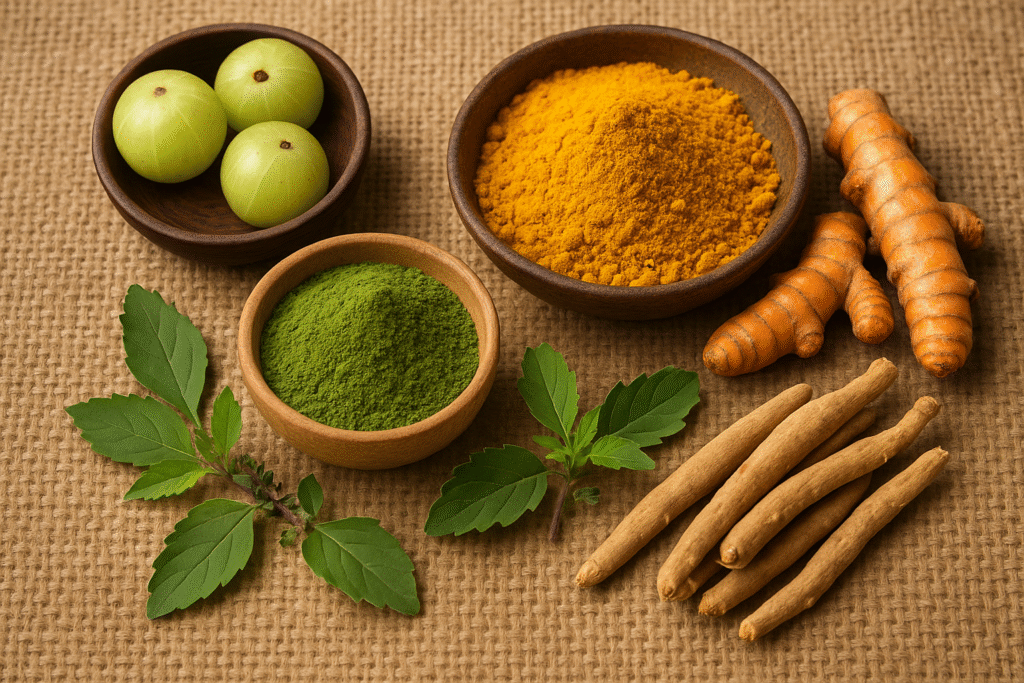
1. Amla (Indian Gooseberry) – Nature’s Vitamin C Powerhouse
Let’s start with Amla, one of Ayurveda’s most celebrated fruits.
Amla is an unassuming little berry, but nutritionally? It’s absolutely loaded. We’re talking about vitamin C content that puts oranges to shame—around 600-700mg per 100 grams. But here’s what makes Amla special: the vitamin C in Amla is heat-stable and bound to tannins, which means it actually survives cooking and processing and stays bioavailable in your body.
This matters because vitamin C is crucial for immunity. It supports white blood cell function, strengthens connective tissues, and acts as a potent antioxidant. But beyond immunity, Amla also supports healthy skin, strong hair, and digestive health.
How to use it: You can find dried Amla powder at any Indian grocery store or online. Mix a teaspoon into water or your morning smoothie. Or consume it as Amla juice. Some people even like to eat the fresh fruit when in season. The taste is tart and slightly astringent, but it grows on you. Many Ayurvedic practitioners recommend taking Amla daily during cold and flu season for immune support.
The beauty of Amla is that it’s affordable, accessible, and it actually works. This isn’t a supplement. It’s real food that’s been nourishing Indian populations for thousands of years.
2. Ashwagandha – The Stress-Busting Immunity Ally
Ashwagandha might sound exotic, but it’s becoming increasingly familiar in wellness circles. And for good reason.
Ashwagandha is an adaptogenic herb, which means it helps your body adapt to stress. But here’s what makes it relevant to immune health: chronic stress absolutely tanks your immunity. When your nervous system is constantly activated, your immune system gets suppressed. Ashwagandha helps regulate stress hormones, calm your nervous system, and in doing so, supports your immune function.
Beyond stress management, Ashwagandha contains alkaloids and withanolides (bioactive compounds) that directly support immune response. Studies have shown it can increase white blood cell counts and enhance immunity.
How to use it: Ashwagandha powder can be mixed into warm milk (traditional practice), added to smoothies, or taken as a capsule. A typical dose is around 300-600mg daily. Many people take it in the evening because of its calming properties. It has a slightly bitter, earthy taste that pairs well with warming spices like cinnamon and cardamom.
What’s incredible about Ashwagandha is that it addresses immunity holistically—not just by boosting immune cells, but by reducing the stress that suppresses immunity in the first place.
3. Turmeric – The Golden Healer You Already Know
Turmeric might be the most famous Ayurvedic superfood worldwide, and it deserves that reputation.
The secret is curcumin, the active compound in turmeric that gives it that golden color. Curcumin is a potent anti-inflammatory and antioxidant. In Ayurvedic terms, turmeric is “warming” and supports healthy digestion, but modern research shows it does so much more. It supports immune function, reduces systemic inflammation, and protects cells from oxidative stress.
Here’s the catch though: curcumin alone isn’t very bioavailable. Your body doesn’t absorb it well on its own. But when combined with black pepper (which contains piperine), absorption increases by up to 2000%. This is why traditional Ayurvedic recipes always pair turmeric with black pepper—it’s not random; it’s chemistry that works.
How to use it: The traditional preparation is Golden Milk (or Turmeric Latte): mix turmeric powder with warm milk, add a pinch of black pepper, a touch of honey, and warming spices like cinnamon and ginger. Drink it in the morning or evening. Or simply add turmeric to your cooking—curries, soups, rice dishes. Make it a daily practice.
4. Tulsi (Holy Basil) – The Immunity Herb of the Gods
In India, Tulsi is treated with reverence. Many homes have Tulsi plants growing in their gardens or courtyards, treated almost like spiritual protectors. But beyond tradition, Tulsi has serious immunological power.
Tulsi contains essential oils and compounds that support immunity at multiple levels. It has antimicrobial properties, supports respiratory health, and like Ashwagandha, it helps manage stress—which, as we’ve established, is crucial for immunity.
What makes Tulsi special is that it’s not just medicinal in extreme doses. You can consume it regularly as a tea or in cooking without any negative effects. It tastes pleasant—slightly peppery, aromatic, and warming.
How to use it: The simplest way is as a tea. Steep fresh or dried Tulsi leaves in hot water for 5-10 minutes. Drink it as an everyday beverage. You can add honey, lemon, or ginger if you like. Many Ayurvedic practitioners recommend Tulsi tea especially during cold and flu season for immune support.
You can also find Tulsi powder and add it to smoothies or cooking. The accessibility and daily-ness of Tulsi make it one of the easiest Ayurvedic superfoods to incorporate into your life.
5. Moringa – The Nutritional Powerhouse You’re Sleeping On
Moringa might be the least familiar on this list, but it’s potentially the most nutrient-dense plant on the planet.
Moringa leaves contain all nine essential amino acids (making it a complete protein), plus massive amounts of vitamins A, C, E, calcium, potassium, and iron. It also contains compounds with antimicrobial and anti-inflammatory properties. In traditional Ayurvedic practice and throughout Southeast Asia and Africa, Moringa has been used for centuries to support immune health and nutritional status.
What’s mind-blowing is that Moringa leaves can be dried and powdered without losing most of their nutritional value, making it incredibly shelf-stable and accessible.
How to use it: Moringa powder has a slightly earthy, green taste. Mix it into smoothies, soups, or even sprinkle it on food. A teaspoon a day provides significant nutritional support. You can also brew dried Moringa leaves as a tea. Start with small amounts (a quarter to a half teaspoon) because its concentrated nutrition can be powerful if you’re not used to it.
Building Your Clean Eating Practice with Ayurvedic Superfoods
Here’s what’s beautiful about these five foods: they’re not expensive. They’re not hard to find. They’re not processed or synthetic. They’re real food that your body recognizes and knows how to use.
The clean eating movement of 2025 is about getting back to basics—eating real food, understanding ingredients, and choosing foods that actually nourish rather than just fill. These Ayurvedic superfoods embody that philosophy perfectly.
A practical approach: Don’t try to incorporate all five at once. That’s overwhelming and unnecessary. Pick one. Maybe start with Turmeric since it’s probably already in your kitchen. Use it daily for two weeks. Notice how you feel. Then add Amla. Then add Tulsi. Layer them in slowly.
Within a month or two of consistent use, you’ll notice real changes. Your immunity feels stronger—you don’t catch every cold that goes around. Your energy is more stable. Your digestion works better. Your skin looks clearer.
These aren’t placebo effects. These are real, measurable improvements that come from actually nourishing your body with powerful, clean, whole foods.
The Bottom Line
We keep looking for the next exotic superfood when some of the world’s most powerful immune-boosting foods have been quietly working in Ayurveda for thousands of years. Amla, Ashwagandha, Turmeric, Tulsi, and Moringa aren’t trends. They’re timeless nutrition that happens to be perfectly aligned with everything clean eating stands for.
In 2025, as more people question where their food comes from and what they’re actually putting in their bodies, these Ayurvedic superfoods represent a return to something real, something tested, and something that genuinely works.
Your immunity doesn’t need complicated protocols or expensive supplements. It needs real food, consistent use, and patience. These five Ayurvedic powerhouses deliver exactly that.
Ready to upgrade your immunity? Start with one superfood from this list. Make it part of your daily routine. In a month, notice the difference. Then add another. Small, consistent choices create powerful, lasting results.