
Introduction: The Mind Behind an Empire
In the heart of ancient India, a brilliant strategist emerged who redefined leadership, ethics, and governance. Chanakya, also known as Kautilya, was not merely a scholar or a philosopher; he was a visionary whose teachings and strategies laid the foundation for the Mauryan Empire’s greatness. Have you ever wondered how wisdom from centuries ago can still resonate in today’s leadership practices? This article delves into Chanakya’s life, his Vedic wisdom, and the lasting impact of his principles on modern leadership and planning.
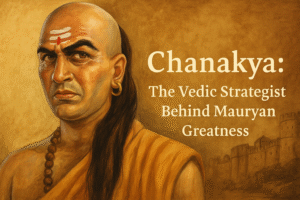
Who Was Chanakya?
Born in the 4th century BCE in ancient India, Chanakya was a professor at Takshashila University, where he taught political science, economics, and philosophy. His sharp intellect and deep understanding of human behavior led him to play a pivotal role in the rise of Chandragupta Maurya, the founder of the Mauryan Empire.
His magnum opus, the Arthashastra, serves not just as a political treatise but also as a guide to ethical leadership and effective governance. It combines the intricate details of statecraft with profound Vedic principles, showcasing the inseparable bond between ethics and effective leadership.
Vedic Wisdom and Leadership
At the core of Chanakya’s teachings lies Vedic wisdom, a treasure trove of insights that emphasize the significance of dharma (duty/righteousness), artha (wealth), kama (pleasure), and moksha (liberation). These concepts form the four pillars of a balanced life and effective governance.
The Principle of Dharma: Ethical Leadership
Dharma, or righteousness, is the cornerstone of Chanakya’s philosophy. In a world rife with challenges, a leader’s ability to adhere to dharma becomes paramount. Chanakya believed that ethical leadership fosters loyalty and respect among followers, creating a stable and flourishing society. To illustrate this point, consider the following practices:
- Transparency: Chanakya advocated open communication in governance, ensuring that decisions were made with the welfare of the people in mind.
- Justice: Leaders must administer justice fairly, without favoritism, emphasizing the importance of equality and fairness.
- Responsibility: A true leader must take accountability for their actions and decisions, embodying the very essence of dharma.
Leaders today can derive valuable lessons from this principle. For instance, many successful organizations prioritize ethical decision-making, leading not just to profitability but to sustainable growth. Companies like Patagonia exemplify this by emphasizing environmental sustainability while staying profitable.
Artha: Strategic Planning and Governance
Artha, or the pursuit of wealth, is not just about material gain; it is about strategic planning and resource management. Chanakya’s teachings highlight the necessity of understanding economic principles to govern effectively. Here are ways modern leaders can apply these concepts:
- Resource Allocation: Understanding the optimal use of resources is crucial. Leaders should assess strengths and weaknesses, aligning resources with strategic goals.
- Long-term Vision: Chanakya advised that leaders should plan for the future, taking into account market trends, potential challenges, and opportunities.
- Flexibility: In a rapidly changing world, adaptability is key. Chanakya emphasized the importance of being prepared to pivot strategies as circumstances evolve.
Take the example of Amazon, whose foresight in diversifying into cloud computing (AWS) not only brought in significant revenue but also solidified its market position.
Kama: The Balance of Pleasure
Kama, often interpreted as pleasure, signifies the importance of enjoying life but in moderation. For Chanakya, it was essential for leaders to find joy and contentment, which fosters creativity and innovation. Here’s how to embody this principle:
- Work-Life Balance: Encouraging a culture that values both hard work and personal time can lead to a more satisfied and productive workforce.
- Creativity: Allowing space for creative pursuits can lead to innovative solutions and breakthroughs within organizations.
- Team Morale: Celebrating achievements and fostering a positive work environment boosts employee morale and promotes loyalty.
Google is a prime example of this principle in action, incorporating office designs that celebrate creativity and downtime, resulting in high levels of employee satisfaction and productivity.
Moksha: The Ultimate Liberation
The pursuit of moksha, or liberation, ultimately represents the highest aspiration in life. For leaders, this can be interpreted as striving for a legacy that extends beyond personal gain. Chanakya believed that true leaders seek to create a lasting impact on society. Ways to embrace this include:
- Community Engagement: Investing in societal welfare and community initiatives creates a positive legacy.
- Mentorship: Educating and empowering the next generation of leaders ensures that wisdom continues to thrive.
- Ethical Business Practices: Upholding ethical standards enhances reputation and builds trust with stakeholders.
For instance, Tata Group has consistently focused on corporate social responsibility, fostering a legacy of trust and respect in India.
Key Strategies from Chanakya’s Teachings
Chanakya’s insights into statecraft and governance provide timeless strategies that can be applied in various contexts. Here are actionable tips derived from his teachings:
- Build a Strong Network: Chanakya emphasized the importance of alliances. Cultivate relationships that can provide support and resources.
- Assess and Adapt: Continuously evaluate your strategies and be ready to change course when necessary.
- Invest in Knowledge: Knowledge is power. Invest in continuous learning for yourself and your team.
- Lead by Example: Model the behavior you wish to see. Your actions set the tone for your organization.
- Practice Patience: Not every decision yields immediate results. Practice patience and resilience in your leadership journey.
Real-World Applications: Chanakya’s Legacy Today
Chanakya’s principles are not confined to history; they resonate strongly in modern leadership practices. Here are some notable examples:
- Political Leaders: Politicians like Narendra Modi have drawn on Chanakya’s strategies of diplomacy and statecraft to navigate complex political landscapes.
- Business Executives: CEOs such as Ratan Tata have embodied Chanakya’s emphasis on ethics and social responsibility, ensuring corporate practices align with societal values.
- Educators: Educational institutions incorporate Chanakya’s teachings in leadership programs, emphasizing ethical decision-making and strategic thinking.
Why It Matters: The Relevance of Chanakya’s Wisdom
In today’s fast-paced world, characterized by constant change and uncertainty, the Vedic wisdom espoused by Chanakya serves as a guiding light. His teachings encourage leaders to be ethical, strategic, and compassionate, bridging the gap between ancient wisdom and contemporary challenges.
As we navigate the complexities of modern governance, economics, and personal leadership, Chanakya’s insights remind us that success is not solely measured by power or wealth but by the ethical considerations and legacies we leave behind.
Key Takeaways
- Chanakya’s teachings highlight the significance of ethical leadership, strategic planning, and the balance of personal fulfillment.
- Vedic wisdom remains relevant today, providing frameworks for effective governance and personal growth.
- Implementing Chanakyan principles can lead to sustainable success, nurturing both individuals and communities.
- The pursuit of dharma, artha, kama, and moksha creates a holistic approach to leadership and life.
Conclusion: Embracing the Chanakya Legacy
Chanakya’s life and teachings continue to inspire leaders across various fields, encouraging them to embrace a holistic approach that intertwines ethics with ambition. As we reflect upon his wisdom, we must ask ourselves: How can we incorporate these timeless principles into our own lives and leadership styles? The journey of a leader is not merely about achieving power but about fostering a legacy that uplifts society. Let us all strive to channel our inner Chanakya, not just to lead, but to inspire and empower others along the way.