Ever felt like generic wellness advice doesn’t quite fit you? Like you’re following the same rules as everyone else, but something still feels off?
That’s because everyone isn’t the same. And Ayurveda figured this out 5,000 years ago.
At the heart of Ayurvedic wisdom is a simple but revolutionary idea: every person has a unique constitution called a “dosha.” Your dosha is basically your individual blueprint—it determines how your body naturally functions, what keeps you balanced, and what throws you off. When you understand your dosha, everything changes. Suddenly, wellness advice that seemed random becomes crystal clear. You stop forcing yourself into one-size-fits-all routines and start honoring what your body actually needs.
In this guide, we’re going to explore the three doshas in depth, help you discover your unique constitution, and give you practical ways to bring your dosha back into balance.
The Three Doshas Explained
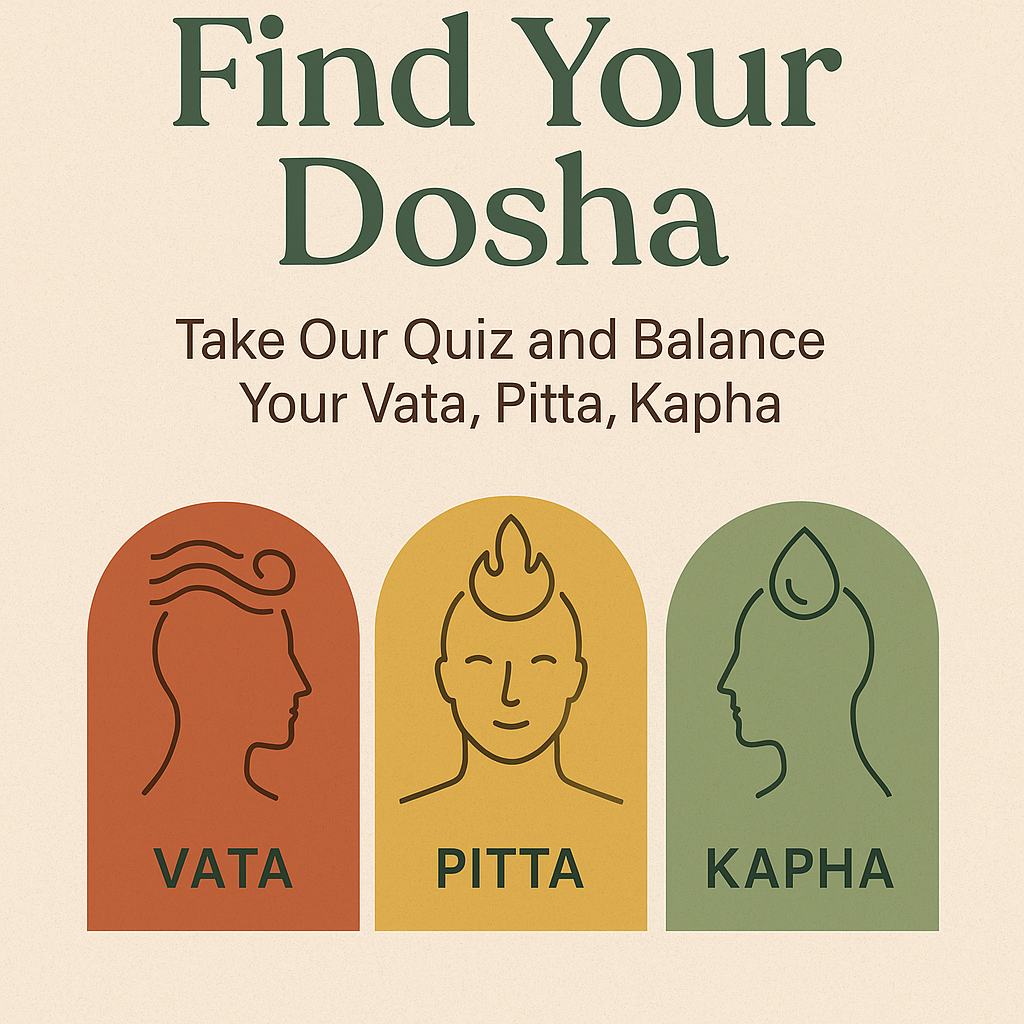
Ayurveda describes the body and mind through three fundamental energies called doshas: Vata, Pitta, and Kapha. Each person has all three in their system, but typically one or two are more dominant. That dominant combination is your unique constitution.
Vata – The Energy of Movement
Vata is the energy of movement and communication. It governs everything that flows: blood circulation, nerve impulses, thoughts, and elimination. When Vata is balanced, you’re creative, energetic, communicative, and flexible. You adapt easily to change. Your energy feels boundless.
When Vata is imbalanced? You’re scattered, anxious, restless, and hard to pin down. You might struggle with constipation or dry skin. Your sleep becomes erratic. Your thoughts race. You feel ungrounded.
Vata types tend to be:
- Slender, light-framed
- Creative and imaginative
- Quick-thinking but sometimes scattered
- Talkative and enthusiastic
- Sensitive to cold
- Prone to anxiety when imbalanced
- Active and energetic
Pitta – The Energy of Transformation
Pitta is the energy of transformation and digestion. It governs metabolism, digestion, intelligence, and willpower. When Pitta is balanced, you’re sharp, ambitious, focused, and driven. You make decisions easily. You have strong digestion and metabolism. You’re a natural leader.
When Pitta is imbalanced? You become overly critical, aggressive, and impatient. You might experience inflammation, skin issues, or digestive problems. You’re prone to burnout because you push too hard. Everything feels urgent.
Pitta types tend to be:
- Medium build, athletic
- Sharp intelligence and quick wit
- Ambitious and competitive
- Strong digestion
- Warm body temperature
- Prone to irritability when imbalanced
- Natural leaders and decision-makers
Kapha – The Energy of Structure
Kapha is the energy of structure and stability. It governs the physical body, lubrication, and grounding. When Kapha is balanced, you’re calm, grounded, patient, and nurturing. You have steady energy. You’re loyal and dependable. You recover well from illness.
When Kapha is imbalanced? You become sluggish, heavy, and stuck. You might gain weight easily or struggle with lethargy. You resist change. Everything feels like it takes twice as much effort.
Kapha types tend to be:
- Fuller body frame
- Calm and patient
- Nurturing and supportive
- Slow, steady metabolism
- Cool body temperature
- Prone to stagnation when imbalanced
- Grounded and reliable
Discover Your Dosha – The Quiz
Ready to find out your unique constitution? Answer the following questions honestly. For each question, choose the answer that resonates most with you—not what you wish were true, but what’s actually true about you.
Section 1: Physical Characteristics
1. What’s your natural body frame?
- A) Thin, light, small-boned (Vata)
- B) Medium, athletic, muscular (Pitta)
- C) Fuller, heavier, rounder (Kapha)
2. What’s your natural body temperature?
- A) I’m often cold; I need layers (Vata)
- B) I’m naturally warm; I prefer cool environments (Pitta)
- C) I’m moderate; I adapt easily (Kapha)
3. How would you describe your skin?
- A) Dry, thin, tends to get dehydrated (Vata)
- B) Oily or combination, prone to acne or sensitivity (Pitta)
- C) Thick, clear, naturally smooth and moist (Kapha)
4. What’s your hair like?
- A) Thin, dry, easily frizzy (Vata)
- B) Medium, straight, early graying or thinning (Pitta)
- C) Thick, wavy, strong and lustrous (Kapha)
Section 2: Energy & Movement
5. How would you describe your natural energy level?
- A) Variable; I have bursts of energy followed by crashes (Vata)
- B) Consistent and strong; I can sustain high activity (Pitta)
- C) Steady but moderate; I prefer a relaxed pace (Kapha)
6. How do you handle change?
- A) I adapt quickly and enjoy variety (Vata)
- B) I like some change but need control (Pitta)
- C) I prefer routine and stability (Kapha)
7. What’s your sleep like?
- A) Light, easily disrupted, sometimes insomnia (Vata)
- B) Moderate, I can fall asleep quickly but might wake early (Pitta)
- C) Deep, I sleep easily and wake refreshed (Kapha)
Section 3: Digestion & Appetite
8. How’s your digestion?
- A) Irregular; I’m prone to bloating and gas (Vata)
- B) Strong and efficient; I digest quickly (Pitta)
- C) Slow but steady; I rarely have digestive issues (Kapha)
9. What’s your appetite like?
- A) Variable; I sometimes forget to eat (Vata)
- B) Strong and regular; I get hungry easily (Pitta)
- C) Moderate and consistent (Kapha)
10. What do you crave?
- A) Warm, grounding foods; I love soups and stews (Vata)
- B) Cool, light foods; heavy meals make me uncomfortable (Pitta)
- C) Rich, comforting foods; I don’t crave much variety (Kapha)
Section 4: Mind & Emotions
11. How would you describe your thinking style?
- A) Quick, scattered, creative, lots of ideas at once (Vata)
- B) Sharp, focused, analytical, decisive (Pitta)
- C) Steady, methodical, deep thinking (Kapha)
12. What triggers your stress?
- A) Uncertainty and lack of routine (Vata)
- B) Lack of control or challenges to my authority (Pitta)
- C) Sudden change or loss of comfort (Kapha)
13. What’s your communication style?
- A) Talkative; I love conversation and sharing ideas (Vata)
- B) Direct and persuasive; I like to lead discussions (Pitta)
- C) Quiet; I listen more than I speak (Kapha)
14. How do you respond to stress?
- A) I get anxious, worried, and scattered (Vata)
- B) I become irritable, angry, or frustrated (Pitta)
- C) I withdraw and become sluggish (Kapha)
Section 5: Preferences & Lifestyle
15. Your ideal environment is:
- A) Warm, calm, predictable (Vata)
- B) Cool, stimulating, challenging (Pitta)
- C) Comfortable, familiar, relaxed (Kapha)
16. What’s your exercise preference?
- A) Light, varied activities like yoga or walking (Vata)
- B) Intense exercise like running or competitive sports (Pitta)
- C) Gentle, sustained movement like swimming (Kapha)
17. In social situations, you:
- A) Make friends easily but don’t always maintain connections (Vata)
- B) Take charge and lead the group (Pitta)
- C) Build deep, lasting friendships slowly (Kapha)
18. Your memory is:
- A) Quick to learn but quick to forget (Vata)
- B) Sharp and focused on what interests me (Pitta)
- C) Slow to learn but excellent long-term memory (Kapha)
Scoring Your Dosha
Count how many A’s, B’s, and C’s you got:
- Mostly A’s = Vata Dominant
- Mostly B’s = Pitta Dominant
- Mostly C’s = Kapha Dominant
- Mixed results = You’re likely a dual dosha type (for example, Vata-Pitta or Pitta-Kapha)
Most people are actually dual dosha types, with one slightly more dominant. That’s perfectly normal and actually quite common.
How to Balance Your Dosha
Once you know your dosha, the real magic begins. Balancing your dosha means aligning your lifestyle with what your body naturally needs.
Balancing Vata
Vata needs: grounding, warmth, routine, and calm.
- Food: Choose warm, grounding foods. Cooked meals over raw. Add healthy fats like ghee and sesame oil. Root vegetables, warming spices, and nourishing grains.
- Routine: Establish consistent sleep, meal, and exercise times. Vata thrives on predictability.
- Environment: Stay warm. Avoid excessive cold and wind.
- Exercise: Gentle practices like yoga, tai chi, or walking. Nothing too intense or chaotic.
- Lifestyle: Oil massage (abhyanga), meditation, and calming practices help ground scattered Vata energy.
Balancing Pitta
Pitta needs: cooling, moderation, and release of intensity.
- Food: Choose cool, light foods. Raw fruits and vegetables, cooling herbs like cilantro and mint. Avoid excess spicy, fried, or heavy foods.
- Routine: Build in downtime. Pitta’s tendency is to constantly push; you need conscious rest.
- Environment: Stay cool. Avoid excessive heat.
- Exercise: Moderate intensity. Mix intense exercise with cooling, restorative practices.
- Lifestyle: Swimming, moonlight walks, and calming meditation help cool excess Pitta heat. Learn to say no and delegate.
Balancing Kapha
Kapha needs: stimulation, warmth, and movement.
- Food: Choose light, warming foods. Spices, raw foods, and meals with less oil. Avoid excess heavy, oily, cold foods.
- Routine: Create variety and challenge. Kapha needs stimulation to stay engaged.
- Environment: Seek warmth and brightness.
- Exercise: More vigorous movement. Running, dancing, or high-energy classes help mobilize Kapha’s tendency to stagnate.
- Lifestyle: New experiences, social connection, and dynamic practices help energize Kapha. Avoid excessive rest or comfort.
Practical Next Steps
Finding your dosha is just the beginning. The real transformation comes from consistently applying this knowledge to your daily life.
Start small: Don’t overhaul everything at once. Pick one element that resonates with your dosha’s needs. Maybe it’s adjusting your breakfast to be more grounding (if you’re Vata), or adding more cooling foods (if you’re Pitta), or incorporating more movement (if you’re Kapha).
Notice what shifts: After two weeks of consistent practice, pay attention. How does your energy feel? Your digestion? Your mood? When you start honoring your unique constitution, the changes can be surprisingly quick and noticeable.
Work with your nature, not against it: This is the ultimate gift of knowing your dosha. Instead of forcing yourself into routines that don’t fit, you can finally work with your body’s natural tendencies. That’s when wellness stops feeling like a battle and starts feeling like coming home.
The Bottom Line
You’re not broken. You’re not one-size-fits-all. You have a unique constitution with specific needs. Once you understand your dosha, you stop chasing generic advice and start honoring what your body actually needs to thrive.
Ayurveda doesn’t ask you to be someone you’re not. It asks you to be the best version of yourself—balanced, healthy, and aligned with your nature.
Take the quiz. Discover your dosha. Then start the beautiful work of bringing yourself back into balance.
What’s your dosha? Share in the comments or save this quiz to revisit whenever you need a reminder of your unique constitution. And remember: knowing your dosha is just the first step. Using that knowledge consistently is what creates real transformation.