What if the world never knew your true worth because of where—or to whom—you were born?
This is the tragedy and triumph of Karna, one of the most fascinating and morally complex characters in the Mahabharata. Born to royalty but raised in obscurity, blessed by the gods yet cursed by fate, Karna’s life is a saga of unwavering loyalty, unmatched generosity, and heartbreaking choices.
Karna’s story is not just about battles and bows—it’s about dignity in the face of rejection, generosity when it costs everything, and standing by one’s word even when it means certain defeat. Let’s journey through the life of the man known as Daanveer—the great giver—and see why, even centuries later, his legacy inspires.
Born by Fate: Karna’s Origins and Early Struggles
Divine Birth and Hidden Identity
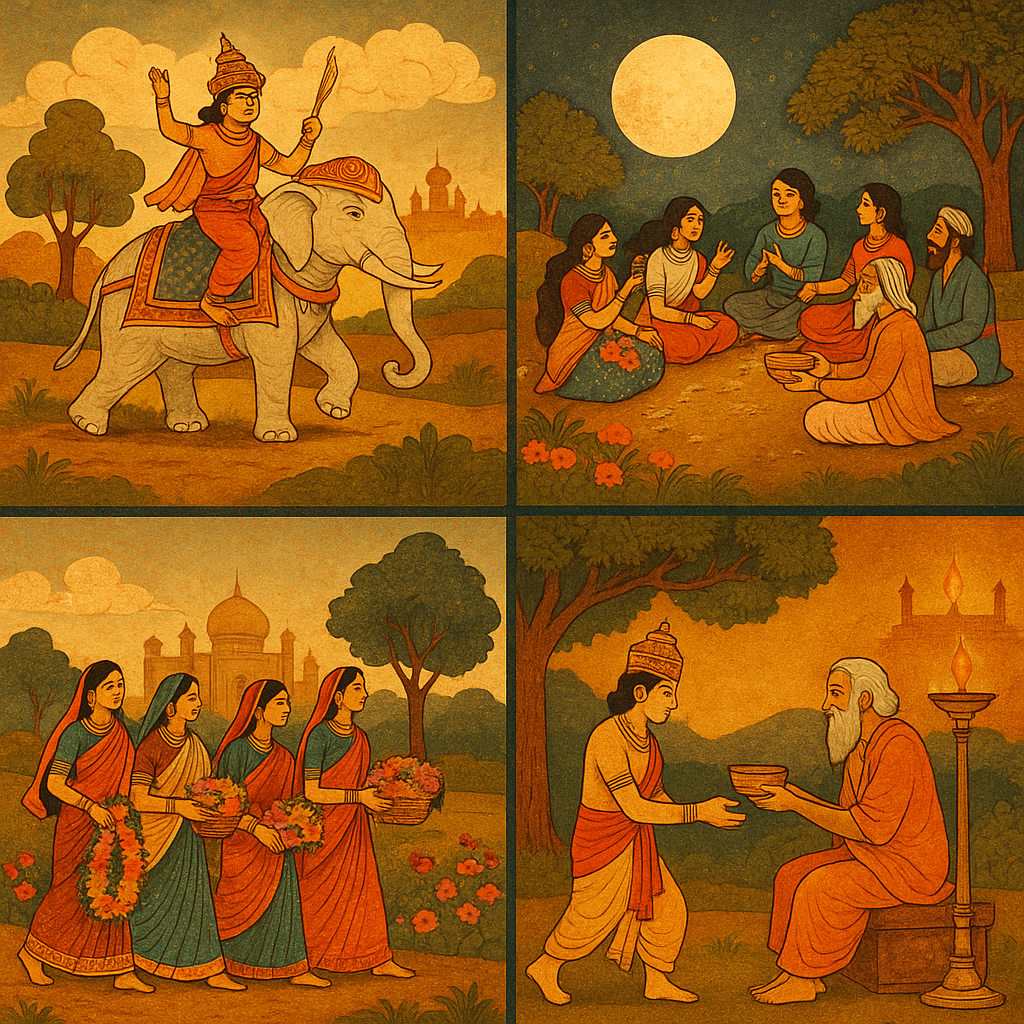
Karna’s life began in mystery. His mother, Kunti, had received a boon from Sage Durvasa that allowed her to summon any god and bear a child by them. Out of curiosity, she invoked Surya, the Sun God. Surya granted her a son who was born with golden armor (kavacha) and earrings (kundala)—divine gifts for protection.
But Kunti was unmarried, and societal norms would not forgive an unwed mother. In fear and desperation, she placed her newborn in a basket and set him afloat on the Ganga.
The infant was found by a charioteer, Adhiratha, and his wife, Radha, who raised him lovingly as their own. Yet, the world knew him as the “son of a charioteer,” not the son of royalty.
Growing Up in Poverty and Rejection
From a young age, Karna showed extraordinary skill in archery and warfare. But the caste-bound society of the time refused him opportunities.
When he sought training from Drona, the teacher of the Pandavas and Kauravas, he was rejected because of his perceived low birth. Undeterred, Karna disguised himself as a Brahmin and trained under Parashurama, the legendary warrior-sage.
However, fate struck again—Parashurama discovered Karna’s true lineage (or so he thought) and cursed him, declaring that his knowledge would fail him when he needed it most.
The Virtue of Sacrifice: Karna’s Code of Honour
Loyal to Duryodhana Against All Odds
Karna’s life changed when Duryodhana, prince of the Kauravas, recognized his talent. When Karna was mocked during a tournament for his birth, Duryodhana crowned him King of Anga instantly—giving him both status and friendship.
From that day on, Karna pledged unwavering loyalty to Duryodhana. Even when he later learned that he was the eldest son of Kunti—making him the rightful eldest Pandava—he refused to betray his friend, saying, “Duryodhana has stood by me when the world stood against me. How can I abandon him now?”
The Gift of Kavacha-Kundala… and What It Cost Him
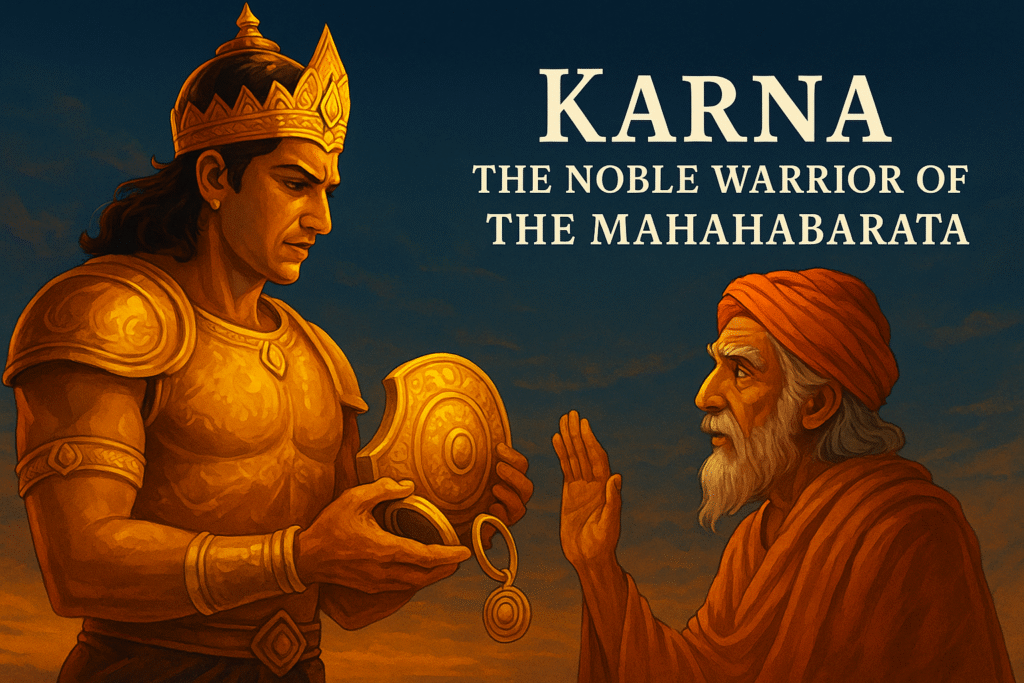
Perhaps the most defining act of Karna’s generosity was when Indra, the father of Arjuna (his greatest rival), approached him disguised as a poor Brahmin asking for his divine armor and earrings.
Karna recognized the god but still gave them away—knowing full well it would make him vulnerable in battle. This sacrifice cost him his divine protection, but it cemented his reputation as Daanveer—the man who would never refuse a request.
Karna—The Mightiest Warrior We Didn’t Expect
Training Under Parashurama
Despite the curse that would later haunt him, Karna’s training under Parashurama honed his skills to perfection. He mastered celestial weapons and rivaled even Arjuna in skill.
Parashurama himself admitted Karna was his most dedicated student—before fate turned that respect into heartbreak.
Rivalry with Arjuna and Turning the Tide of the War
The Mahabharata often frames Karna and Arjuna as destined rivals—the sun-born warrior versus the thunder-wielding prince. Their duels were the stuff of legend.
Karna entered the Kurukshetra War late—after Bhishma fell—but his presence changed the Kaurava strategy. His valor on the battlefield was unmatched; he defeated mighty warriors like Bhima, Nakula, Sahadeva, and even Yudhishthira.
However, destiny struck again. On the seventeenth day of the war, his chariot wheel got stuck in the mud. Bound by rules of combat, Arjuna should have waited—but urged by Krishna, he took the fatal shot while Karna struggled.
Thus fell the greatest warrior who never truly fought for himself.
Flaws, Loyalty, and Tragic Choices
Curses and Concealed Weaknesses
Karna’s life was shadowed by three curses:
- From Parashurama—his knowledge would fail in crisis.
- From a Brahmin—whose cow he accidentally killed, cursing his chariot to fail him.
- From Mother Earth—his chariot wheel would sink at a crucial moment.
These curses played a decisive role in his downfall.
The Ethics of Choosing the “Wrong Side”
Many debate Karna’s morality. He fought for the Kauravas, who were in the wrong—but he did so out of personal loyalty and gratitude.
Karna’s choice wasn’t about right or wrong—it was about honor. And in a world where survival often meant betrayal, he chose to remain steadfast.
Legacy That’s More Than Just a Warrior
Karna in Modern Culture
From poems and plays to films and novels, Karna has inspired countless retellings. Authors like Shivaji Sawant (Mrityunjaya) have portrayed him as the ultimate tragic hero—misunderstood by the world but true to his values.
What His Story Teaches Us Today
Karna’s life teaches us:
- Stand by those who believe in you.
- Give without expecting return.
- True greatness isn’t about winning—it’s about how you live.
In a world obsessed with results, Karna reminds us that character outlasts victory.
Conclusion
Karna’s life is a paradox—born a prince but dying as an outcast, gifted by gods yet cursed by fate, capable of victory but destined for defeat. And yet, it is this very paradox that makes him unforgettable.
He wasn’t perfect—he had his flaws and made questionable choices—but his loyalty, generosity, and dignity under adversity make him one of the most inspiring figures in world literature.
Karna’s story whispers to us across centuries:
True greatness lies not in the crown you wear, but in the heart you carry.