Introduction: A Love Beyond Monarchies
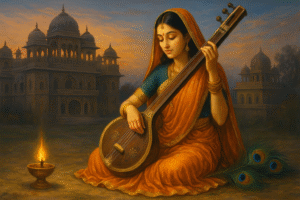
In the heart of Rajasthan, amid the echoes of ancient palaces and the vibrant culture of India, there lived a queen whose spirit transcended royal boundaries. Mirabai, a name that resonates through the ages, chose love—divine love—over earthly power. But what does it mean to choose spirituality in a world that often elevates material success? Mirabai’s journey is not just a tale of devotion; it’s a powerful narrative of feminine strength, resilience, and the transformative power of bhakti.
Who Was Mirabai? A Brief Historical Context
Born in 1498 in a small village near Udaipur, Mirabai was the daughter of a noble family, destined for a life of privilege. However, her heart was destined for a different path. At a young age, she experienced a profound spiritual awakening—one that would lead her to reject the conventional life expected of her as a princess.
Mirabai’s era was marked by intense societal norms that confined women to domesticity and subservience. Nevertheless, she emerged as a beacon of hope, defying traditions and embracing her devotion to Lord Krishna, whom she considered her eternal husband. Her poetry and songs, filled with longing and love, remain an inspiration to many, capturing the essence of bhakti—a personal devotion to the divine.
The Essence of Bhakti: A Spiritual Movement
Bhakti, derived from the Sanskrit word “bhaj,” meaning to worship or serve, emphasizes a personal connection with the divine. It is a spiritual practice transcending ritualistic worship, encouraging individuals to experience God in their own unique way. Bhakti movements flourished in medieval India, emphasizing love and devotion over caste and creed.
Mirabai’s contributions to this movement were revolutionary. Through her verses, she communicated her profound love for Krishna, suggesting that spirituality is accessible to all, regardless of social status. Here are some key aspects of bhakti highlighted by Mirabai’s life:
- Personal Connection: Bhakti encourages a direct, personal relationship with God, free from intermediaries.
- Love Over Ritual: The emphasis is on heartfelt devotion rather than mere ritualistic practices.
- Inclusivity: Bhakti transcends social hierarchies, making spirituality accessible to everyone.
Mirabai’s Journey: A Tale of Love and Rebellion
Mirabai’s life was filled with trials, yet her unwavering devotion to Krishna fortified her spirit. After marrying into the royal family of Mewar, she faced immense opposition. Her husband’s family disapproved of her devotion, viewing it as a threat to their traditional values.
Undeterred, Mirabai found solace in her love for Krishna. She composed numerous bhajans (devotional songs) that expressed her longing for the divine. One of her most famous compositions, “Pag Ghungroo Baandh,” captures her yearning for Krishna, portraying a dance that transcends physicality and speaks to the soul.
Mirabai’s Poetry: A Medium of Expression
Her poetry not only reflects her personal experiences but also serves as a powerful medium for social change. Through her verses, she challenged the patriarchal norms that sought to silence her. Some notable themes in her poetry include:
- Divine Love: Mirabai’s verses express an intimate bond with Krishna, portraying him as both lover and friend.
- Self-Discovery: Her journey reflects a quest for identity beyond societal expectations.
- Empowerment: By voicing her devotion, she empowers women to seek their truth and embrace their spirituality.
The Feminine Strength of Mirabai
In a world where women were often relegated to the background, Mirabai emerged as a formidable figure, embodying strength, resilience, and independence. Her decision to reject worldly power in favor of spiritual devotion is a testament to her character.
Mirabai’s life invites us to explore the dimensions of feminine strength:
- Emotional Resilience: Despite facing immense opposition and personal loss, Mirabai’s spirit remained unbroken. Her emotional resilience serves as a powerful lesson in overcoming adversity.
- Authentic Self-Expression: By fearlessly expressing herself through poetry and music, she paved the way for future generations of women to share their voices.
- Faith as Strength: Her unwavering faith in Krishna highlights the role of spiritual belief as a source of strength.
Lessons from Mirabai: Practical Insights
What can we learn from Mirabai’s extraordinary life? Here are some practical insights that can be applied to our daily lives:
- Embrace Your Passion: Like Mirabai, pursue what sets your soul on fire, whether it’s art, spirituality, or any other form of self-expression.
- Stand Up for Your Beliefs: Be courageous in voicing your truth, even when faced with societal or familial pressure.
- Seek Inner Peace: Turn to spiritual practices, such as meditation or prayer, to cultivate a deeper connection with your inner self.
- Empower Others: Use your voice and experiences to uplift those around you, fostering a sense of community and strength.
Mirabai’s Legacy: A Timeless Influence
The legacy of Mirabai lives on, inspiring countless individuals across generations. Her bhajans are sung in temples and homes, and her life story continues to be a source of motivation for those seeking spiritual fulfillment.
Educational institutions and cultural festivals celebrate her contributions, ensuring that her teachings are passed down. Notably, the Mirabai Festival in Rajasthan honors her life and work, showcasing performances of her poetry and songs.
Mirabai in Modern Context: A Symbol of Empowerment
In contemporary society, Mirabai’s story resonates with women advocating for their rights and a place in the spiritual discourse. She serves as a reminder that spiritual strength transcends gender and cultural barriers.
As women today continue to challenge societal norms and assert their voices, Mirabai stands as a symbolic figure of empowerment, encouraging women to embrace their identities without fear. Her spirit reminds us that true strength lies in vulnerability and authenticity.
Conclusion: A Spiritual Legacy to Cherish
Mirabai’s journey exemplifies the power of bhakti and the strength inherent in feminine spirituality. Choosing Krishna over a kingdom was not merely an act of rebellion but a profound commitment to spiritual authenticity. Her life invites us to reflect on our own relationships with the divine and challenge the societal norms that limit us.
As we navigate our paths, may we draw inspiration from Mirabai, allowing her story to guide us towards a life infused with passion, devotion, and a deeper connection to the universe.
In embracing Mirabai’s teachings, let us remember to:
- Follow our hearts with unwavering faith.
- Stand strong in our beliefs and values.
- Celebrate our unique journeys, knowing that every step taken in love is a step towards the divine.
Let Mirabai’s legacy be a light that shines brightly for all who seek the divine in their lives.