What is Navratri? The Festival That Unites India
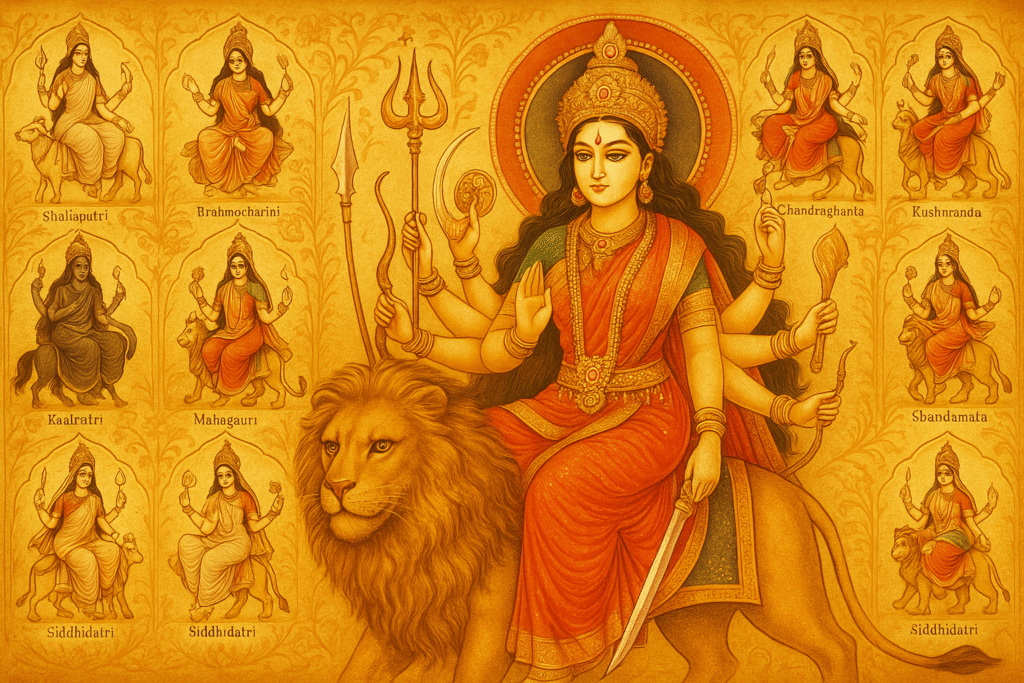
Navratri, meaning “nine nights” in Sanskrit, is one of India’s most vibrant Hindu festivals celebrating Goddess Durga and her nine divine forms. Celebrated twice yearly—Chaitra Navratri (March-April) and Sharad Navratri (September-October)—this festival combines devotion, fasting, dance, and cultural celebrations across India.
When autumn arrives, millions of Indians dress in colorful traditional wear, perform Garba and Dandiya, observe Navratri fasts, and worship Maa Durga with complete devotion. The festival concludes with Dussehra or Vijayadashami, celebrating good’s victory over evil.
The Story Behind Navratri: Why Do We Celebrate?
Goddess Durga vs Mahishasura
The main legend tells of demon king Mahishasura, who became invincible through Lord Brahma’s boon. When he terrorized the gods, they combined their powers to create Goddess Durga. She fought Mahishasura for nine nights and defeated him on the tenth day—now celebrated as Dussehra.
Lord Rama’s Connection
According to the Ramayana, Lord Rama performed Durga Puja during these nine days before defeating Ravana. This added another layer of significance to the Navratri celebration.
Seasonal Change & Health
Navratri marks the seasonal transition from monsoon to autumn. Ancient wisdom recognized this as the perfect time for body detox through Navratri fasting and spiritual cleansing.
Navratri 2025 Dates & 9 Forms of Goddess Durga (Navdurga)
Each day honors one form of Maa Durga, with specific colors and rituals:
Day 1: Shailaputri – Strength & new beginnings
Day 2: Brahmacharini – Devotion & discipline
Day 3: Chandraghanta – Courage & peace
Day 4: Kushmanda – Health & cosmic energy
Day 5: Skandamata – Motherly protection
Day 6: Katyayani – Warrior strength
Day 7: Kalaratri – Destroyer of negativity
Day 8: Mahagauri – Purity & compassion
Day 9: Siddhidatri – Spiritual wisdom & perfection
How India Celebrates Navratri: Regional Traditions
Gujarat – Garba & Dandiya Nights
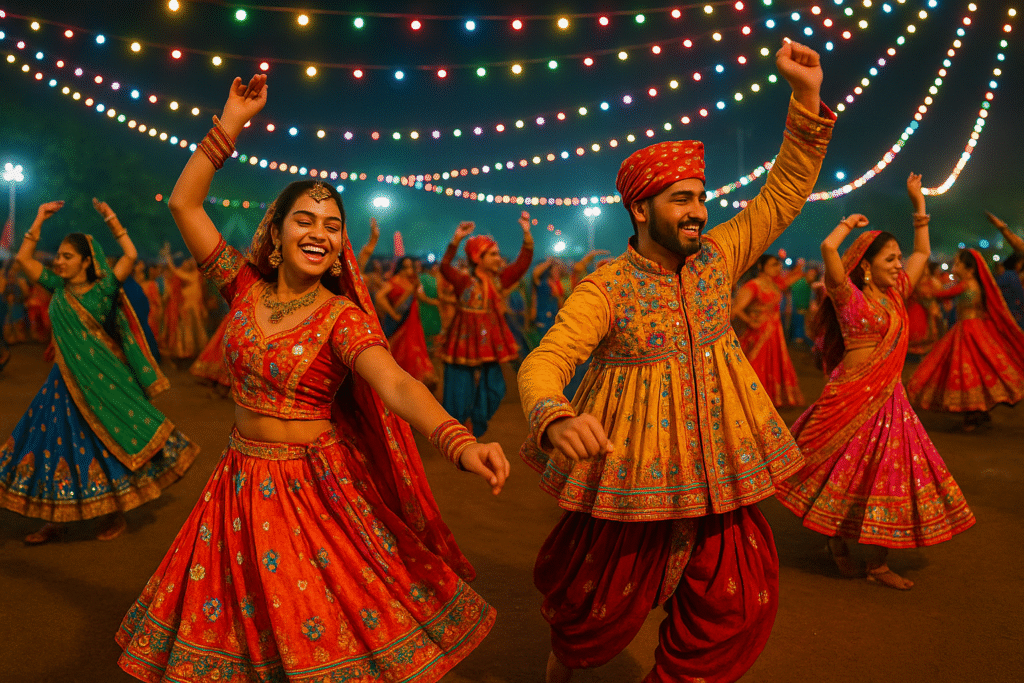
Gujarat is famous for Navratri Garba dance where thousands gather in colorful chaniya cholis to dance in circles until dawn. Dandiya Raas with colorful sticks follows, creating magical nights of music and devotion.
West Bengal – Durga Puja Pandals
Kolkata Durga Puja is world-famous with stunning artistic pandals, beautiful clay idols, and cultural programs. The Durga idol immersion on Dashami is an emotional spectacle.
North India – Ramlila & Dussehra
Delhi and UP host grand Ramlila performances depicting the Ramayana, ending with burning massive Ravana effigies on Dussehra.
South India – Golu & Saraswati Puja
Families create Golu doll displays on stepped platforms, visit homes, exchange gifts, and worship Goddess Saraswati for knowledge.
Navratri Fasting: Rules, Benefits & Foods
Why Fast During Navratri?
Navratri vrat (fasting) offers multiple benefits:
- Detoxifies the body during seasonal change
- Improves digestion and immunity
- Enhances mental clarity and focus
- Deepens spiritual connection
What to Eat During Navratri Fast
Allowed foods (Navratri fasting food):
- Fruits, milk, yogurt
- Sabudana (tapioca), Kuttu atta (buckwheat)
- Potatoes, sweet potatoes
- Sendha namak (rock salt)
- Dry fruits and nuts
Foods to avoid:
- Regular grains (wheat, rice)
- Onion, garlic
- Non-vegetarian items
- Regular table salt
Garba Dance: The Spiritual Significance
Garba dance isn’t just entertainment—it’s moving meditation. Dancers circle around a lamp representing life’s cycle. The Dandiya Raas sticks symbolize Durga’s weapons fighting evil. These traditional dances have become global phenomena, with Navratri celebrations happening worldwide.
The 3 Spiritual Stages of Navratri
Days 1-3: Destroy negative qualities (anger, ego, laziness)
Days 4-6: Build positive qualities (devotion, courage, discipline)
Days 7-9: Gain wisdom, purity, and enlightenment
This progression takes you from darkness to light, weakness to strength.
Navratri Colors 2025 & Their Meanings
Each day has an auspicious color to wear:
- Day 1: Royal Blue (strength)
- Day 2: Yellow (joy)
- Day 3: Green (growth)
- Day 4: Grey (balance)
- Day 5: Orange (energy)
- Day 6: White (peace)
- Day 7: Red (power)
- Day 8: Sky Blue (tranquility)
- Day 9: Pink (compassion)
Navratri Puja Vidhi (How to Worship)
Simple home ritual:
- Clean your puja space
- Place Goddess Durga’s idol or picture
- Light a diya (lamp) and incense
- Offer flowers, fruits, and sweets
- Recite Durga mantras or Durga Chalisa
- Perform aarti in the evening
- Maintain your fast and prayers
Why Navratri Matters Today
In our busy modern lives, Navratri festival teaches us:
- Inner strength to face challenges
- Community bonding through celebration
- Women empowerment through Shakti worship
- Healthy living through mindful fasting
- Cultural roots and traditions
Navratri Wishes & Celebration Tips
For families: Involve kids in decorating, cooking special foods, and learning about each goddess.
For fitness: Use Garba as cardio—30 minutes burns 200+ calories!
For travelers: Visit famous celebrations in Ahmedabad, Kolkata, Mysore, or Delhi.
For beginners: Start with a one-day fast or evening-only fasting.
Final Thoughts
Navratri reminds us that the divine feminine power lives within each of us. Whether you fast, dance Garba, visit Durga Pandals, or simply light a lamp at home—you’re connecting with centuries of devotion and cultural heritage.
This Navratri 2025, embrace the festival’s true spirit: overcoming your inner demons, celebrating with loved ones, and inviting Maa Durga’s blessings into your life.
Jai Mata Di! Happy Navratri! 🙏✨