
Introduction: A Warrior’s Spirit
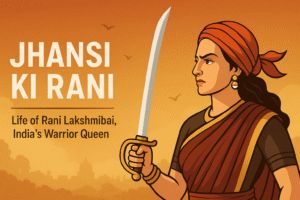
In the annals of Indian history, few figures are celebrated with as much reverence and awe as Rani Lakshmibai, the Queen of Jhansi. Her indomitable spirit and unwavering courage during the tumultuous times of the 1857 rebellion against British colonial rule have etched her name into the hearts of millions. Can one woman, driven by her love for her land and people, change the course of history? The answer lies in the inspiring life story of Jhansi Ki Rani.
The Early Life of Rani Lakshmibai
Rani Lakshmibai was born as Manikarnika Tambe on November 19, 1828, in Varanasi, to a Brahmin family. Her father, Moropant Tambe, was a pensioned military officer, and her mother, Bhagirathi, was a devoted homemaker. From a young age, Manikarnika exhibited exceptional intelligence and a strong will, breaking societal norms that confined women to domestic roles.
A Unique Upbringing
Manikarnika’s childhood was unlike that of most girls of her time. She learned to ride horses, wield swords, and shoot arrows, which was rare for women in 19th-century India. Her father recognized her potential and encouraged her to pursue her interests, fostering a sense of independence and resilience.
Marriage and Ascension
At the age of 14, she married Raja Gangadhar Rao, the Maharaja of Jhansi. Upon her marriage, she was renamed Lakshmibai. The couple shared a deep bond, and their union was marked by love and mutual respect. Unfortunately, their happiness was short-lived, as Raja Gangadhar Rao passed away in 1853, leaving Rani Lakshmibai with the responsibility of ruling Jhansi.
The Fight for Independence
Following the Raja’s death, the British East India Company sought to annex Jhansi, citing the absence of a male heir. This move was met with fierce resistance from Lakshmibai, who refused to abandon her rightful claim to the throne. Her struggle was not merely a fight for power; it was a fight for her people’s dignity and freedom.
The Great Rebellion of 1857
The year 1857 marked a significant turning point in Indian history. The Sepoy Mutiny, or the Indian Rebellion, erupted as sepoys revolted against oppressive British policies. Rani Lakshmibai seized the moment, rallying her subjects and leading them into battle. Her charisma and leadership inspired many to join her cause.
Key Battles and Strategies
In 1857, Lakshmibai displayed remarkable military prowess. She organized her forces, trained soldiers, and strategically defended Jhansi from British advances. The Siege of Jhansi was a pivotal moment, where her determination and tactical skills came to the forefront:
- Preparation: Lakshmibai fortified the city and prepared her army with limited resources, showcasing her ingenuity.
- Alliances: She forged alliances with other rebel leaders, including Tantia Tope and Nana Rao, strengthening the rebellion.
- Guerrilla Warfare: Employing guerrilla tactics, she launched surprise attacks and disrupted British supply lines, prolonging the siege.
Legacy of Jhansi Ki Rani
Rani Lakshmibai’s indefatigable spirit and valor during the struggle for independence left an indelible mark on Indian history. Her legacy transcends the battlefield, inspiring generations of women to fight for their rights and stand against oppression.
Symbol of Resistance
Today, Jhansi Ki Rani is celebrated as a symbol of resistance against tyranny. She embodies the spirit of empowerment and courage, encouraging women to break free from societal shackles. Statues, paintings, and films immortalize her bravery, ensuring that her story continues to inspire.
Rani Lakshmibai in Popular Culture
Rani Lakshmibai’s life has inspired numerous artistic expressions, from literature to cinema:
- Literature: Many authors have penned biographies and historical novels depicting her life, making her story accessible to new audiences.
- Films: Movies like “Jhansi Ki Rani” and “Lal Kaptaan” showcase her heroism, bringing her legacy to the silver screen.
- Festivals: The annual Jhansi Mahotsav celebrates her contributions, uniting people in honoring her memory.
Lessons from Rani Lakshmibai’s Life
The life of Rani Lakshmibai teaches us invaluable lessons that resonate even today:
- Courage in Adversity: Her unwavering resolve during challenging times reminds us of the power of courage and resilience.
- Leadership: Lakshmibai’s ability to lead and inspire her people underscores the importance of strong leadership in times of crisis.
- Empowerment: As a woman who defied societal norms, she inspires individuals to pursue their dreams, regardless of societal constraints.
Key Takeaways
In reflecting on the life of Rani Lakshmibai, we recognize that her story is not just a tale of war; it is a narrative of hope, empowerment, and resilience. Here are some key takeaways:
- True leadership is marked by the ability to inspire others.
- Courage can emerge from the most unexpected circumstances.
- The fight for justice and equality is timeless and universal.
Conclusion: A Call to Action
Rani Lakshmibai’s legacy continues to resonate with us today. As we navigate our lives in an increasingly complex world, let her story remind us of the importance of standing up for our beliefs and empowering others. The spirit of the warrior queen lives on in each of us, urging us to challenge the status quo, seek justice, and be the change we wish to see in the world. Let us honor her memory by embodying the principles she stood for and inspiring future generations to carry the torch of courage and resilience.