A Book That Changed Everything
Imagine a book so complete, so practical, that for the last 1,500 years doctors have used it to heal people. Not as a historical artifact. Not as something to study in museums. But as an active, working guide for staying healthy.
That book exists. It’s called the Ashtang Hridayam.
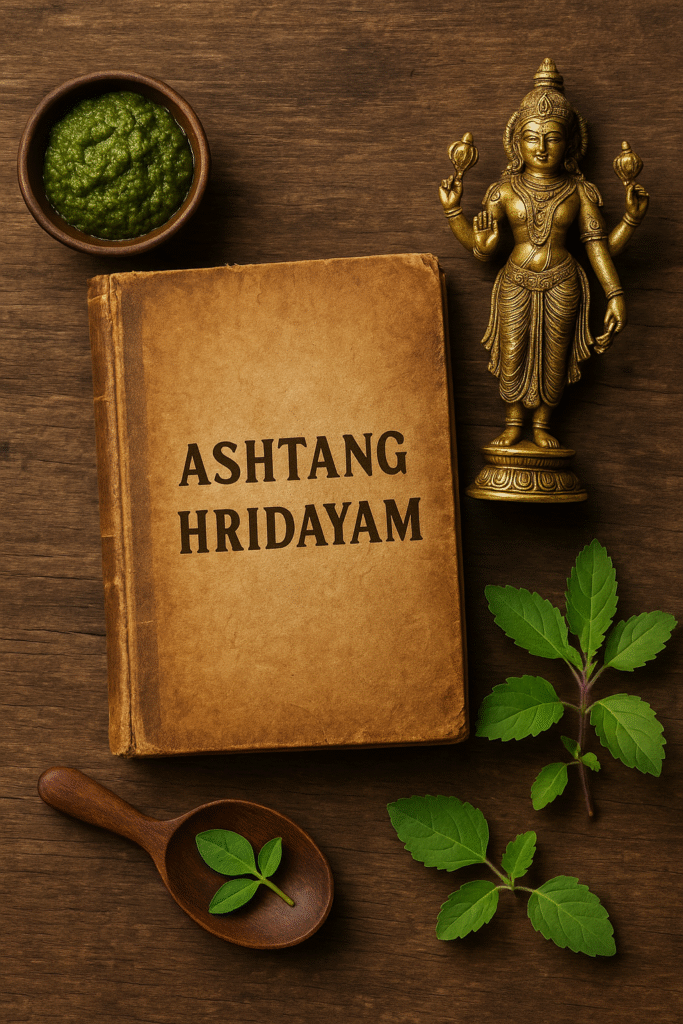
Written around 700 CE by a sage named Vagbhata, this Sanskrit text contains about 7,000 verses. That might sound like a lot of old poetry, but here’s the thing: every single verse is about solving a real health problem that people face today.
Think about your life right now. You probably know someone with arthritis, someone with diabetes, someone with anxiety or digestive problems. You might be dealing with these yourself.
The Ashtang Hridayam addresses all of these. Not with complicated modern medicines or expensive procedures, but with something radical: a system that stops these diseases from ever developing in the first place.
This is the opposite of what modern medicine does. Modern medicine says, “You got sick? Let’s treat it.” Ancient Ayurveda says, “Why did you get sick in the first place? Let’s make sure it never happens again.”
And that simple difference changed everything.
Who Was Vagbhata? The Man Behind the Masterpiece
Let’s talk about the author for a second.
Vagbhata wasn’t a random scholar sitting in a library making stuff up. According to Ayurvedic tradition, he was someone with access to thousands of years of medical knowledge—knowledge that had been tested, refined, and proven effective across generations.
He lived during the 7th century in India, which was a time when Indian doctors were actually famous across the world. People traveled from other countries to learn from Indian physicians because they had the best surgical techniques and understood how to use plants to heal.
Why He Wrote This Book
Here’s the practical reason Vagbhata created the Ashtang Hridayam:
Earlier Ayurvedic texts (especially the Charaka Samhita and Sushruta Samhita) were incredibly detailed and comprehensive. But they were LONG. Like, thousands of verses long. A student would need decades just to memorize everything.
Vagbhata looked at this situation and thought: “What if I take all this knowledge and organize it in a way that doctors can actually use? What if I create something that’s complete but also practical?”
So he distilled 1,000+ years of medical knowledge into 7,000 carefully organized verses. Each verse covers one key concept. Each concept builds on the previous one.
The result? A book that busy practitioners could refer to quickly, that students could actually memorize, and that contained everything needed to keep people healthy.
The Genius Move
Here’s what’s really genius: Vagbhata didn’t try to be original. He was like saying, “I’m not trying to invent new medicine. I’m organizing the best medicine we already have so it actually works for people.”
That’s why the Ashtang Hridayam became THE textbook. For 1,500 years, it’s been:
- What doctors studied in Ayurvedic colleges
- What experienced physicians referred to for tricky cases
- What other scholars wrote commentaries about
- The foundation of modern Ayurvedic practice
The 7000 Verses: What Makes This Book So Special?
Okay, so 7,000 verses sounds intimidating. But understand what that means practically.
Each verse is about one idea. One key principle or practice. So instead of long, rambling explanations, you get:
“Eat warm foods in winter.”
“Massage your body with oil.”
“Sleep when the sun sets.”
Simple. Clear. Actionable.
The Four Big Questions It Answers
If you read the Ashtang Hridayam carefully, every verse is answering one of four questions:
Question 1: What keeps you healthy?
This is prevention. What habits, foods, routines, and practices maintain your good health?
Question 2: What causes disease?
What goes wrong? What mistakes do people make that create illness?
Question 3: How does disease develop?
It’s not random. Disease develops in stages. Understanding the stages is key.
Question 4: How do you fix disease once it develops?
If prevention failed, what do you do? How do you reverse damage?
Notice the order? Prevention comes first. That’s intentional. The book spends way more time on preventing disease than treating it. Because prevention works better.
Why 7000 Is The Right Number
You might think, “Why not 10,000 verses? Why not 5,000?”
The answer is actually practical. 7,000 is calibrated so that:
- It’s comprehensive (covers everything you need to know)
- It’s learnable (a dedicated student can memorize it in 20 years)
- It’s organized (each verse relates logically to surrounding verses)
- It’s practical (no unnecessary fluff)
There’s a reason this number stuck around for 1,500 years—it’s the perfect balance between completeness and usability.
The Eight Limbs: Ayurveda’s Complete Healthcare System
The title “Ashtang” literally means “Eight Limbs.” Think of it like: Ayurveda has eight different branches, and Vagbhata organized his book around these eight branches.
Limb 1: Kayachikitsa (Internal Medicine)
This is about diseases that affect your whole body—your digestion, your energy, your overall health.
Think of it as general medicine. Fevers, weak digestion, chronic tiredness, system-wide diseases. This is the biggest section of the book because most diseases fall into this category.
Limb 2: Balachikitsa (Pediatrics)
Kids are different from adults. They have different problems, different needs, different treatments.
This branch covers baby health, child development, childhood diseases, and how to raise healthy kids.
Limb 3: Graha Chikitsa (Mental/Psychological Disorders)
Mental health. Emotional imbalances. Behavioral problems. Anxiety. Depression.
The ancient Ayurvedic doctors understood something we’re only rediscovering: your mind and body are connected. Mental problems have physical solutions.
Limb 4: Urdhvanga Chikitsa (Head and Neck Diseases)
Diseases of the upper body. Eyes, ears, nose, throat, head problems.
These are treated differently because they’re in a special location. Your eyes need different treatment than your feet do.
Limb 5: Shalya Chikitsa (Surgery)
When you need to cut, stitch, remove something, or perform an intervention.
Ayurveda isn’t against surgery. It just uses it strategically, as a tool when other approaches won’t work.
Limb 6: Vishapaharana Chikitsa (Toxicology)
Poison treatment. What to do if someone is poisoned.
This was especially important historically, but it’s still relevant today (drug overdoses, chemical exposures, etc.).
Limb 7: Rasayana Chikitsa (Rejuvenation)
This is fascinating. It’s about staying young, maintaining vitality, living longer.
Not just avoiding disease, but actually enhancing your energy and youthfulness as you age.
Limb 8: Vajikarana Chikitsa (Reproductive Health and Vitality)
Sexual function, reproductive health, fertility, and sexual vitality.
The ancient doctors understood that sexual health is connected to overall vitality and longevity.
The Three Doshas: Understanding Your Body’s Nature
Now we get to the core idea that makes Ayurveda completely different from modern medicine.
Modern medicine asks: “What is normal? What is abnormal? What’s the disease?”
Ayurveda asks: “What is YOUR normal? What is balanced for YOU? What went out of balance?”
And to answer those questions, Ayurveda uses the tridosha system.
What Are Doshas, Anyway?
The word “dosha” is usually translated as “defect” or “fault,” but that’s misleading.
Better translation: “That which moves” or “that which changes.”
Doshas are three biological principles operating in your body. They’re not made-up concepts. You can observe them working:
- Wind in your body (Vata)
- Fire in your body (Pitta)
- Water/earth in your body (Kapha)
Every function in your body—from digestion to thinking to moving—involves these three principles working together.
The Three Doshas Explained Simply
Vata = Movement
Think of Vata as the wind element. Anything that moves uses Vata:
- Blood flowing
- Food moving through digestive system
- Nerve signals traveling
- Thoughts happening
- Breathing
When Vata is balanced: You move smoothly, think clearly, sleep well, and feel creative.
When Vata is out of balance: You feel anxious, your digestion is irregular, you can’t sleep, your joints hurt.
Pitta = Transformation
Pitta is the fire element. Anything that transforms uses Pitta:
- Food being digested
- Metabolism happening
- Body temperature
- Vision
- Thinking and decision-making
When Pitta is balanced: You digest well, feel confident, make good decisions, and have clear thinking.
When Pitta is out of balance: You get heartburn, become irritable, have skin problems, and your digestion goes haywire.
Kapha = Structure
Kapha is the water/earth element. It creates stability and structure:
- Your body structure (bones, muscle, fat)
- Lubrication (joints, digestive tract, sinuses)
- Immunity
- Emotional stability
When Kapha is balanced: Your body is strong, your joints don’t hurt, you’re emotionally stable, and your immunity is strong.
When Kapha is out of balance: You gain weight, feel sluggish, get congested, and feel depressed.
Vata: The Energy of Movement
Let’s get specific about Vata because understanding this completely changes how you think about your body.
What Vata Actually Does
Your blood needs to move through your body. That’s Vata at work.
Your food needs to move through your digestive system. That’s Vata.
Your breath needs to move in and out. That’s Vata.
Your thoughts need to move through your mind. That’s Vata.
Nerve signals need to travel from your brain to your body. That’s Vata.
When your Vata is working properly: everything flows. Movement is smooth. Your circulation is good. Your digestion is regular. Your thinking is clear.
Where Vata Hangs Out
Vata’s main home is your colon. It also lives in your bones, your skin, and your nervous system.
This is why you see:
- Dry skin (Vata in skin)
- Joint pain (Vata in bones)
- Nerve problems (Vata in nervous system)
- Constipation (Vata in colon)
The Vata Life Stage
According to Ayurveda, from age 50 onwards, Vata naturally increases in your body. This explains why:
- Joints get less flexible
- Circulation sometimes decreases
- Memory can become less sharp
- Skin dries out
This isn’t random aging. It’s increased Vata. And if you understand Vata, you can manage it.
When Vata Goes Out of Balance
Too much Vata (Vata Aggravation) causes these problems:
Physical signs:
- Joint and bone pain
- Constipation or irregular bowel movements
- Poor circulation
- Dry skin and hair
- Tremors or shakiness
- Weak digestion
- Insomnia or disturbed sleep
Mental signs:
- Anxiety and worry
- Scattered, racing thoughts
- Restlessness
- Fear and insecurity
- Difficulty making decisions
- Talking too much
- Can’t stay focused
How to Balance Vata
The principle is simple: balance movement with stability.
Through food:
- Eat warm, cooked foods (not raw or cold)
- Add healthy oils and ghee
- Include grains like wheat and rice
- Use warming spices
- Avoid cold smoothies, salads, raw foods
Through routine:
- Go to bed early (before 10 PM)
- Wake at consistent time
- Get oil massage regularly
- Eat at consistent times
- Do gentle, consistent exercise
- Avoid lots of traveling
Through lifestyle:
- Create routine and stability
- Avoid excessive activity
- Spend time in warm environments
- Get adequate rest
- Meditate
- Do calming practices
Pitta: The Fire That Digests Everything
Pitta is your internal fire. And like any fire, it can be useful when managed, or dangerous when out of control.
What Pitta Actually Does
Your stomach acid? That’s Pitta.
Your metabolism? That’s Pitta turning food into fuel.
Your body temperature? That’s Pitta.
Your ability to see? The light in your eyes? That’s Pitta.
Your courage and confidence? Your ability to make decisions? That’s Pitta.
When Pitta is balanced: You digest everything easily. You feel confident. You make good decisions. You have strong vision and clear thinking.
Where Pitta Lives
Pitta’s home is your small intestine. It also hangs out in your stomach, liver, spleen, eyes, and skin.
This is why you see:
- Acid reflux (Pitta in stomach)
- Skin rashes and inflammation (Pitta in skin)
- Eye strain (Pitta in eyes)
- Liver problems (Pitta in liver)
The Pitta Life Stage
From ages 14-50, Pitta naturally increases. This is when:
- Your metabolism is strongest
- You’re most ambitious
- You’re most competitive
- You have the most drive
This is the productive years of life. But it’s also the years where Pitta imbalance causes the most problems.
When Pitta Goes Out of Balance
Too much Pitta (Pitta Aggravation) causes:
Physical signs:
- Heartburn and acid reflux
- Ulcers
- Skin rashes and inflammation
- Hair loss
- Excessive sweating
- Diarrhea
- High fever
- Liver problems
Mental signs:
- Anger and irritability
- Perfectionism
- Excessive ambition
- Jealousy
- Aggressive behavior
- Racing mind at night
- Burnout
How to Balance Pitta
The principle: cool the fire without extinguishing it.
Through food:
- Eat cooling foods like cucumber, coconut, lettuce
- Reduce spicy foods
- Avoid heavy, oily, fried foods
- Include bitter and sweet tastes
- Don’t eat too much heat-generating food
Through routine:
- Massage with coconut oil (cooling)
- Cool showers
- Adequate rest (Pitta people overwork)
- Time away from hot sun
- Regular breaks from intense work
Through lifestyle:
- Avoid excessive competition
- Practice compassion
- Spend time in cool environments
- Do calming, not stimulating, activities
- Meditation with cooling focus
Kapha: The Glue That Holds You Together
Kapha is often misunderstood. People think of Kapha as something negative (sluggish, heavy, slow). But actually, Kapha is what makes you resilient and strong.
What Kapha Actually Does
Your bones? That’s Kapha structure.
Your joints working smoothly? That’s Kapha lubrication.
Your muscles and tissues? That’s Kapha.
Your immunity? That’s Kapha protecting you.
Your emotional stability and patience? That’s Kapha.
When Kapha is balanced: You’re strong. Your joints work smoothly. You don’t get sick easily. You’re calm and patient.
Where Kapha Lives
Kapha’s home is your stomach and lungs. It also hangs out in your joints, lymph, and fat tissue.
This is why you see:
- Congestion (Kapha in lungs)
- Heavy feeling (Kapha in fat tissue)
- Joint swelling (Kapha in joints)
- Sluggish lymph (Kapha in lymph)
The Kapha Life Stage
From birth to age 14, Kapha naturally increases. This is why:
- Kids have strong immune systems
- They’re resilient and flexible
- They recover quickly from illness
- They build body and strength
When Kapha Goes Out of Balance
Too much Kapha (Kapha Aggravation) causes:
Physical signs:
- Weight gain
- Water retention and bloating
- Sluggish digestion
- Congestion and cough
- Stuffy sinuses
- Heavy, sluggish feeling
- Excessive mucus
- Lethargy and fatigue
Mental signs:
- Depression and sadness
- Lethargy and laziness
- Attachment and possessiveness
- Resistance to change
- Heaviness and dullness
- Excessive sleeping
- Lack of motivation
How to Balance Kapha
The principle: stimulate and activate.
Through food:
- Eat warm, dry, light foods
- Include spicy foods
- Use warming spices like ginger and black pepper
- Smaller, fewer meals
- Avoid heavy, oily, cold foods
- Avoid excess sweets
Through routine:
- Wake early (before sunrise)
- Dry massage or warming oil
- Regular, vigorous exercise (most important)
- Shorter sleep
- Stimulating activities
Through lifestyle:
- Exercise regularly (essential for Kapha types)
- Seek variety and change
- Stimulating activities and hobbies
- Social engagement
- Avoid excessive sleep
The Big Shift: Why Prevention Beats Treatment Every Time
Here’s the core idea that changes everything.
Modern medicine waits for you to get sick. Then it treats you.
Ayurveda stops you from getting sick in the first place.
The Math Is Simple
Let me explain why prevention always wins:
Imagine your doshas are slightly out of balance. Nothing wrong. You feel fine. But the imbalance is there.
Stage 1: Dosha Imbalance (No Symptoms)
At this stage, what does it take to fix it?
- Change your diet slightly
- Adjust your routine
- That’s it. Takes a few days.
Stage 2: Dosha Spreading (Vague Symptoms)
At this stage, the imbalance is spreading. You might feel slightly off, but nothing serious.
What does it take to fix?
- More deliberate dietary changes
- Stronger routine adjustments
- Some basic herbal support
- Takes weeks to a few months
Stage 3: Dosha Affecting Tissues (Clear Symptoms)
Now symptoms are obvious. Tests show abnormalities. You go to a doctor.
What does it take to fix?
- Specific herbal treatments
- Strict dietary protocols
- Lifestyle changes
- Takes months to a year
Stage 4: Tissue Damage (Established Disease)
Now you have actual disease. Organs are affected.
What does it take to fix?
- Major interventions
- Long-term treatment
- Multiple medicines
- Takes years, maybe impossible to reverse fully
Stage 5: Multiple Organs Affected
Complications have developed. Multiple systems failing.
What does it take to fix?
- Emergency interventions
- Possible surgery
- Hospitalization
- Significant suffering
- Often not fully reversible
The Key Insight
The earlier you intervene, the less effort it takes.
Intervene in Stage 1 = 10% effort needed.
Intervene in Stage 5 = 1000% effort needed (and might not even work).
Modern medicine has no way to detect Stage 1 or Stage 2. By the time modern medicine sees you, you’re in Stage 3 or later.
Ayurveda teaches you to recognize Stage 1 and Stage 2 yourself, before any disease develops.
Prevention Is Permanent
Here’s another thing: prevention creates permanent health. Once you’re balanced, you stay balanced (as long as you maintain good practices).
Treatment often creates dependency. You take medicine to manage symptoms. If you stop the medicine, symptoms return.
Prevention addresses root causes. Address the root cause, and the disease disappears permanently.
How Disease Actually Develops (And How to Stop It)
Okay, so now let’s look at this from a practical perspective.
Vagbhata describes six specific stages of how disease develops. Understanding these stages is literally the key to preventing disease.
Stage 1: Dosha Accumulation (Sanchaya)
What happens: One dosha starts accumulating in its home location.
Example: If you keep eating cold foods and moving erratically, Vata accumulates in your colon.
Symptoms: NONE
This is the key point. There are NO symptoms. You feel completely normal. You have no idea anything is wrong.
Can it be fixed?
- Yes, easily
- Simple lifestyle changes stop it
- Takes a few days to a week
How does modern medicine help?
- No way to detect it
- Doctors can’t see it on tests
- No treatment available because doctors don’t even know it exists
Stage 2: Dosha Aggravation (Prakopa)
What happens: The accumulated dosha starts to “heat up” or aggravate.
It’s still in its original location, but it’s getting stronger, more active.
Symptoms: Vague
Maybe you feel slightly off. Your digestion isn’t quite right. You’re not sleeping great. But nothing serious.
Can it be fixed?
- Yes, still fairly easily
- More deliberate dietary changes needed
- Stronger lifestyle adjustments
- Takes a few weeks to 2-3 months
How does modern medicine help?
- Tests still show nothing abnormal
- Doctors say “You’re fine”
- No treatment available
Stage 3: Dosha Spreading (Prasara)
What happens: The aggravated dosha spreads to other parts of the body.
It leaves its home location and starts traveling.
Symptoms: Starting to Show
Now you have real symptoms. You might have:
- Persistent digestive issues
- Regular joint pain
- Sleep problems
- Consistent anxiety
Can it be fixed?
- Yes, but now it takes real effort
- Specific herbal treatments needed
- Significant dietary changes
- Lifestyle overhaul required
- Takes 3-6 months
How does modern medicine help?
- Now tests are starting to show abnormalities
- Doctors might finally give you a diagnosis
- Treatment options available, but usually suppression not cure
Stage 4: Tissue Lodgment (Sthana Samshraya)
What happens: The dosha lodges in weak tissue.
It’s settling into a particular tissue or organ system and causing damage.
Symptoms: Disease
Now you have clear disease:
- Ulcers (if Pitta in stomach tissue)
- Arthritis (if Vata in joint tissue)
- Congestion (if Kapha in lung tissue)
Can it be fixed?
- Yes, but requires serious intervention
- Long-term herbal treatment
- Strict dietary protocols
- Major lifestyle changes
- Takes 6-12 months or longer
How does modern medicine help?
- Tests clearly show disease
- Diagnosis is made
- Treatment available
- Usually symptom suppression, not cure
Stage 5: Disease Manifestation (Vyakti)
What happens: The disease is now firmly established.
Multiple tissues affected. Complications developing.
Symptoms: Chronic Disease
- Uncontrolled diabetes
- High cholesterol
- Multiple organ involvement
- Quality of life significantly impaired
Can it be fixed?
- Difficult and time-consuming
- Requires massive lifestyle changes
- Long-term intensive treatment
- Takes years (if reversible at all)
How does modern medicine help?
- Treatment available but often unsatisfying
- Usually lifelong medication
- Risk of complications
- Side effects are common
Stage 6: Complications (Bheda)
What happens: The disease has caused multiple complications.
Secondary diseases have developed. The situation is complex.
Symptoms: Crisis
- Organ failure risk
- Multiple interrelated problems
- Medical emergencies
- Often life-threatening
Can it be fixed?
- Maybe with emergency intervention
- Often irreversible
- Quality of life severely diminished
- Prognosis uncertain
The Lesson
The lesson is obvious: intervene as early as possible.
Stage 1 prevention = easy, fast, permanent.
Stage 6 crisis management = difficult, slow, often ineffective.
And here’s the thing: You can learn to recognize Stage 1 and Stage 2 yourself.
You don’t need doctors. You don’t need expensive tests. You just need to understand what balanced and imbalanced doshas feel like in your body.
That’s what following Ayurvedic principles teaches you.
Why Modern Medicine Missed Prevention
This is worth understanding because it explains why we’re in a healthcare crisis.
Modern medicine developed by studying acute infectious diseases.
Acute infectious diseases work differently:
- Someone gets infected with bacteria or virus
- They get sick suddenly
- Without treatment, they die or recover slowly
- With medicine (antibiotics, antivirals), they recover quickly
- Treatment works dramatically
This success created a pattern: Treat acute diseases with medicines.
But chronic diseases don’t work this way. There’s no bacteria to kill. There’s no virus to fight.
Chronic diseases develop because of lifestyle choices. They develop over years. They develop in stages.
So the medicine-based approach doesn’t work well.
But modern medicine kept trying to apply the acute disease model to chronic diseases:
“You have diabetes? Take medicine.” “You have arthritis? Take medicine.” “You have anxiety? Take medicine.”
None of this addresses why the person developed these conditions in the first place.
So the disease persists. The patient stays on medicine forever.
The Business Problem
There’s also an economic reason prevention was abandoned.
Prevention doesn’t make money.
If you sell someone a routine that keeps them healthy for life, they buy it once.
If you sell someone a medicine for their disease, they buy it every month for decades.
Which is more profitable?
Modern medicine is a business. Businesses need profit. Prevention isn’t profitable.
So even though prevention is better, treatment is what gets developed, funded, and promoted.
What Ayurveda Offers
Ayurveda never abandoned prevention because it was never a business.
It was a knowledge system designed to keep people healthy.
For 1,500 years, it remained focused on: “How do we prevent disease?”
And the answer is what Vagbhata wrote down: Understand your constitution, follow the right routine, eat the right foods, and maintain balance.
The Daily Routine That Prevents Disease
Here’s where theory becomes practice.
The Ashtang Hridayam devotes thousands of verses to daily routine. Why? Because routine prevents disease more effectively than anything else.
Why Routine Works
Your body likes consistency. Consistency creates balance.
When you do things at different times, your doshas get confused. When you do things consistently, your doshas stay balanced.
It’s like your body’s internal clock. When your clock is set properly (consistent routine), everything works. When your clock is all over the place, nothing works.
The Ideal Daily Schedule
This is not hard rules. This is guidance based on how your body works.
5:00 AM – Wake Up
Why so early? Because this is when:
- Body is naturally most alert
- Digestion is good
- Mind is most clear
- Hormones are optimal
Early waking is one of the most powerful preventive practices.
5:30 AM – Bathroom and Cleaning
- Use bathroom
- Scrape your tongue (removes natural coating called ama)
- Brush teeth
- Wash face
6:00 AM – Oil Massage
This is powerful preventive medicine.
Oil massage:
- Lubricates joints
- Stimulates circulation
- Moves lymph
- Calms nervous system
- Reduces Vata imbalance
Do full body massage with oil appropriate to your type:
- Vata types: sesame or warm oil
- Pitta types: coconut oil
- Kapha types: warm, light oil
Spend 15-20 minutes. Let oil absorb.
6:30 AM – Bath
Warm shower or bath after oil massage.
The warmth helps oil absorb deeper into tissues.
7:00 AM – Exercise
Do movement appropriate to your constitution:
- Vata: gentle yoga, slow walk
- Pitta: moderate exercise, not overheating
- Kapha: vigorous exercise, regular activity
20-30 minutes. Not to exhaustion.
8:00 AM – Breakfast
Eat when you’re hungry. Usually this time.
Eat full, satisfying meal. This is when digestion is strong.
12:00-1:00 PM – Lunch
Main meal of the day. Biggest meal.
Your digestive fire (Pitta) is strongest now.
Eat warm, cooked foods. Substantial meal.
1:00-2:00 PM – Rest
After lunch, rest for 20-40 minutes.
Lie on right side (this aids digestion).
Light nap is fine.
3:00-5:00 PM – Work/Activity
Normal activity and work hours.
If hungry, light snack (fruit, tea).
6:00 PM – Dinner
Lighter than lunch. Maybe 1/3 less food.
Warm, easy-to-digest foods.
Completed before sunset.
7:00 PM – Walking
Walk at least 500 steps after dinner.
Gentle, peaceful walk. Aids digestion. Calms mind.
Don’t sit immediately after eating.
8:00-9:00 PM – Evening Wind Down
Calming activities.
Warm milk with spices.
Prepare for sleep.
Reduce screens and stimulation.
9:30-10:00 PM – Sleep
Sleep by 10 PM.
This is optimal because:
- Hormones align properly
- Deep sleep happens early
- Digestion completes
- Body regenerates
Eating for YOUR Body Type, Not Everyone’s
This is where Ayurveda becomes personally practical.
Modern nutrition says: “Eat this diet. It’s good for everyone.”
Ayurveda says: “You have a unique constitution. Eat for YOUR constitution.”
Vata-Type People Should Eat
Best foods:
- Warm, cooked foods
- Healthy oils and ghee
- Whole grains (rice, wheat)
- Root vegetables (carrots, beets)
- Warming spices (ginger, cumin, cinnamon)
- Warm milk with spices
- Chicken and fish in moderation
- Dates, sesame seeds
Avoid:
- Cold foods and drinks
- Raw salads and smoothies
- Too much air (lots of vegetables)
- Caffeine
- Excessive sweets
- Very dry foods
Why: Vata people are naturally dry, light, and cold. They need warming, nourishing, oily foods to stay balanced.
Pitta-Type People Should Eat
Best foods:
- Cooling foods
- Coconut, cucumber, lettuce
- Sweet fruits (melons, dates)
- Cooling spices (coriander, fennel)
- Ghee in moderation
- Cooling herbs
- Olive oil
- Vegetables (not too spicy preparation)
Avoid:
- Spicy foods
- Too much oil/fat
- Very heating foods
- Excessive salt
- Fermented foods
- Alcohol
- Overripe foods
Why: Pitta people are naturally warm and intense. They need cooling, light foods to stay balanced.
Kapha-Type People Should Eat
Best foods:
- Warm, dry, light foods
- Spicy foods
- Bitter and pungent tastes
- Warming spices (black pepper, ginger, cayenne)
- Light oils
- Small frequent meals
- Leafy greens (slightly cooked)
- Beans and legumes
- Stimulating foods
Avoid:
- Heavy, oily foods
- Cold foods
- Dairy (heavy)
- Too many sweets
- Fried foods
- Excessive rest/napping
- Excess salt
Why: Kapha people are naturally heavy and slow. They need stimulating, light, warm foods to stay balanced.
The Point
When you eat for YOUR type:
- Your digestion works better
- Your energy stabilizes
- You lose or gain weight appropriately
- Your mood improves
- Disease prevention happens naturally
When you eat against your type:
- Problems develop
- Energy becomes unstable
- Weight becomes hard to manage
- Mood suffers
- Disease risk increases
Seasonal Eating: Working WITH Nature, Not Against It
Here’s something most people never think about: your body needs different things in different seasons.
Modern life ignores this. We eat the same way year-round. We live in climate-controlled buildings. We ignore natural cycles.
But your body KNOWS the seasons. And it needs different support in different seasons.
Summer (June-August) – Pitta Season
In summer, heat increases naturally. Your body is heating up.
What this means:
- Digestion can become too strong (burns up tissues)
- You can become irritable and angry
- Sleep can become light
- Skin issues can appear
How to eat:
- Lighter foods
- Cooling foods (cucumber, coconut, watermelon)
- Less oil, less salt
- Cooling herbs (mint, coriander)
- More salads and raw foods (now okay)
- Sweet fruits
- Less spice
Routine adjustments:
- More rest
- Cooler baths
- Less intense exercise
- Spend time in shade
Why: You’re adding cooling to counterbalance summer heat.
Fall (September-November) – Vata Season
In fall, things become dry. Wind increases. Movement increases.
What this means:
- Skin becomes dry
- Joints can become stiff
- Digestion becomes irregular
- Anxiety can increase
How to eat:
- Warming foods
- Cooked vegetables
- Healthy fats and oils
- Warming spices (ginger, cumin, cinnamon)
- More substantial meals
- Warm milk
- Sesame oil
Routine adjustments:
- Oil massage increases
- Earlier bedtime
- More grounding practices
- Consistent routine crucial
- Less traveling
Why: You’re adding warmth and stability to counterbalance fall dryness and movement.
Winter (December-February) – Kapha Season
In winter, things become heavier and damper. Cold increases. Energy seems to slow.
What this means:
- Digestion can become sluggish
- Weight gain can happen
- Energy can decrease
- Lethargy can set in
How to eat:
- Light, warm foods
- Spicy foods
- Warming spices (black pepper, ginger)
- Stimulating foods
- Smaller portions
- Less heavy foods
- More herbal teas with spices
Routine adjustments:
- Early waking (don’t oversleep)
- More exercise
- Less rest
- Stimulating activities
- Warmer environments
Why: You’re adding stimulation and lightness to counterbalance winter heaviness and cold.
Spring (March-May) – Late Kapha/Early Pitta
Spring is transition time. You’re moving from winter heaviness to summer heat.
What this means:
- Allergies often appear
- Congestion can happen
- You’re transitioning from slow to active
How to eat:
- Gradually transition to lighter foods
- Begin introducing cooling foods
- Bitter and pungent tastes
- Gradually reduce heavy oils
- Light cleansing
Routine adjustments:
- Gradually shift from winter to summer routine
- Begin increasing exercise gradually
- Begin increasing rest gradually
- Transition slowly, don’t jump
Why: You’re gradually adjusting your body to accommodate seasonal change.
The Genius
This is genius because you’re not fighting nature. You’re working WITH it.
In summer, you don’t try to eat heavy winter foods. In winter, you don’t try to eat light summer foods.
You adapt. Your body stays balanced. Disease prevention happens naturally.
Real Questions People Ask About Ayurveda
Q: Doesn’t Ayurveda Contradict Modern Science?
A: Not really. They’re answering different questions.
Modern science asks: “What chemical compound causes this? What mechanism is happening?”
Ayurveda asks: “What is the pattern? How do I restore balance?”
Modern medicine is great for: understanding mechanisms, treating acute disease, surgery, emergency care.
Ayurveda is great for: disease prevention, chronic disease management, personalized health.
They can work together. Use modern medicine for acute problems. Use Ayurveda for prevention and chronic management.
Q: Can I Take My Current Medications and Do Ayurveda?
A: Yes, absolutely. Keep taking prescribed medications.
As your health improves through Ayurvedic practices, work with your doctor to gradually reduce medications (never stop abruptly).
Many people find that as they implement daily routine, proper diet, and lifestyle changes, their medication needs decrease naturally.
Q: I’m Not Indian. Can Ayurveda Still Help Me?
A: Completely. The tridosha principles aren’t cultural. They’re biological.
Every human has Vata, Pitta, and Kapha. Every human needs seasonal adjustments. Every human benefits from consistent routine.
Ayurveda is universal because the body is universal.
Q: What If I Already Have a Chronic Disease?
A: Most chronic diseases can be significantly improved or reversed by addressing root causes through diet, routine, and lifestyle.
The timeline depends on:
- How long you’ve had the disease
- How severe it is
- How consistently you implement changes
- Your individual constitution
Typically: 3-6 months shows significant improvement.
Q: What About My Genetics? Aren’t Some Diseases Inherited?
A: Yes, your Prakriti (constitution) is partly inherited. But that’s not destiny.
Your genetics create predisposition, not inevitability.
Someone predisposed to diabetes won’t develop it if they:
- Eat properly for their constitution
- Follow consistent routine
- Maintain balance
Someone not predisposed CAN develop it if they:
- Eat wrong foods
- Have chaotic routine
- Ignore balance
Lifestyle is often more powerful than genetics.
Q: How Long Before I See Results?
A: Most people notice within 2-4 weeks:
- Better energy
- Better digestion
- Better sleep
- Better mood
For chronic diseases:
- 3-6 months: noticeable improvement
- 6-12 months: significant reversal possible
- 1+ years: deep healing happens
The earlier you start, the better the results.
Q: Is Fasting Ayurvedic? Isn’t That Extreme?
A: Fasting is recommended in Ayurveda, but strategically, not excessively.
Vata types: Fast less frequently, break fast gently
Pitta types: Moderate fasting is balancing
Kapha types: Regular fasting is very beneficial
Even 12-16 hour overnight fasts (basically skipping breakfast) are considered fasting and have benefits.
The key: fasting must match your constitution. Consult someone qualified if you’re not sure.
Q: What If I Have Weak Digestion?
A: Weak digestion is usually Vata or Pitta imbalance.
The solution is foods and practices that STRENGTHEN digestion, not foods that are “easy to digest.”
For weak digestion:
- Warm, cooked foods
- Digestive spices (ginger, cumin, fennel)
- Consistent meal times
- Adequate digestive fire
- Rest after eating
Ironically, very light foods sometimes make digestion worse because they don’t stimulate enough digestive power.
How Your Health Changes Month by Month
This is practical because it shows you what to expect.
Month 1: Waking Up
What happens:
- Your body adjusts to new routine
- Digestion starts improving
- Energy becomes more stable
- Sleep becomes more regular
- Some detoxification might happen (temporary fatigue, minor symptoms)
Challenges:
- Breaking old habits is hard
- Body might feel unusual during transition
- Some people feel worse before better (this is normal)
Your experience:
- “I’m sleeping better”
- “My digestion is improving”
- “I feel more alert”
- “But I’m tired from the changes”
What to do:
- Stick with it, don’t quit
- Be patient with your body
- The adjustment period is worth it
Months 2-3: Real Changes
What happens:
- Energy noticeably increases
- Chronic pain reduces
- Skin looks better
- Mental clarity improves
- Emotional stability improves
- Sleep becomes consistent
Improvements:
- Digestive issues often resolve
- Joint pain decreases
- Anxiety reduces
- Most people feel significantly better
Your experience:
- “I have so much more energy”
- “My joints don’t hurt anymore”
- “I’m sleeping deeply”
- “My mood is so much better”
- “People are asking what I’m doing different”
What to do:
- Continue the practices
- Notice what’s working
- Make small adjustments based on results
- Start being more consistent (the habit is forming)
Months 4-6: Disease Reversal
What happens:
- Chronic health conditions begin reversing
- Energy stabilizes at high level
- Mental clarity becomes normal
- Emotional resilience increases
- Your body seems to “reset”
- If on medications, needs might decrease
Major improvements:
- Blood pressure often normalizes
- Blood sugar often improves
- Arthritis often significantly improves
- Most digestive issues resolve
- Anxiety often resolves
Your experience:
- “I feel completely different”
- “The doctor is surprised by my lab results”
- “I have more energy than I did 20 years ago”
- “This is actually working”
What to do:
- Keep going with practices
- Work with your doctor if medication reduction is needed
- Start noticing deeper benefits (mood, clarity, intuition)
Months 7-12: New Normal
What happens:
- Chronic diseases that seemed permanent start resolving
- Energy becomes stable and strong
- Health becomes truly your baseline
- Prevention is happening automatically
- Life satisfaction increases
- You’re no longer “managing disease”—you’re optimizing health
Sustained benefits:
- Most reversible diseases show significant improvement or resolution
- Hospitalization and doctor visits decrease
- Medication needs continue decreasing
- Quality of life improves dramatically
- Prevention happens automatically
Your experience:
- “This is my new life”
- “I don’t remember the last time I was sick”
- “I have energy I haven’t had in years”
- “I’m not sick anymore”
What to do:
- Maintain your practices (now they’re automatic)
- Enjoy your health
- Help others understand what’s possible
Year 2 and Beyond: Optimal Health
What happens:
- Disease becomes rare
- Health becomes your baseline
- Aging process seems to slow
- Longevity markers improve
- Life becomes more balanced and peaceful
This is what happens when prevention actually works.
Conclusion: Why This Matters Right Now
Let’s zoom out for a second.
Right now, in India and across the world, we’re facing a healthcare crisis.
85% of India is diseased. Healthcare systems are overwhelmed. Medicines aren’t solving problems. Chronic disease is exploding.
And here we have an ancient text that literally contains the solution.
Not a fancy new drug. Not expensive surgery. Not a complicated intervention.
A simple, systematic approach to health that:
- Prevents disease
- Costs almost nothing
- Requires no infrastructure
- Works for everyone
- Has been proven for 1,500 years
The Only Question
The only question is: will people actually use it?
Because prevention requires:
- Personal responsibility
- Consistent effort
- Understanding your body
- Making daily choices aligned with health
It can’t be delegated to doctors. You have to do it yourself.
But here’s the thing: when you do it, it works.
You stop getting sick. Your energy becomes stable. Your mind becomes clear. Your life improves.
And then you realize: this is what health actually feels like.
The Invitation
The Ashtang Hridayam is an invitation to that realization.
An invitation to stop waiting for disease.
An invitation to understand your unique body and honor it.
An invitation to prevent problems before they start.
An invitation to experience genuine health—not just “not being sick,” but actual wellness, energy, clarity, and vitality.
Start Today
You don’t need permission. You don’t need a doctor’s approval.
Just start:
This week:
- Figure out if you’re Vata, Pitta, or Kapha dominant
- Notice your current routine
- See what’s working and what isn’t
Next week:
- Add one practice (oil massage, or consistent wake time, or constitutional foods)
- Notice how you feel
- Build from there
This month:
- Establish a basic daily routine
- Adjust your diet for your constitution
- Make seasonal adjustments
- Notice the changes
Small changes, consistently applied, create massive transformation.
That’s what Vagbhata understood. That’s what 1,500 years of Ayurvedic practice has proven.
Your health is waiting to transform. All you have to do is start.
Key Takeaways
- Ashtang Hridayam contains 7,000 practical verses addressing real health problems that exist today
- Vagbhata distilled 1,000+ years of medical knowledge into a system that’s complete but practical
- The tridosha system (Vata, Pitta, Kapha) represents three biological principles that govern all body functions
- Balance of YOUR unique doshas equals health; imbalance equals disease
- Prevention works because it stops disease in early stages before major damage happens
- Disease develops in six stages, with Stage 1 being easiest to stop
- Modern medicine has no way to detect early stages, so it waits until disease is established
- Your constitution (Prakriti) determines what keeps you healthy—different people need different foods and routines
- Consistent daily routine prevents 90% of preventable diseases
- Seasonal adjustments ensure your body stays balanced throughout the year
- Following these principles, most people see results within 2-4 weeks and significant health transformation within 3-6 months
- You don’t need doctors or expensive treatments—you need consistent personal practice
Next Steps
- Identify your dosha type – Take time this week to understand if you’re Vata, Pitta, or Kapha dominant
- Start one practice – Choose one thing from this article and do it for a week
- Track what changes – Notice your energy, digestion, sleep, mood
- Build slowly – Add another practice the next week
- Be consistent – Consistency matters more than perfection
- Share what works – When you experience benefits, others will want to know
The wisdom is 1,500 years old. The invitation is right now.
Your health transformation starts with a single choice to honor your body’s nature. Make that choice today.
This article is based on Vagbhata’s Ashtang Hridayam and represents traditional Ayurvedic knowledge. While these principles have proven effective for millennia, results vary based on individual constitution, current health status, and consistency of practice. For serious health conditions, work with qualified Ayurvedic practitioners and appropriate medical professionals.