
🪷 Festivals
Buddha Purnima Story and Significance: Birth, Awakening, and Compassion
Last updated: September 26, 2026
Buddha Purnima remembers the life and awakening of Gautama Buddha and invites reflection on suffering, compassion, attention, and freedom.
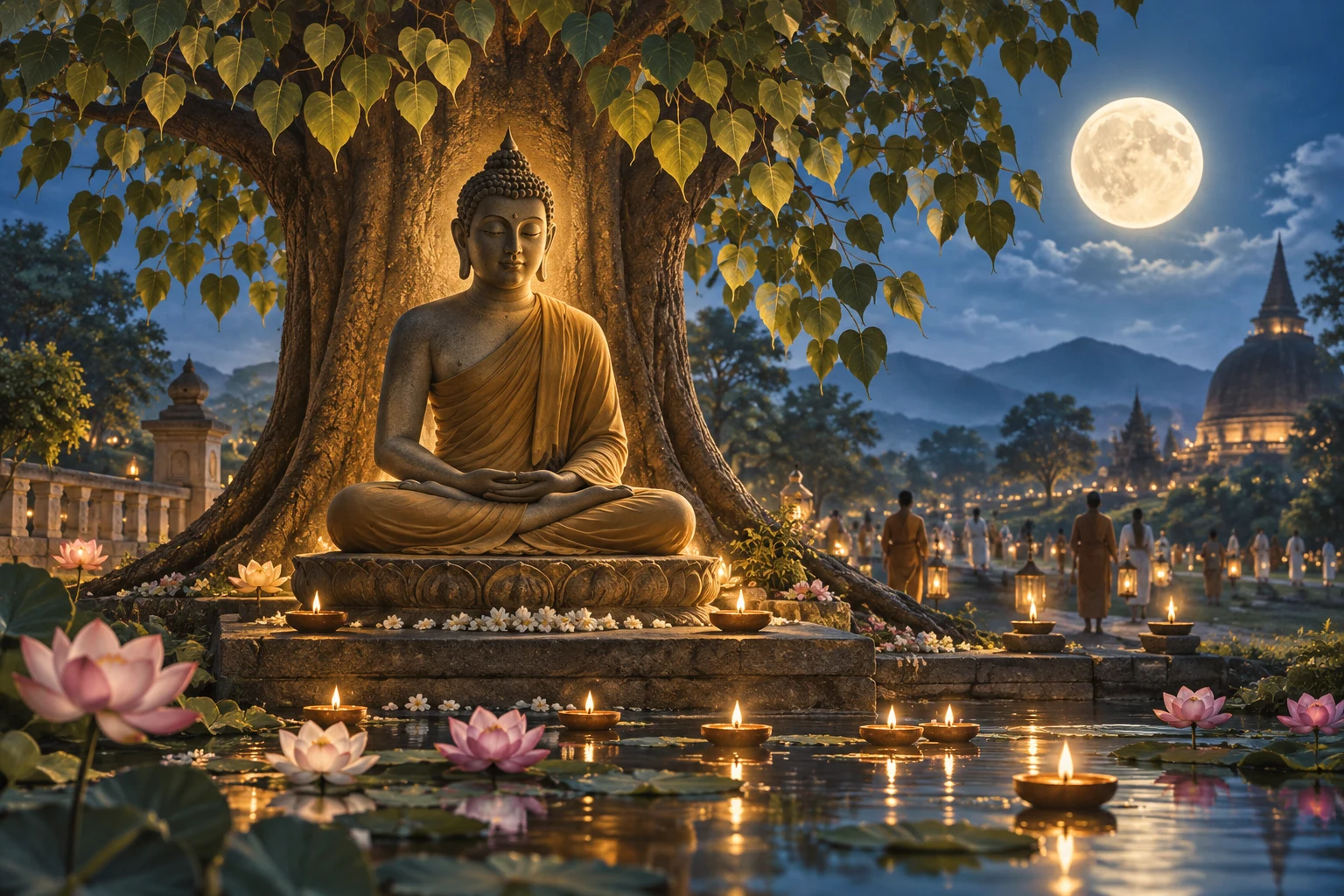
Buddha Purnima, also called Buddha Jayanti or Vesak in many communities, is the most important annual Buddhist observance across much of Asia. It falls on the full moon associated with the month of Vaishakha, usually in April or May. Buddhist communities commonly remember three events in the Buddha’s life on this day: his birth, his awakening, and his passing into Mahaparinirvana. Calendars and customs differ, so a local monastery is the best guide for the date and form of observance in your tradition.
From Siddhartha to the Buddha
Traditional biographies say that Siddhartha Gautama was born at Lumbini, in present-day Nepal, and grew up in a privileged household. Encounters with ageing, illness, death, and a wandering seeker confronted him with the insecurity of ordinary life. He eventually left home to search for freedom from suffering.
Siddhartha first studied with respected teachers and then practised severe asceticism. Finding that self-denial had not brought liberation, he accepted nourishment and adopted a middle way between luxury and self-mortification. This is an important part of the Buddha Purnima story: sincere practice requires discipline, but wisdom does not grow from needlessly harming the body.
Awakening beneath the Bodhi tree
At Bodh Gaya, Siddhartha sat in meditation beneath the tree later known as the Bodhi tree. Buddhist accounts describe a night of deep insight in which he understood suffering, its causes, its cessation, and the path of practice leading toward that cessation. He was thereafter known as the Buddha, “the awakened one.”
He taught for decades, beginning with the first sermon at Sarnath. His teachings placed ethical conduct, meditation, and wisdom within a practical path. This background helps explain why Buddha Purnima is both commemorative and active: devotees honour a life, but they also renew the practices that life represents.
What the three events mean
The birth reminds practitioners that awakening is a human possibility. The enlightenment at Bodh Gaya represents freedom through clear seeing rather than blind reaction. Mahaparinirvana, remembered in connection with Kushinagar, directs attention to impermanence—even the Buddha’s physical life came to an end.
Not every Buddhist school narrates or dates these events in exactly the same way. It is more accurate to speak of shared commemorative tradition than to turn devotional biographies into modern documentary history.
How Buddha Purnima is observed
Common practices include visiting a monastery or stupa, listening to teachings, meditating, chanting, and offering lamps, incense, or flowers. Lay practitioners may undertake ethical precepts, eat simple food, give alms, donate to charitable causes, or assist vulnerable people and animals. Flowers serve as a particularly clear teaching: their beauty is real, but it does not last.
Public celebration should remain gentle and respectful. Ask before photographing monks, ceremonies, or worshippers. Dress appropriately for a sacred site, keep your phone quiet, and follow the host community’s instructions. Releasing captive animals can cause ecological harm and support harmful capture practices; a donation to responsible animal care is a safer expression of compassion.
A simple practice at home
Set aside twenty minutes in a clean, quiet place. Begin with three slow breaths and recall an intention such as, “May my actions reduce harm.” Read a short teaching, then sit in silence for ten minutes. Notice breathing and return to it whenever attention wanders. Finish by choosing one concrete act of generosity—sharing food, calling someone who is isolated, or supporting a trusted charity.
The point is not to imitate an unfamiliar ceremony. It is to bring attention, compassion, and restraint into the day. Readers new to contemplative practice can use the mantra versus meditation guide to understand how different forms of focused practice work.
The lasting lesson
Buddha Purnima asks a direct question: what can be understood and changed in the way we meet suffering? Its symbols become meaningful when they shape conduct—less cruelty in speech, more patience with discomfort, wiser consumption, and generosity without display. The celebration then continues after the lamps have gone out.
For official cultural background, see the Government of India’s Buddha Purnima overview and the Ministry of Culture’s account of the triple commemoration.
Frequently Asked Questions
What does Buddha Purnima commemorate?
Buddhist communities commonly associate the full moon of Vaishakha with the Buddha's birth, awakening, and Mahaparinirvana. The emphasis and observances vary among countries and traditions.
Are Buddha Purnima and Vesak the same festival?
The names are often used for the same major Buddhist observance, although calendars, dates, and local customs can differ among Buddhist traditions and countries.
How can a beginner observe Buddha Purnima?
A beginner can meditate quietly, read a short Buddhist teaching, offer flowers or a lamp where appropriate, give to someone in need, and practise careful, non-harming speech.
Why are flowers offered on Buddha Purnima?
Flowers honour the Buddha and also illustrate impermanence: a fresh flower is beautiful, but it changes and fades.