
The Bhagavad Gita
Bhagavad Gita chapters,
one verse at a time.
Explore all 18 chapters and 700 shlokas with Sanskrit, transliteration, Hindi and English meaning, clear commentary, and a practical reflection.
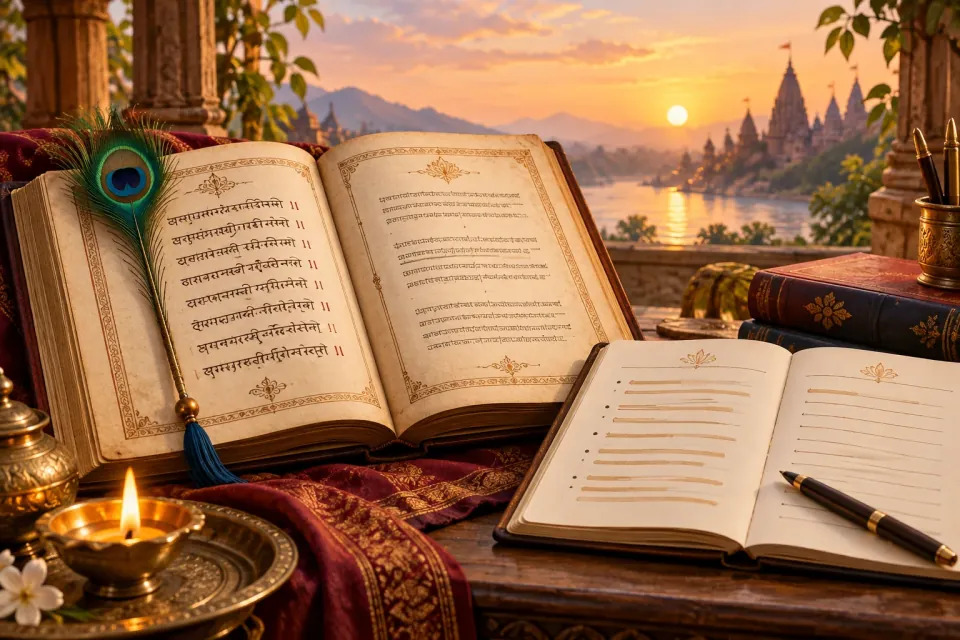
Your right is to action alone, never to its fruits. — Gita 2.47
Where should I begin?
Choose your way into the Gita
Begin with Chapter 2, the philosophical foundation.
Study 18 important shlokas and their meanings.
Read each chapter and shloka in Hindi.
Bhagavad Gita chapters list
All 18 chapters of the Bhagavad Gita
The Bhagavad Gita has 18 chapters and about 700 verses (shlokas), spoken mostly by Krishna to Arjuna on the battlefield of Kurukshetra, within the Bhishma Parva of the Mahabharata. Each chapter is named as a yoga, a path or discipline: the first six chapters stress action and the self, the middle six devotion and Krishna's divine nature, and the last six knowledge, the three gunas and liberation.
The table below lists every chapter with its Sanskrit name, English meaning and number of verses. Chapter 18 is the longest with 78 verses, Chapter 2 follows with 72, and Chapters 12 and 15 are the shortest with 20 verses each. Chapter 13 is counted as 35 verses here and 34 in some editions, which is why totals of 700 and 701 both appear.
| Chapter | Sanskrit name | English meaning | Verses | Central theme |
|---|---|---|---|---|
| Chapter 1 | Arjuna Vishada Yoga | The Yoga of Arjuna's Dejection | 47 | Arjuna's grief and refusal to fight at Kurukshetra |
| Chapter 2 | Sankhya Yoga | The Yoga of Knowledge | 72 | the eternal self, duty and action without attachment |
| Chapter 3 | Karma Yoga | The Yoga of Action | 43 | karma yoga, selfless action and duty |
| Chapter 4 | Jnana Karma Sannyasa Yoga | The Yoga of Knowledge and Renunciation of Action | 42 | divine incarnation, wisdom in action and sacrifice |
| Chapter 5 | Karma Sannyasa Yoga | The Yoga of Renunciation of Action | 29 | renunciation, detached action and inner peace |
| Chapter 6 | Dhyana Yoga | The Yoga of Meditation | 47 | meditation, mastering the mind and moderation |
| Chapter 7 | Jnana Vijnana Yoga | The Yoga of Knowledge and Realisation | 30 | Krishna's two natures and the four kinds of devotees |
| Chapter 8 | Akshara Brahma Yoga | The Yoga of the Imperishable Absolute | 28 | Brahman, remembrance at death and the soul's journey |
| Chapter 9 | Raja Vidya Raja Guhya Yoga | The Yoga of Royal Knowledge and Royal Secret | 34 | the royal secret of devotion open to everyone |
| Chapter 10 | Vibhuti Yoga | The Yoga of Divine Glories | 42 | Krishna's divine glories (vibhutis) in the world |
| Chapter 11 | Vishvarupa Darshana Yoga | The Yoga of the Vision of the Universal Form | 55 | Arjuna's vision of Krishna's universal form |
| Chapter 12 | Bhakti Yoga | The Yoga of Devotion | 20 | devotion and the qualities of a true devotee |
| Chapter 13 | Kshetra Kshetrajna Vibhaga Yoga | The Yoga of the Field and the Knower of the Field | 35 | the body as the field, the self as its knower |
| Chapter 14 | Gunatraya Vibhaga Yoga | The Yoga of the Three Gunas | 27 | sattva, rajas and tamas and rising above them |
| Chapter 15 | Purushottama Yoga | The Yoga of the Supreme Person | 20 | the cosmic ashvattha tree and the Supreme Person |
| Chapter 16 | Daivasura Sampad Vibhaga Yoga | The Yoga of Divine and Demonic Qualities | 24 | divine versus demonic qualities and the three gates to hell |
| Chapter 17 | Shraddhatraya Vibhaga Yoga | The Yoga of the Three Kinds of Faith | 28 | three kinds of faith, food, sacrifice, austerity and charity |
| Chapter 18 | Moksha Sannyasa Yoga | The Yoga of Liberation through Renunciation | 78 | renunciation, the three gunas in action, surrender and liberation |
Bhagavad Gita chapters: FAQ
How many chapters are in the Bhagavad Gita?
The Bhagavad Gita has 18 chapters and about 700 verses (shlokas). Chapter 18 is the longest with 78 verses; Chapters 12 and 15 are the shortest with 20 verses each.
What are the names of the 18 chapters of the Bhagavad Gita?
1. Arjuna Vishada Yoga (The Yoga of Arjuna's Dejection); 2. Sankhya Yoga (The Yoga of Knowledge); 3. Karma Yoga (The Yoga of Action); 4. Jnana Karma Sannyasa Yoga (The Yoga of Knowledge and Renunciation of Action); 5. Karma Sannyasa Yoga (The Yoga of Renunciation of Action); 6. Dhyana Yoga (The Yoga of Meditation); 7. Jnana Vijnana Yoga (The Yoga of Knowledge and Realisation); 8. Akshara Brahma Yoga (The Yoga of the Imperishable Absolute); 9. Raja Vidya Raja Guhya Yoga (The Yoga of Royal Knowledge and Royal Secret); 10. Vibhuti Yoga (The Yoga of Divine Glories); 11. Vishvarupa Darshana Yoga (The Yoga of the Vision of the Universal Form); 12. Bhakti Yoga (The Yoga of Devotion); 13. Kshetra Kshetrajna Vibhaga Yoga (The Yoga of the Field and the Knower of the Field); 14. Gunatraya Vibhaga Yoga (The Yoga of the Three Gunas); 15. Purushottama Yoga (The Yoga of the Supreme Person); 16. Daivasura Sampad Vibhaga Yoga (The Yoga of Divine and Demonic Qualities); 17. Shraddhatraya Vibhaga Yoga (The Yoga of the Three Kinds of Faith); 18. Moksha Sannyasa Yoga (The Yoga of Liberation through Renunciation).
Which Bhagavad Gita chapter should I read first?
Chapter 2 (Sankhya Yoga) is the usual starting point because it introduces the eternal self, duty and action without attachment. Chapters 3 (Karma Yoga), 12 (Bhakti Yoga) and 18 (Moksha Sannyasa Yoga) are also popular entry points.
Why are the Gita's chapters called 'yoga'?
Each chapter ends with a colophon naming it as a yoga — such as Karma Yoga or Bhakti Yoga — because each presents one aspect of the discipline that unites a person with the highest truth.
Complete text
The 18 chapters
Follow the arc from Arjuna's despair to discernment, devotion, committed action, and liberation.
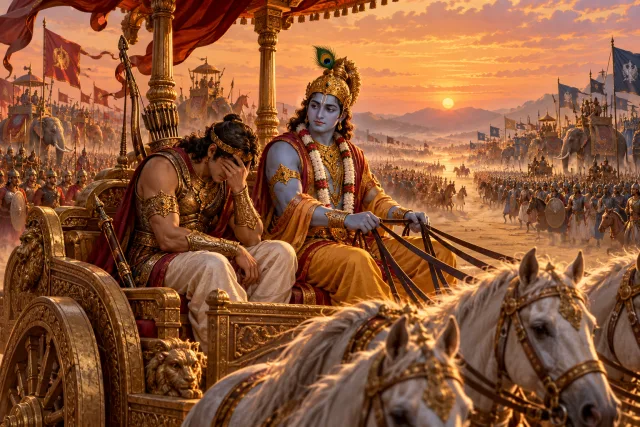 01Chapter 1 · 47 verses↗
Arjuna Vishada Yoga
The Yoga of Arjuna's Dejection
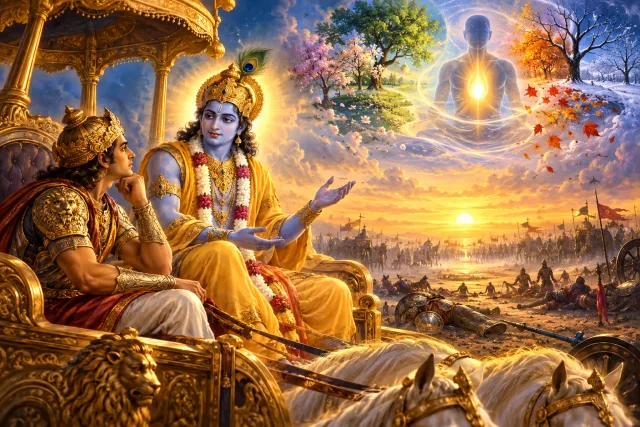 02Chapter 2 · 72 verses↗
Sankhya Yoga
The Yoga of Knowledge
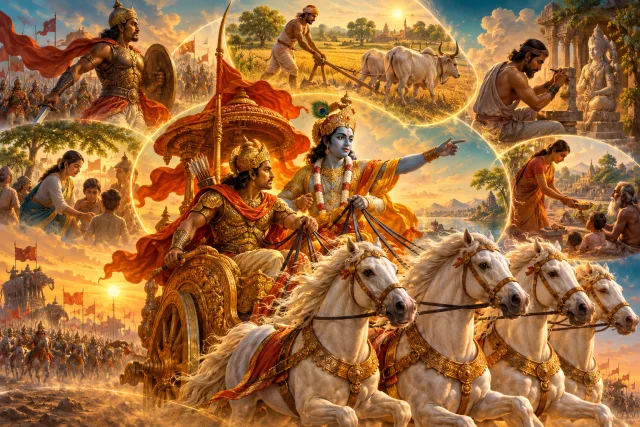 03Chapter 3 · 43 verses↗
Karma Yoga
The Yoga of Action
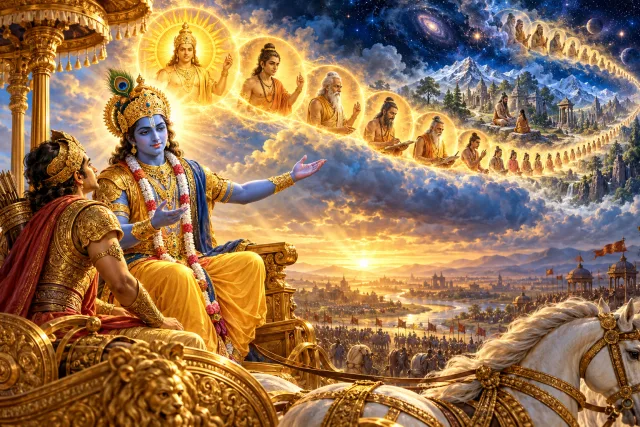 04Chapter 4 · 42 verses↗
Jnana Karma Sannyasa Yoga
The Yoga of Knowledge and Renunciation of Action
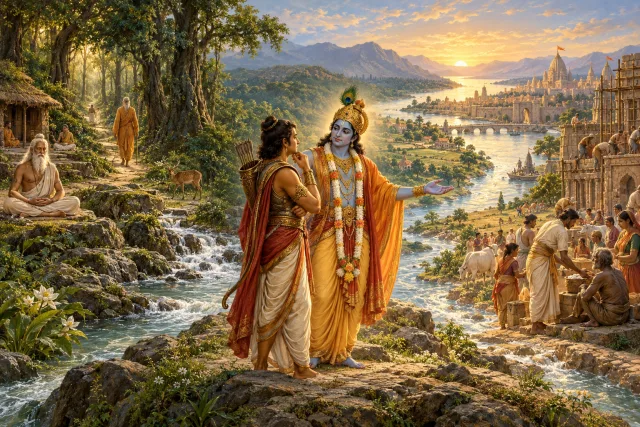 05Chapter 5 · 29 verses↗
Karma Sannyasa Yoga
The Yoga of Renunciation of Action
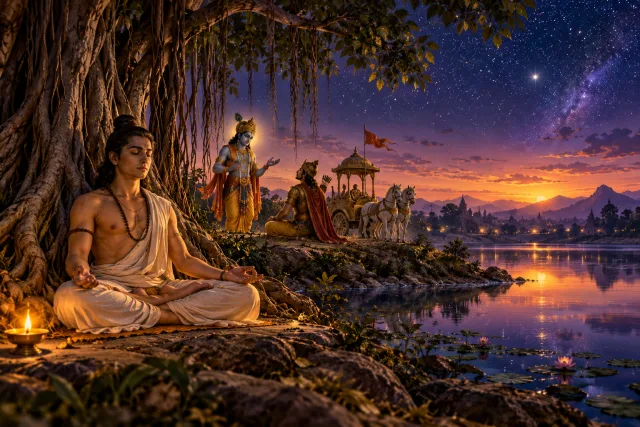 06Chapter 6 · 47 verses↗
Dhyana Yoga
The Yoga of Meditation
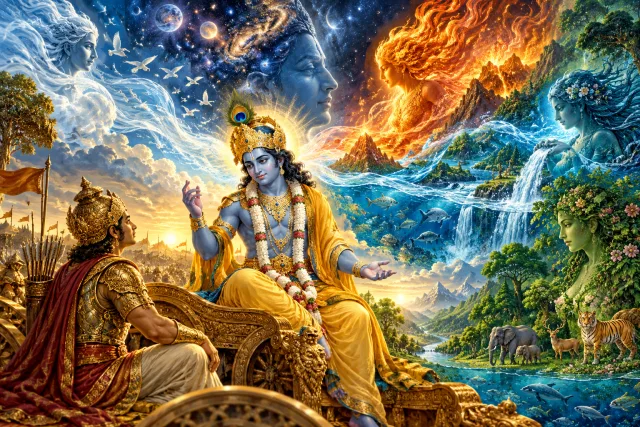 07Chapter 7 · 30 verses↗
Jnana Vijnana Yoga
The Yoga of Knowledge and Realisation
 08Chapter 8 · 28 verses↗
Akshara Brahma Yoga
The Yoga of the Imperishable Absolute
 09Chapter 9 · 34 verses↗
Raja Vidya Raja Guhya Yoga
The Yoga of Royal Knowledge and Royal Secret
 10Chapter 10 · 42 verses↗
Vibhuti Yoga
The Yoga of Divine Glories
 11Chapter 11 · 55 verses↗
Vishvarupa Darshana Yoga
The Yoga of the Vision of the Universal Form
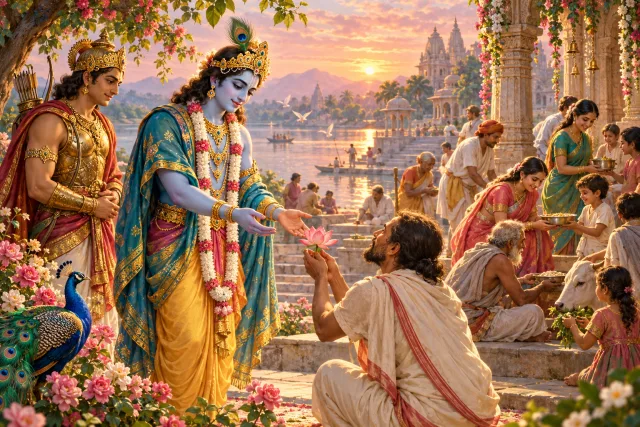 12Chapter 12 · 20 verses↗
Bhakti Yoga
The Yoga of Devotion
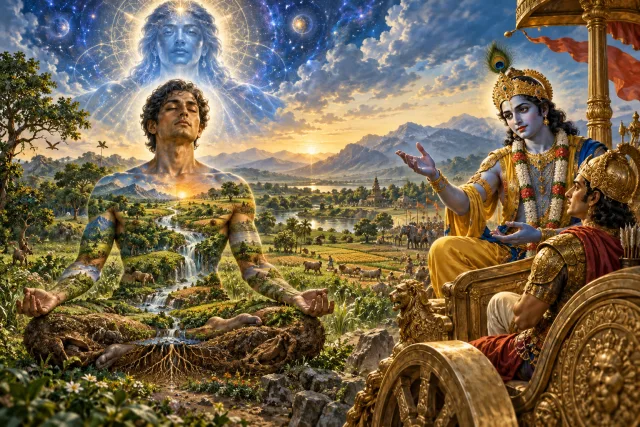 13Chapter 13 · 35 verses↗
Kshetra Kshetrajna Vibhaga Yoga
The Yoga of the Field and the Knower of the Field
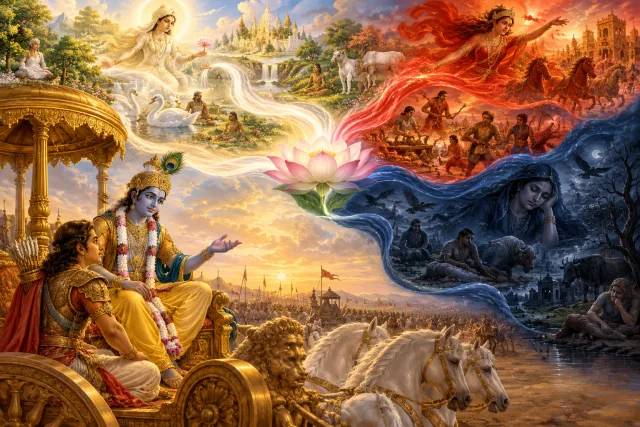 14Chapter 14 · 27 verses↗
Gunatraya Vibhaga Yoga
The Yoga of the Three Gunas
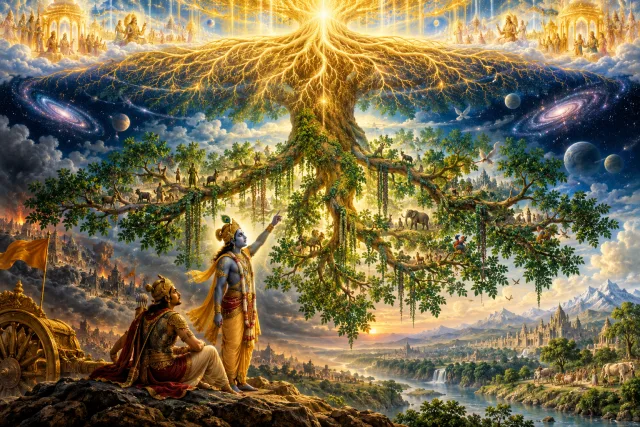 15Chapter 15 · 20 verses↗
Purushottama Yoga
The Yoga of the Supreme Person
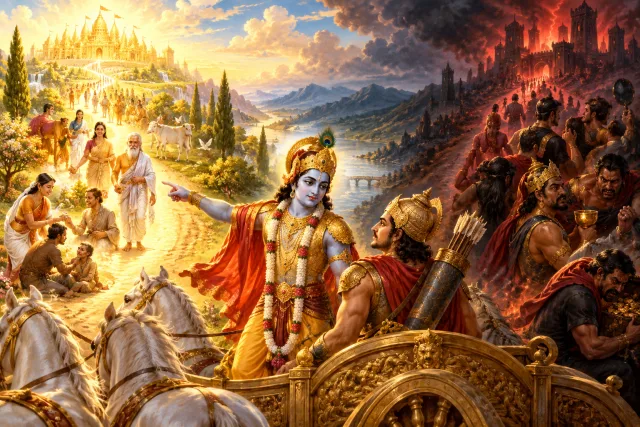 16Chapter 16 · 24 verses↗
Daivasura Sampad Vibhaga Yoga
The Yoga of Divine and Demonic Qualities
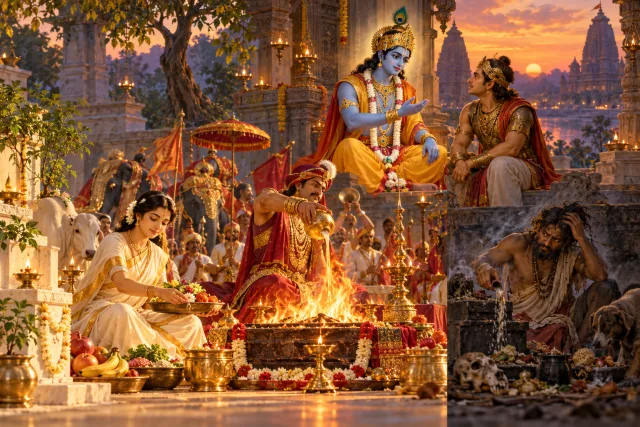 17Chapter 17 · 28 verses↗
Shraddhatraya Vibhaga Yoga
The Yoga of the Three Kinds of Faith
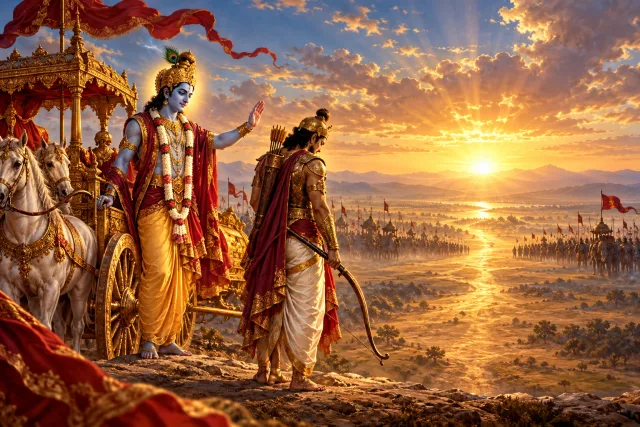 18Chapter 18 · 78 verses↗
Moksha Sannyasa Yoga
The Yoga of Liberation through Renunciation
A simple study rhythm
Read less. Notice more.
1 Read the Devanagari and transliteration aloud.
2 Compare the Hindi and English meanings in context.
3 Take one practical question into your day.
About this complete Bhagavad Gita collection
Use this collection as a guided study path. Chapter pages show the wider argument, while every shloka page slows down for Sanskrit, transliteration, Hindi meaning, English explanation, and a practical reflection.
The eighteen chapters move from Arjuna's despair toward discernment and committed action. Chapters 2 and 3 establish knowledge and karma yoga; Chapters 6 and 12 develop meditation and devotion; Chapter 18 gathers the teaching into a final reflection on duty, surrender, and freedom.
For a Sanskrit-first entry point, read our Gita shlokas in Sanskrit with meaning guide.
Wondering who wrote the Bhagavad Gita? Tradition attributes the text to Sage Vyasa, who preserved it within the Mahabharata; Krishna is its speaker and teacher, and Arjuna its listener. Read how the Gita fits into the Mahabharata for the wider story.