
Aarti & Chalisa
Songs of devotion,
kept close.
Complete Hindi lyrics, readable transliteration, meaning, and gentle guidance for the hymns families return to in daily worship and festival prayer.

Aarti brings light, song, and gratitude. A chalisa offers a longer devotional reading focused on one deity.
Create a clean, quiet space and light a diya safely.
Use the Hindi lyrics and transliteration at a comfortable pace.
Close with gratitude and carry the hymn's teaching forward.
The collection
Find a prayer for this moment
Choose by deity or form. Every page includes the full text, pronunciation support, meaning, significance, and traditional context.
Chalisa
Forty-verse hymns for focused devotion, courage, protection, and inner steadiness.
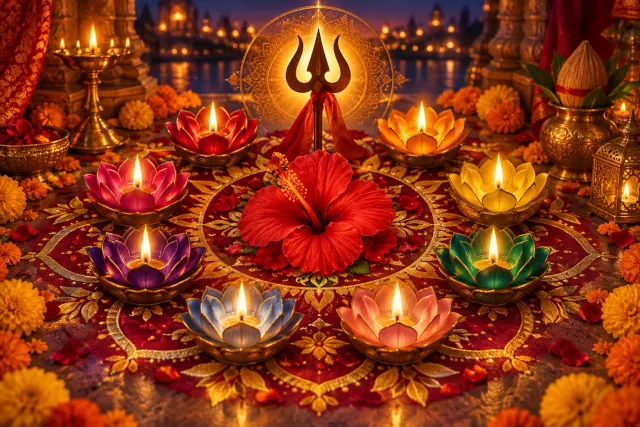
Durga Chalisa
The Durga Chalisa is one of the most widely recited hymns to the Divine Mother, chanted daily by many devotees and especially throughout Navratri, the nine-night festival dedicated to Durga's nine forms. It is traditionally recited on Tuesdays and Fridays as well.
Read lyrics & meaning →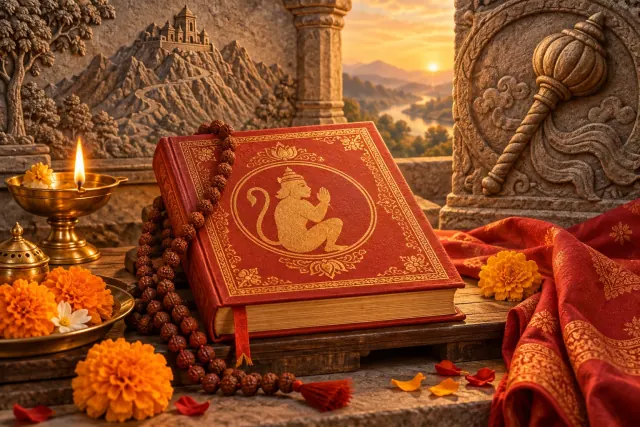
Hanuman Chalisa
The Hanuman Chalisa is one of the most widely recited hymns in Hinduism, believed to invoke Hanuman's protection, remove obstacles, and instill courage and devotion. It is traditionally recited on Tuesdays and Saturdays, Hanuman's designated days, though many devotees recite it daily as part of their morning routine.
Read lyrics & meaning →Aarti
Songs of light and gratitude, traditionally sung at the close of puja.
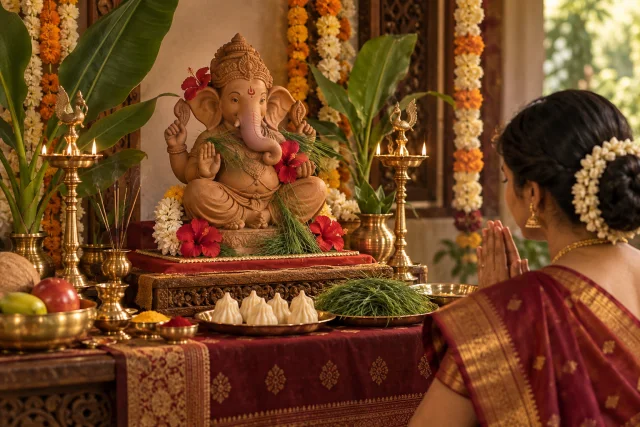
Jai Ganesh Deva Aarti
This is the most widely sung aarti for Lord Ganesha, performed at the close of daily Ganesha puja and especially during Ganesh Chaturthi, when it is sung by families and communities gathered around the Ganesha idol each evening throughout the festival.
Read lyrics & meaning →Om Jai Jagdish Hare Aarti
Composed by Pandit Shraddha Ram Phillauri in the 19th century, this is arguably the most universally recognized aarti in Hinduism, sung at the close of puja in temples and homes across virtually every regional and sectarian tradition, regardless of which deity is being worshipped.
Read lyrics & meaning →
Om Jai Lakshmi Mata Aarti
This aarti is sung during Lakshmi Puja, especially during Diwali and other Friday or prosperity- focused observances. Its central teaching is that prosperity is most auspicious when it supports family, generosity, ethical work, and spiritual steadiness.
Read lyrics & meaning →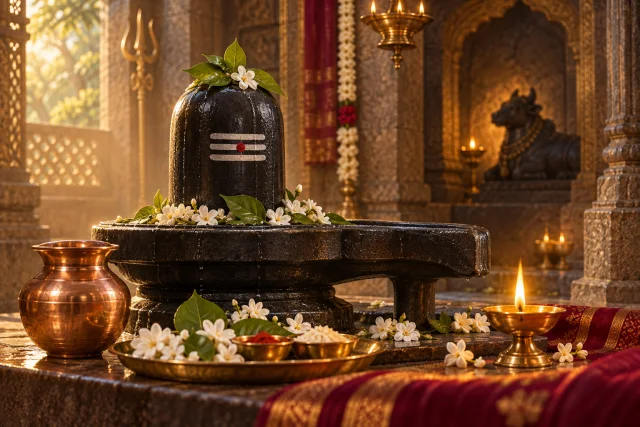
Om Jai Shiv Omkara Aarti
This aarti is sung at the conclusion of Shiva puja in temples and homes across India, especially on Mondays, during Shravan month, and on Maha Shivratri. It is one of the most recognizable and widely sung aartis in Hindu worship.
Read lyrics & meaning →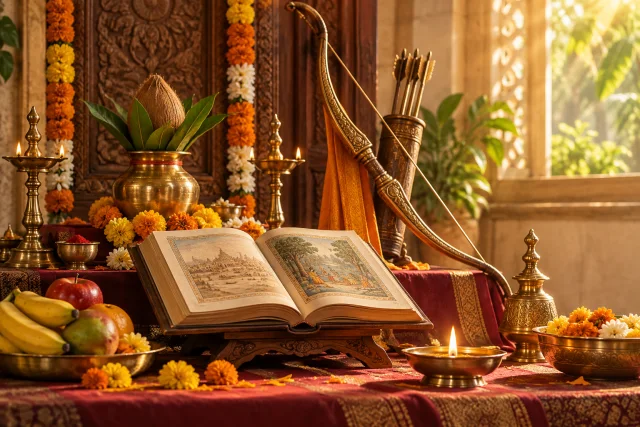
Shri Ram Aarti
Rama Aarti is sung during Rama puja, Ram Navami, Diwali traditions connected with Rama's return to Ayodhya, and regular family worship. Regional versions and melodies may differ.
Read lyrics & meaning →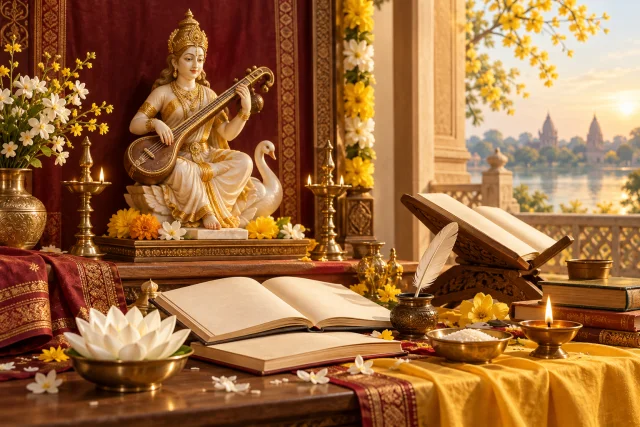
Saraswati Mata Aarti
Saraswati Aarti is especially associated with Vasant Panchami, schools, music practice, examinations, and artistic work. Families and communities may use different versions and melodies.
Read lyrics & meaning →New to devotional reading?
A simple place to begin
An aarti is sung as light is offered at the close of worship. A chalisa is a longer forty-verse hymn of praise. A mantra is usually shorter and repeated with attention to sound and breath.
Understand the difference →