
🐘 Festivals
Ganesh Chaturthi Story and Significance: The Birth of Ganesha
Last updated: September 26, 2026
Ganesh Chaturthi celebrates Ganesha as the guardian of beginnings and lord of wisdom through worship, community, prasad, and immersion.
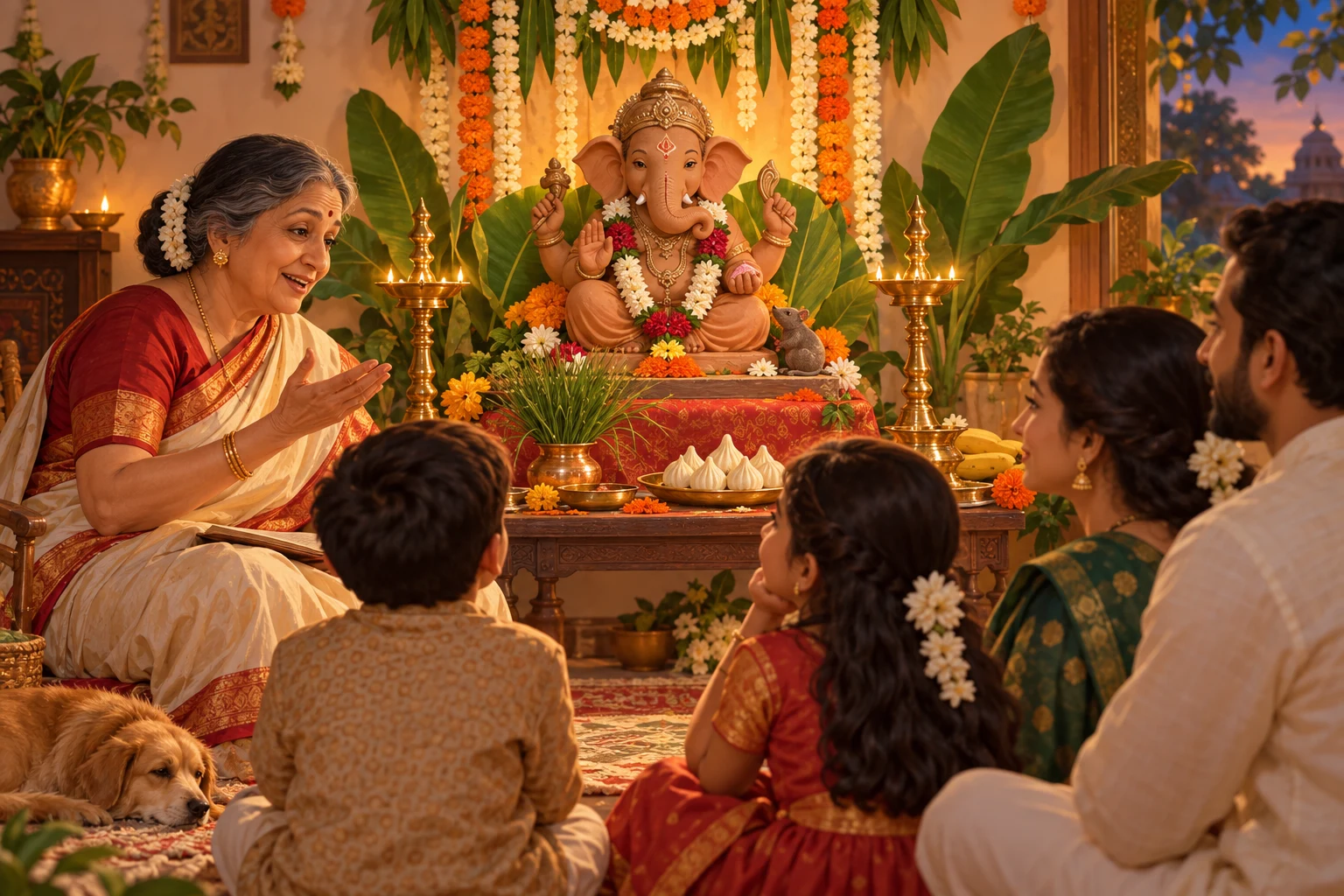
Ganesh Chaturthi celebrates Ganesha, the elephant-headed son of Shiva and Parvati, as the guardian of beginnings and lord of wisdom. Families and communities welcome a murti, offer daily worship, sing aarti, distribute prasad, and conclude with visarjan, or immersion.
Customs differ by region, family, and sampradaya. The festival may last one and a half, three, five, seven, or ten days, and a quiet household observance is as meaningful as a public celebration. Read the Ganesh Chaturthi puja guide for a step-by-step home practice.
The story of Ganesha’s birth
In one widely told account, Parvati creates a child from turmeric paste or material from her own body. She names him Ganesha and asks him to guard the entrance while she bathes. When Shiva returns, the boy does not know him and refuses to let him pass. A confrontation follows, and Shiva severs Ganesha’s head.
Parvati’s grief and anger make restoration necessary. Shiva sends his attendants to bring the head of the first suitable living being they encounter, commonly described as an elephant. Ganesha is revived, accepted as the son of Shiva and Parvati, and given an honoured place among the gods.
Hindu narrative traditions preserve variations, so details can differ across retellings and texts. The story need not be flattened into one literal version. Its enduring themes include maternal power, duty at a threshold, consequences of acting without recognition, repair after harm, and the creation of a new identity from rupture.
Why Ganesha is worshipped first
Ganesha is called Vighnaharta, remover of obstacles, and is invoked before journeys, studies, ceremonies, and new ventures. “Removing obstacles” does not always mean making a task effortless. Wisdom may reveal a better route, the preparation that was missing, or an obstacle that prevents a harmful choice.
His form carries layered symbolism. The large head suggests discernment; wide ears attentive listening; the small eyes concentration; and the mouse vehicle the mind’s ability to enter tiny spaces. The broken tusk is often connected with sacrifice, resolve, and the capacity to work with imperfection. These are devotional interpretations rather than one mandatory decoding.
Why a clay murti is installed
The act of sthapana welcomes sacred presence into a visible form. Devotees decorate the altar, offer flowers and food, chant Ganesha’s names, and treat the guest with hospitality. A temporary clay murti gives the household or neighbourhood a shared centre for prayer, music, learning, and service.
At home, the worship can remain simple. A flower, fruit, diya used safely, and sincere repetition of the Ganesh Beej Mantra are enough. Spending beyond one’s means is not a requirement of devotion.
Meaning of Ganesh Visarjan
At the close of the observance, the murti is carried for immersion. Clay returns to water, while the worshipper carries the remembered presence inward. The movement from formation to dissolution expresses impermanence: a beloved form is honoured fully and then released.
Environmental responsibility belongs to that meaning. Prefer natural, unpainted or non-toxic clay; avoid plastic decorations, chemical paints, and materials that persist in waterways. Follow municipal rules and use approved artificial tanks or a small symbolic home immersion where permitted. Never enter unsafe water or leave ritual waste at a shore.
Bringing the festival into daily life
After the final aarti, choose one obstacle that requires wisdom rather than force. It may be procrastination, careless speech, a disorganised study plan, or an unresolved apology. Name one small action and complete it.
Children can shape a small clay form, learn one Ganesha name, help prepare prasad, or discuss what careful listening looks like. The Ganesh aarti meaning guide can turn familiar singing into thoughtful practice.
Ganesh Chaturthi joins celebration with discernment. Its story does not promise a life without difficulty; it asks devotees to meet beginnings with humility, listen before acting, repair what has been harmed, and release even cherished forms with gratitude.
Frequently Asked Questions
What is the main story of Ganesh Chaturthi?
A widely told account says Parvati created Ganesha and asked him to guard her door. After a conflict with Shiva, Ganesha was restored with an elephant's head and welcomed as Shiva and Parvati's son.
Why is Ganesha worshipped first?
Ganesha is honoured as a guardian of thresholds, patron of wisdom, and remover of obstacles, so devotees often invoke him before study, travel, ceremonies, and new work.
Why is the Ganesh murti immersed?
Visarjan returns the temporary clay form to water and can be understood as a lesson in impermanence: sacred presence is welcomed lovingly, then released without trying to possess it.
How can I celebrate Ganesh Chaturthi simply at home?
Use a natural-clay murti or existing image, keep a clean altar, offer flowers and food, chant or read a Ganesha story, share prasad, and choose a lawful low-impact immersion or symbolic conclusion.