
🤝 Indian National Days
National Unity Day in India: Why 31 October Is Observed
Last updated: September 26, 2026
National Unity Day remembers Sardar Vallabhbhai Patel and invites reflection on the cooperation, constitutional values, and mutual respect needed to hold a diverse country together.
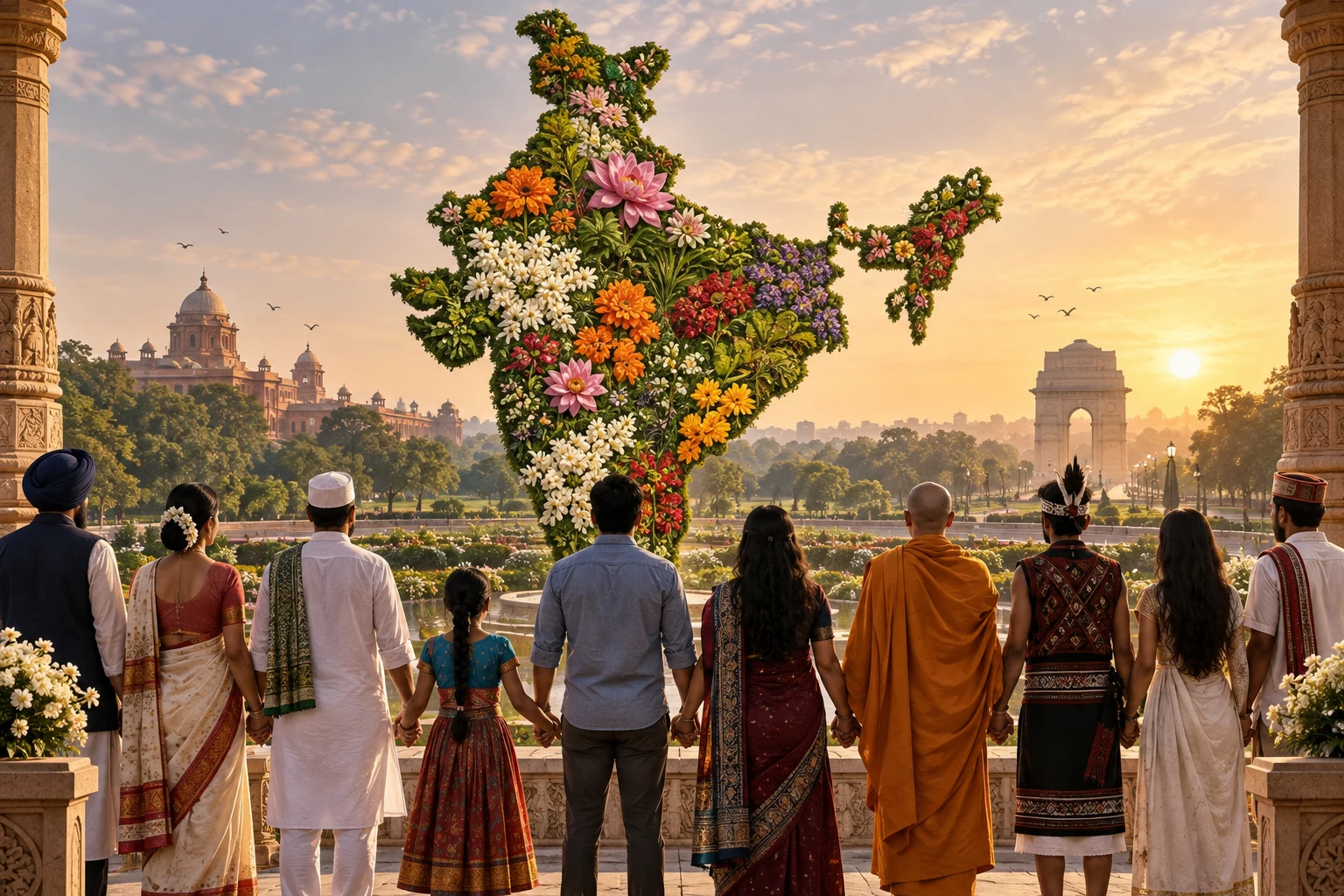
National Unity Day, or Rashtriya Ekta Diwas, is observed in India on 31 October, the birth anniversary of Sardar Vallabhbhai Patel. The Government of India began the annual observance in 2014 to remember Patel’s role in national integration and to reaffirm commitment to India’s unity, integrity, and security.
National Unity Day facts at a glance
| Question | Answer |
|---|---|
| Date | 31 October every year |
| Hindi name | Rashtriya Ekta Diwas |
| Person remembered | Sardar Vallabhbhai Patel |
| First national observance | 2014 |
| Common activities | Unity pledge, Run for Unity, discussions, cultural programmes, and public-service events |
Patel and political integration
When British rule ended in 1947, the subcontinent contained former British provinces and hundreds of princely states. These states had different sizes, political circumstances, and relationships with the departing colonial power. Patel, serving as the first Deputy Prime Minister and Home Minister, worked closely with V. P. Menon and other leaders and administrators to secure accession to the Indian Union.
The process should not be reduced to a single heroic moment. It involved instruments of accession, negotiation with rulers, administrative planning, public movements, and, in a few cases, coercion or armed conflict. Remembering Patel responsibly means recognising both his decisive leadership and the complicated circumstances in which integration occurred.
Patel had also been active in the freedom movement, including peasant campaigns in Gujarat. The popular title “Sardar” became closely associated with the Bardoli Satyagraha. National Unity Day places his post-independence role within this longer public life.
Why 31 October is observed
Patel was born on 31 October 1875. A 2014 Ministry of Home Affairs announcement established the annual observance and called for pledge-taking and Run for Unity activities. A later Gazette notification dated 28 December 2023 formally declared that his birth anniversary would be commemorated every year as Rashtriya Ekta Diwas.
This history is documented in the Government of India’s 2014 observance announcement and the Ministry of Home Affairs Gazette notification.
Unity in a diverse nation
Unity does not mean uniformity. India contains many languages, religions, cuisines, artistic traditions, landscapes, and regional histories. Democratic unity is stronger when difference can exist alongside equal citizenship, constitutional government, and non-violent ways of resolving disagreement.
The word integrity in official descriptions of the day refers to the wholeness and security of the country. In daily civic life, that ideal also depends on trust: refusing prejudice, checking misinformation before forwarding it, listening across language or regional difference, and protecting another person’s right to participate.
How the day is observed
Government offices and public institutions commonly hold a unity pledge. Schools and community organisations may arrange a Run for Unity, essay or quiz programmes, exhibitions, marches, and cultural presentations. These activities become more educational when their meaning is explained rather than treated as a ceremony to complete.
Local history can make the theme concrete: participants might document how people from different regions have built a neighbourhood, workplace, university, or public institution together.
Useful classroom activities include tracing the former princely states on a historical map, comparing the roles of different participants in integration, and discussing how federalism allows national and state institutions to coexist. A cultural programme should represent traditions accurately and avoid turning communities into costumes or stereotypes.
Four ways to make the observance meaningful
- Learn before celebrating. Read a primary source, map, speech, or Constituent Assembly discussion rather than relying only on slogans.
- Practise cooperation. Organise a mixed-team service activity such as a library, accessibility, or neighbourhood clean-up project.
- Make language inclusive. Provide translations or summaries so participants are not excluded by the programme’s language.
- Connect unity with constitutional conduct. Discuss how equality, fraternity, peaceful disagreement, and respect for institutions support a shared nation.
National Unity Day is different from Independence Day and Republic Day. Compare its purpose with the Independence Day history and the Republic Day guide.
Frequently Asked Questions
When is National Unity Day observed in India?
National Unity Day, or Rashtriya Ekta Diwas, is observed every year on 31 October, the birth anniversary of Sardar Vallabhbhai Patel.
Why is Sardar Patel associated with National Unity Day?
As independent India's first Deputy Prime Minister and Home Minister, Patel played a central role in the political integration of the princely states into the Indian Union. The observance remembers that contribution.
When did India begin observing Rashtriya Ekta Diwas?
The Government of India announced the annual observance in 2014. An official Gazette notification in 2023 formally declared 31 October as Rashtriya Ekta Diwas.
How can a school observe National Unity Day meaningfully?
Alongside the unity pledge or Run for Unity, students can study a map of accession, discuss linguistic and cultural diversity, practise respectful debate, and undertake a cooperative local service project.