
Mantra · Kali
Kali Mantra (Om Kreem Kalikayai Namah)
Last updated: August 31, 2026
Om Kreem Kalikayai Namah, the Kali Beej Mantra — Sanskrit text, meaning, benefits for protection and inner transformation, and how to chant it correctly.
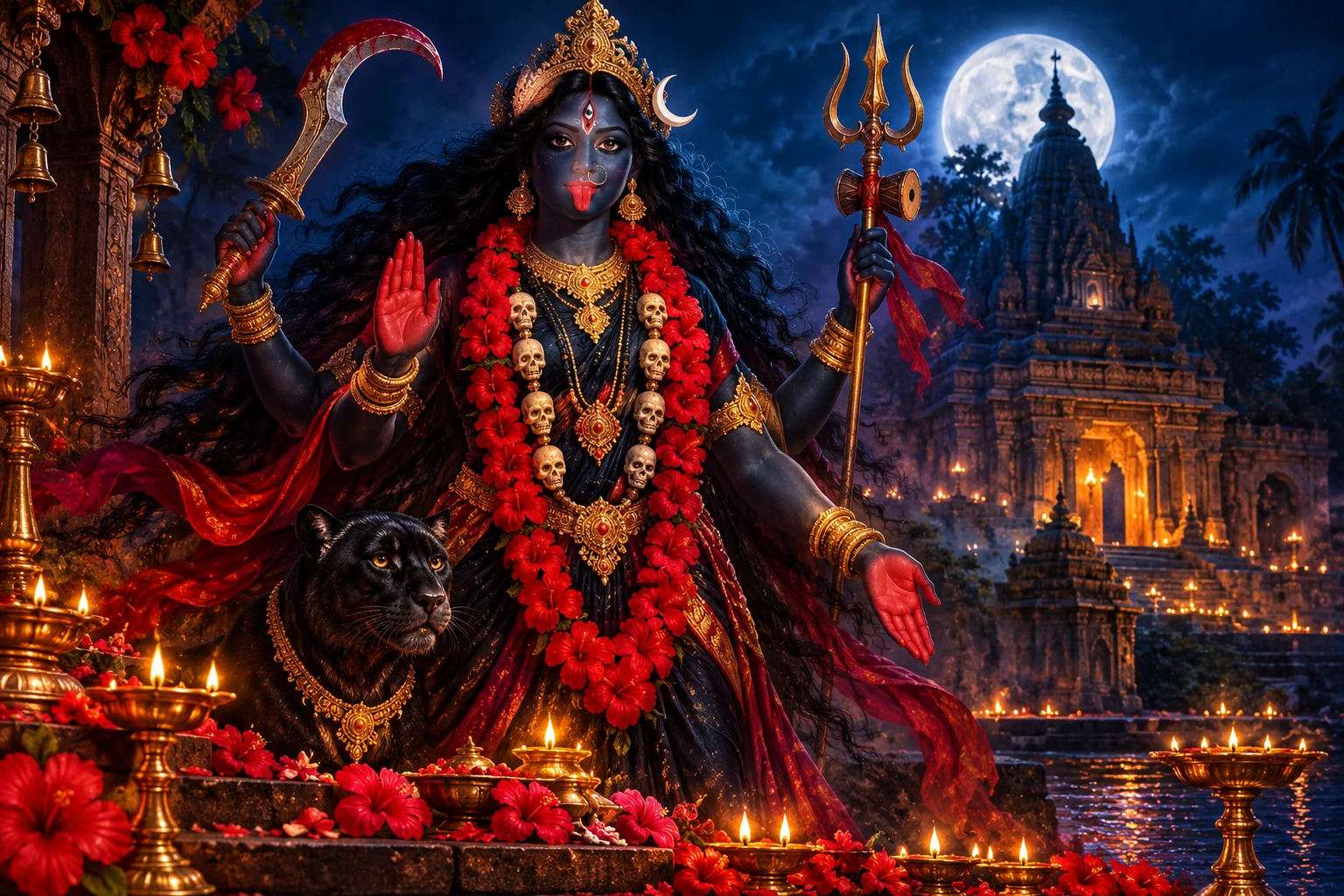
ॐ क्रीं कालिकायै नमः
Om Kreem Kalikayai Namah
Meaning
"I bow to Goddess Kalika (Kali)." Built around the beej syllable "Kreem," this mantra invokes Kali's fierce, transformative energy — the aspect of the Divine Mother that destroys ignorance, ego, and negativity. It is chanted for courage, protection, and the strength to face what one would normally avoid.
मैं माँ काली को नमन करता हूँ। "क्रीं" बीज अक्षर देवी काली की परिवर्तनकारी शक्ति का प्रतीक है, जो अज्ञान और नकारात्मकता को नष्ट करती है। यह मंत्र भय पर विजय पाने और आंतरिक शक्ति जगाने के लिए जपा जाता है।
Benefits
- Chanted for courage and the strength to confront fear, negativity, or difficult truths.
- Believed to support inner transformation by dissolving ego and old patterns.
- Associated with protection from harmful influences and negative energy.
- Traditionally approached with seriousness and steady practice rather than casual use.
How to Chant
Om Kreem Kalikayai Namah is traditionally chanted at night, when Kali's energy is considered most present, though it can be practiced at other times as well. It is recommended to approach this mantra with a settled, grounded mind, ideally alongside guidance from an experienced practitioner for deeper practice.
Recommended count: 108 times (1 mala)
Origin
“Kreem” is the beej syllable of Kali, one of the primary forms of Devi (the Divine Mother) within Shakta tradition. Where Durga represents protective strength and Lakshmi represents abundance, Kali represents the fierce, transformative power that clears away what no longer serves growth — often described as destruction in service of renewal, not destruction for its own sake.
Word-by-word breakdown
| Sanskrit | Meaning |
|---|---|
| Om | The primordial sound |
| Kreem | Beej syllable representing Kali’s transformative energy |
| Kalikayai | To Kalika (Kali) |
| Namah | Salutations, I bow to |
When it is chanted
Traditionally chanted at night, on Kali Puja (during Diwali in Bengal and eastern India), and by practitioners in Shakta traditions seeking inner strength and transformation.
How to chant the Kali Mantra
Approach this mantra with a settled, grounded mind rather than casually. Chant Om Kreem Kalikayai Namah 108 times with a mala, often at night. For deeper or sustained practice, many traditions recommend guidance from an experienced teacher. To understand how a seed syllable works, read what is a beej mantra. Related Devi practice includes the Durga Beej Mantra, the Durga Chalisa, and the Kali Chalisa.
Frequently asked questions
What is the Kali Mantra used for?
It is chanted for courage, protection, and inner transformation — the strength to face fear, negativity, or difficult truths. Kali’s fierceness is traditionally understood as clearing away what blocks growth, not destruction for its own sake.
When should the Kali Mantra be chanted?
Night is the traditional time, and Kali Puja is the main festival occasion. It can be practised at other times with a calm, focused attitude.
Is the Kali Mantra safe for beginners?
It is usually approached with more seriousness than a simple daily mantra. Beginners can chant it respectfully in small amounts; for intensive practice, seek an experienced practitioner’s guidance.
Frequently Asked Questions
What does Kali Mantra (Om Kreem Kalikayai Namah) mean?
"I bow to Goddess Kalika (Kali)." Built around the beej syllable "Kreem," this mantra invokes Kali's fierce, transformative energy — the aspect of the Divine Mother that destroys ignorance, ego, and negativity. It is chanted for courage, protection, and the strength to face what one would normally avoid.
How many times should Kali Mantra (Om Kreem Kalikayai Namah) be chanted?
The traditional recommendation is 108 times (1 mala).
What are the benefits of chanting Kali Mantra (Om Kreem Kalikayai Namah)?
Chanted for courage and the strength to confront fear, negativity, or difficult truths. Believed to support inner transformation by dissolving ego and old patterns.