
Mantra · Kartikeya
Kartikeya Mantra (Om Saravanabhavaya Namah)
Last updated: August 31, 2026
Om Saravanabhavaya Namah, the Kartikeya (Murugan/Skanda) mantra — Sanskrit text, meaning, benefits for courage and success, and how to chant it correctly.
ॐ सरवणभवाय नमः
Om Saravanabhavaya Namah
Meaning
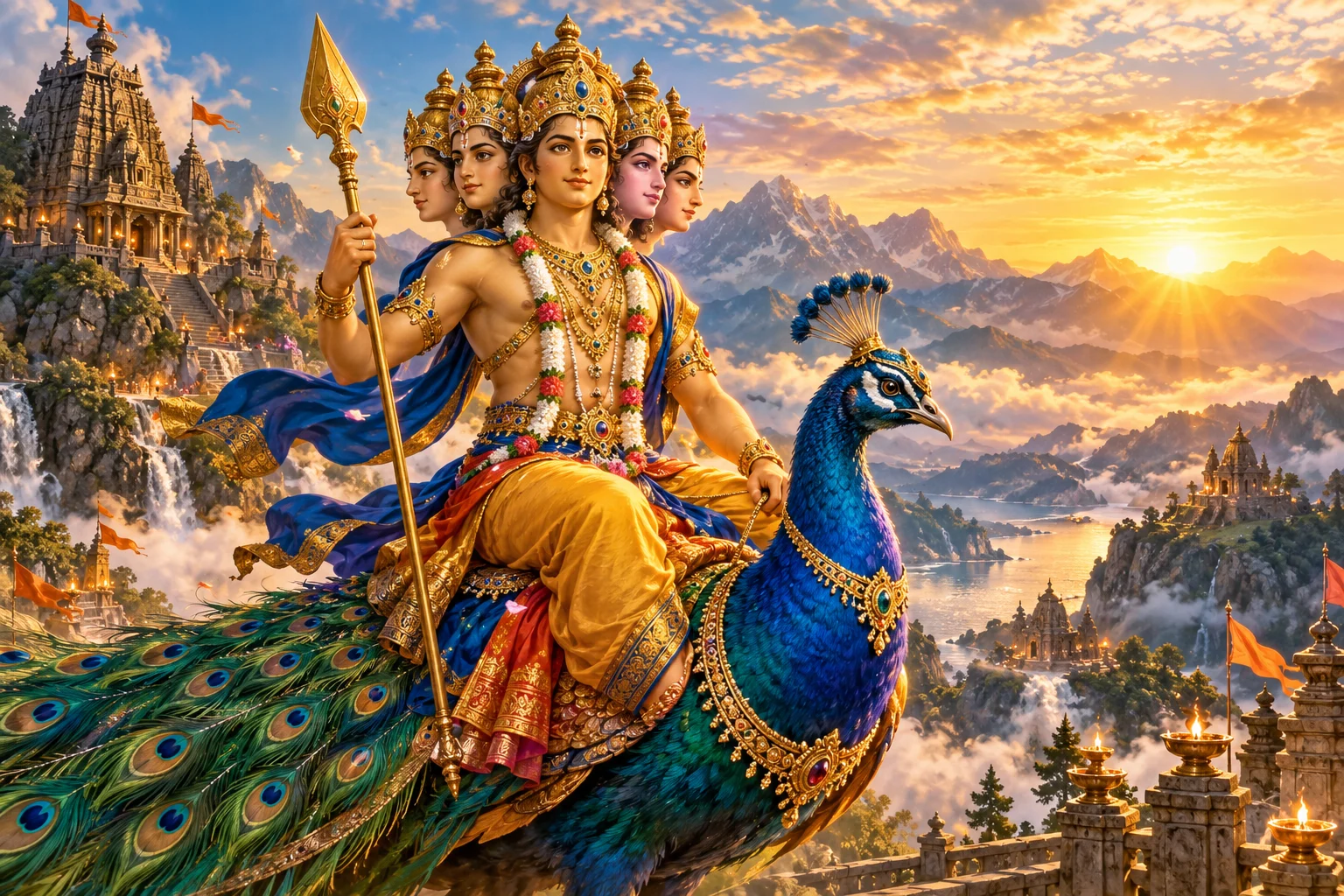
"I bow to the one born in the Sharavana reeds." This mantra addresses Kartikeya — also known as Murugan (especially in South India) and Skanda — the son of Shiva and Parvati, commander of the celestial army, and deity of courage, war, and victory. It is chanted for strength, success in difficult undertakings, and protection.
मैं भगवान कार्तिकेय को नमन करता हूँ, जिनका जन्म सरोवर (शरवण) में हुआ था। यह मंत्र साहस, विजय और बाधाओं पर विजय पाने के लिए जपा जाता है।
Benefits
- Chanted for courage and success, especially before facing a significant challenge or competition.
- Popular in South India, where Kartikeya is worshipped as Murugan at major temples across Tamil Nadu.
- Associated with removing obstacles and negative influences, alongside Ganesh.
- Often recited by students and those in competitive or high-pressure situations.
How to Chant
Om Saravanabhavaya Namah can be chanted at any time, though Tuesdays and the festival of Skanda Shashti are considered especially significant. It is traditionally repeated 108 times using a mala.
Recommended count: 108 times (1 mala), especially on Skanda Shashti
Origin
Kartikeya’s name and this mantra both reference the story of his birth: raised by six celestial mothers (Krittikas) among reeds in a sacred lake (Sharavana), before being united into a single form. Worshipped across India as Kartikeya, Skanda, and Subrahmanya, he is especially prominent in Tamil Nadu and South India as Murugan, where he holds a central place in regional devotional tradition distinct from, though related to, his worship elsewhere.
Word-by-word breakdown
| Sanskrit | Meaning |
|---|---|
| Om | The primordial sound |
| Saravanabhavaya | To the one born in the Sharavana reeds (a name for Kartikeya) |
| Namah | Salutations, I bow to |
When it is chanted
Commonly chanted on Tuesdays, during Skanda Shashti (a six-day festival marking Kartikeya’s victory over the demon Surapadman), and before undertaking anything requiring courage or a decisive outcome.
How to chant the Kartikeya Mantra
Chant Om Saravanabhavaya Namah 108 times with a mala, often on a Tuesday or during Skanda Shashti. Some devotees recite it before an exam, competition, or important decision. As Kartikeya is the son of Shiva and Parvati and the brother of Ganesha, his worship is often combined with the Ganesh Mantra and Om Namah Shivaya. New chanters can follow the guide to starting a daily mantra practice and read what is a beej mantra.
Frequently asked questions
Who is Kartikeya, and is he the same as Murugan?
Kartikeya is the son of Shiva and Parvati and commander of the celestial army. He is worshipped as Skanda and Subrahmanya across India and, especially in Tamil Nadu, as Murugan.
What is the Kartikeya Mantra used for?
It is chanted for courage, protection, and success in difficult or competitive undertakings.
When should the Kartikeya Mantra be chanted?
Tuesdays and Skanda Shashti are the traditional times. It can also be recited before any moment that calls for resolve.
Frequently Asked Questions
What does Kartikeya Mantra (Om Saravanabhavaya Namah) mean?
"I bow to the one born in the Sharavana reeds." This mantra addresses Kartikeya — also known as Murugan (especially in South India) and Skanda — the son of Shiva and Parvati, commander of the celestial army, and deity of courage, war, and victory. It is chanted for strength, success in difficult undertakings, and protection.
How many times should Kartikeya Mantra (Om Saravanabhavaya Namah) be chanted?
The traditional recommendation is 108 times (1 mala), especially on Skanda Shashti.
What are the benefits of chanting Kartikeya Mantra (Om Saravanabhavaya Namah)?
Chanted for courage and success, especially before facing a significant challenge or competition. Popular in South India, where Kartikeya is worshipped as Murugan at major temples across Tamil Nadu.