
Mantra · Lakshmi
Lakshmi Mantra (Om Shreem Mahalakshmyai Namah)
Last updated: August 31, 2026
Om Shreem Mahalakshmyai Namah, the most chanted Lakshmi mantra — Sanskrit text, meaning, benefits for prosperity, and how to chant it correctly.
ॐ श्रीं महालक्ष्म्यै नमः
Om Shreem Mahalakshmyai Namah
Meaning
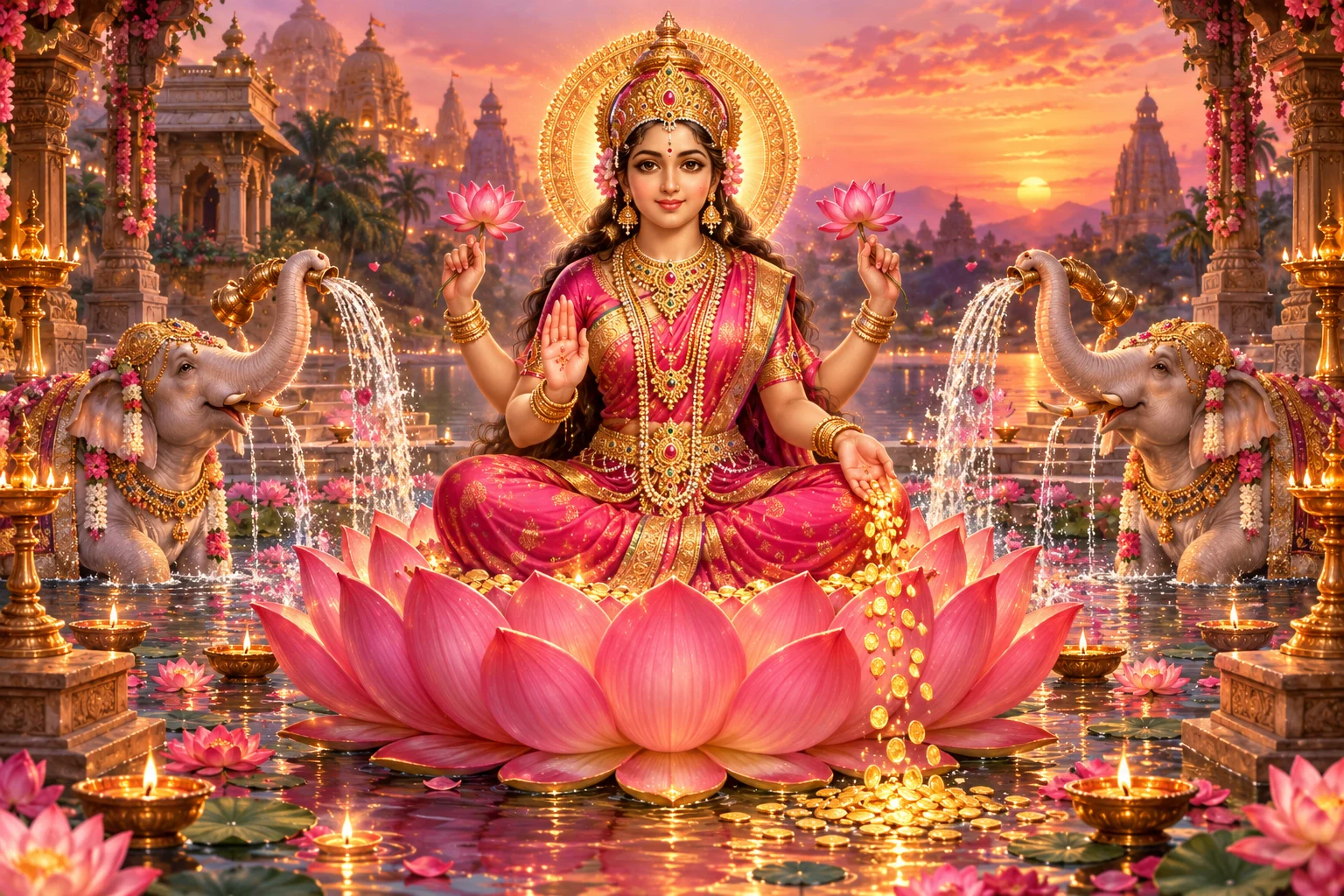
"I bow to Goddess Mahalakshmi." Built around the beej syllable "Shreem," associated with abundance, grace, and prosperity, this is the most widely chanted mantra for Lakshmi, the goddess of wealth, fortune, and wellbeing. It is recited to invoke prosperity — material, spiritual, and emotional.
मैं महालक्ष्मी माता को नमन करता हूँ। "श्रीं" बीज अक्षर देवी लक्ष्मी की समृद्धि, ऐश्वर्य और कृपा का प्रतीक है। यह मंत्र धन, सुख और समृद्धि की प्राप्ति के लिए जपा जाता है।
Benefits
- Chanted for financial stability, prosperity, and abundance in daily life.
- Believed to bring not just wealth but also grace, wellbeing, and contentment.
- Especially popular during Diwali and Friday worship of Lakshmi.
- A simple mantra suitable for daily practice alongside business or career goals.
How to Chant
Om Shreem Mahalakshmyai Namah is traditionally chanted on Fridays, during Diwali, and at the start of the day or before beginning work. It can be repeated 108 times using a mala, ideally in a clean, well-lit space, sometimes with a diya lit nearby as an offering.
Recommended count: 108 times (1 mala), especially on Fridays and during Diwali
Origin
“Shreem” is the beej syllable of Lakshmi, representing Sri — auspiciousness, abundance, and grace. This mantra is one of the most universally recited in Hindu households, especially by those seeking financial and material stability alongside spiritual growth, and features prominently in Diwali and Dhanteras worship.
Word-by-word breakdown
| Sanskrit | Meaning |
|---|---|
| Om | The primordial sound |
| Shreem | Beej syllable representing Lakshmi’s energy of abundance and grace |
| Mahalakshmyai | To Mahalakshmi, the great goddess of fortune |
| Namah | Salutations, I bow to |
When it is chanted
Most commonly chanted on Fridays, throughout Diwali week (especially Lakshmi Puja night), and during Dhanteras — but many devotees also include it in their daily morning practice as a mantra for prosperity and wellbeing.
How to chant the Lakshmi Mantra
Chant Om Shreem Mahalakshmyai Namah 108 times with a mala in a clean, well-lit space, often with a diya nearby. Fridays and Diwali are the classic times. Many households pair the mantra with the Om Jai Lakshmi Mata aarti and the Lakshmi Chalisa. To understand how a seed syllable works, read what is a beej mantra; for the stewardship side of prosperity, see the Kuber Mantra.
Lakshmi worship is traditionally connected with honest work, generosity, and care of a household. The mantra is a devotional practice offered in hope, not a guaranteed financial outcome.
Frequently asked questions
What is the Lakshmi Mantra used for?
It is chanted to invoke prosperity in a broad sense — financial stability, wellbeing, grace, and contentment — and is often recited alongside career or business goals.
When should the Lakshmi Mantra be chanted?
Fridays and the Diwali period, especially Lakshmi Puja night and Dhanteras, are the main occasions. Many devotees also chant it every morning.
How many times should I chant Om Shreem Mahalakshmyai Namah?
The traditional count is 108, one mala. A shorter attentive practice each day is better than an occasional long session.
Frequently Asked Questions
What does Lakshmi Mantra (Om Shreem Mahalakshmyai Namah) mean?
"I bow to Goddess Mahalakshmi." Built around the beej syllable "Shreem," associated with abundance, grace, and prosperity, this is the most widely chanted mantra for Lakshmi, the goddess of wealth, fortune, and wellbeing. It is recited to invoke prosperity — material, spiritual, and emotional.
How many times should Lakshmi Mantra (Om Shreem Mahalakshmyai Namah) be chanted?
The traditional recommendation is 108 times (1 mala), especially on Fridays and during Diwali.
What are the benefits of chanting Lakshmi Mantra (Om Shreem Mahalakshmyai Namah)?
Chanted for financial stability, prosperity, and abundance in daily life. Believed to bring not just wealth but also grace, wellbeing, and contentment.