
Mantra · Savitr (Surya)
Gayatri Mantra
Last updated: August 31, 2026
The Gayatri Mantra with Sanskrit text, transliteration, meaning, benefits, and the correct way to chant this Vedic hymn to the divine light.
ॐ भूर्भुवः स्वः तत्सवितुर्वरेण्यं भर्गो देवस्य धीमहि धियो यो नः प्रचोदयात्॥
Om Bhur Bhuvah Svah Tat Savitur Varenyam Bhargo Devasya Dhimahi Dhiyo Yo Nah Prachodayat
Meaning
We meditate on the glorious splendor of the Divine Creator (Savitr), who pervades the earth, the atmosphere, and the heavens, and who is worthy of worship. May that radiant light illuminate and guide our intellect toward truth and righteousness.
हम उस सृष्टिकर्ता परमात्मा (सविता देव) के दिव्य तेज का ध्यान करते हैं, जो पृथ्वी, अंतरिक्ष और स्वर्ग — तीनों लोकों में व्याप्त है और पूजनीय है। वे हमारी बुद्धि को सद्मार्ग की ओर प्रेरित करें।
Benefits
- Considered the most powerful mantra for awakening intellect, clarity, and wisdom.
- Traditionally chanted at sunrise and sunset (sandhya) to align the mind with natural rhythms.
- Believed to purify thought, speech, and action when chanted with devotion.
- Widely taught to students as part of the Upanayana (sacred thread) tradition for focus and learning.
How to Chant
The Gayatri Mantra is ideally chanted facing the rising or setting sun, in a seated meditative posture. Begin with the pranava Om, then recite the mantra slowly, allowing each phrase — Bhur Bhuvah Svah, Tat Savitur Varenyam, Bhargo Devasya Dhimahi, Dhiyo Yo Nah Prachodayat — to be felt, not just spoken. It is traditionally chanted 108 times using a mala, though 3, 9, or 21 repetitions are common for daily practice.
Recommended count: 108 times (1 mala), or in multiples of 3
Gayatri Mantra meaning in short
The Gayatri Mantra meaning can be stated simply: we meditate on the divine light of the Creator; may that light guide our intellect toward truth. It is a prayer for clear thinking and right understanding rather than a request for a particular material result. The mantra addresses Savitr, the illuminating power linked with the sun, and asks that the same light awaken discernment in the person who chants it. For a fuller, line-by-line explanation, read Gayatri Mantra meaning and benefits.
Gayatri Mantra meaning and interpretation
In English, the prayer moves from meditation to aspiration: first contemplating Savitr’s radiant presence, then asking that this light direct the dhi — the faculty of understanding. That is why the Gayatri Mantra is often associated with study, reflection, and ethical clarity. A concise translation cannot carry every shade of the Sanskrit, so use it as a guide alongside the original text. Explore the word-by-word Gayatri Mantra meaning or the line-by-line explanation before comparing translations.
Origin
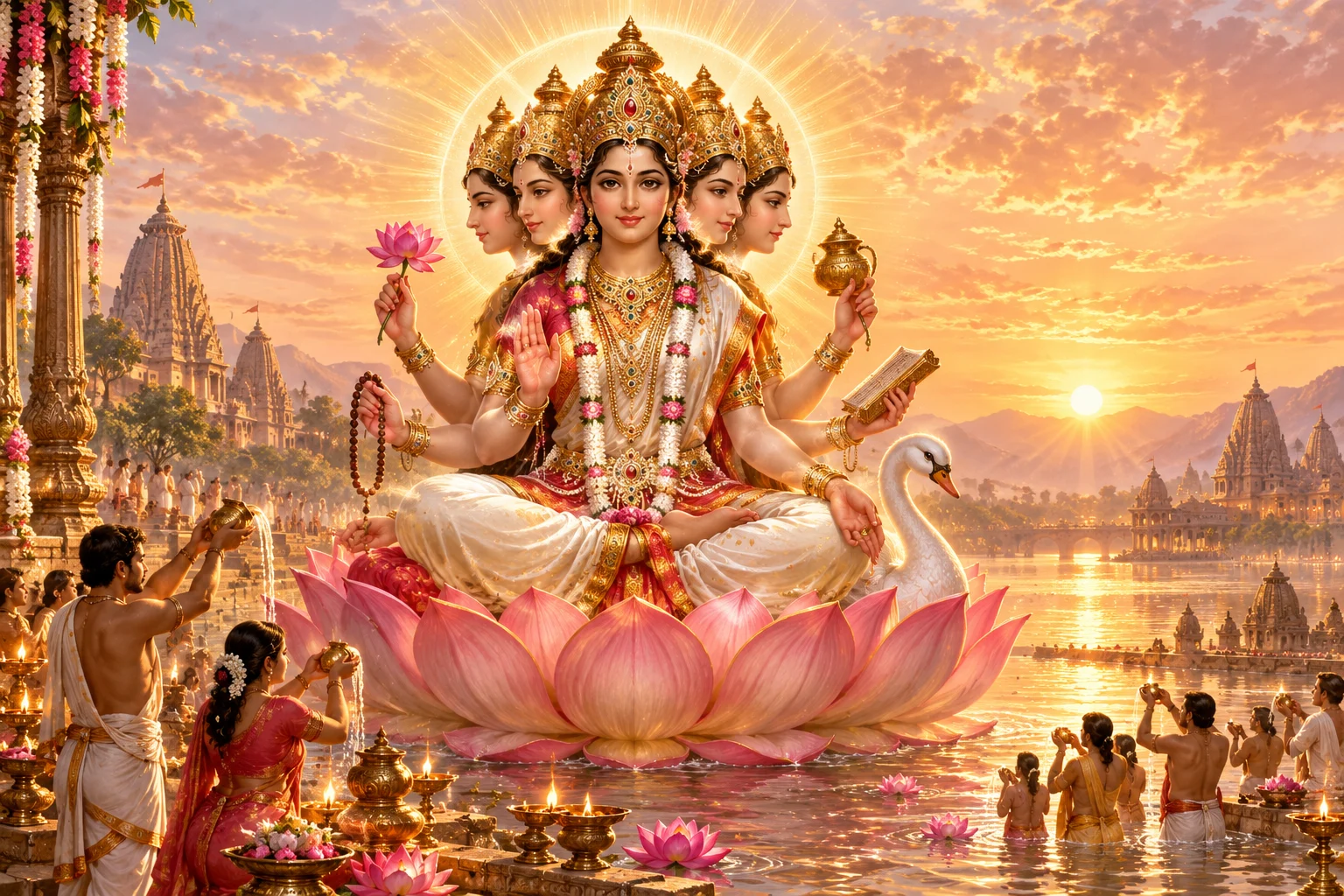
The Gayatri Mantra is drawn from the Rigveda (Mandala 3, Hymn 62, Verse 10) and is composed in the Gayatri meter — 24 syllables arranged in three lines of eight. It is addressed to Savitr, the solar deity representing the life-giving and illuminating power of the sun, and is one of the most widely recited mantras across Hindu traditions. Because it is a Vedic prayer to the sun, it is closely related in spirit to the Surya Mantra.
Word-by-word breakdown
| Sanskrit | Meaning |
|---|---|
| Om | The primordial sound |
| Bhur Bhuvah Svah | The three worlds — earth, atmosphere, heaven |
| Tat | That (the divine) |
| Savitur | Of Savitr, the sun/creator |
| Varenyam | Worthy of worship, most excellent |
| Bhargo | Radiance, splendor, that which burns away impurity |
| Devasya | Of the divine |
| Dhimahi | We meditate upon |
| Dhiyo | Intellect, understanding |
| Yo Nah Prachodayat | May it inspire/guide us |
When it is chanted
Traditionally recited during the three sandhya periods — sunrise, midday, and sunset — the Gayatri Mantra is also chanted during Upanayana ceremonies, before study or exams, and as a daily practice for mental clarity and spiritual grounding. Many households teach it to children as their first Sanskrit prayer.
How to build a daily Gayatri practice
Beginners do not need to start with a full mala. Three, nine, or eleven attentive repetitions at a fixed time — most often at dawn — are enough to establish the habit, and the count can grow as the practice settles. Sit comfortably, keep the breath natural, and read the meaning after chanting so that the sound stays connected to its sense. Pronunciation improves through listening to a trusted reciter rather than through speed. If you follow a particular teacher, lineage, or family custom regarding initiation and Vedic recitation, follow that guidance. For a step-by-step routine, see how to start a daily mantra practice, and for the reasoning behind mala counts, read why mantras are chanted 108 times. You can also follow the Gayatri Mantra daily-practice guide or review a pronunciation guide before increasing your repetition count.
Traditional benefits and honest limits
In devotional practice the Gayatri Mantra is associated with steadier focus, calmer mornings, and a habit of pausing before reacting or deciding. These are spiritual and practice-oriented associations, not medical, financial, or academic guarantees. Chanting can support a reflective routine, but it is not a substitute for qualified medical, mental-health, or practical help. New chanters may also find the beginner’s guide to Hindu mantras useful for context.
Frequently asked questions
What is the Gayatri Mantra meaning in English?
It means roughly: “We meditate on the adorable radiance of the divine Creator; may that light inspire and guide our intellect.” Translations differ in wording because the Sanskrit is compact and layered, but the central request — for illumined, truthful understanding — stays the same.
What does the Gayatri Mantra ask for?
It asks that the divine radiance of Savitr illuminate and guide the intellect. In practice, this is understood as a prayer for discernment and a truthful direction for one’s thoughts and actions, rather than a promise of a particular outcome.
What is the best time to chant the Gayatri Mantra?
Tradition favours the three sandhya periods, especially sunrise and sunset. If only one time is practical, dawn is the most common choice. Consistency at a regular time matters more than a perfect schedule.
How many times should the Gayatri Mantra be chanted?
There is no single required number. A full mala is 108; many people chant in multiples of three, and beginners often start with three or eleven. Follow your teacher or family practice if one is prescribed.
Can anyone chant the Gayatri Mantra?
Traditions differ on initiation, pronunciation, and formal Vedic recitation. If you follow a specific sampradaya or teacher, follow that guidance. For general devotional learning, reading the text, meaning, and context respectfully is a reasonable place to begin.
Frequently Asked Questions
What does Gayatri Mantra mean?
We meditate on the glorious splendor of the Divine Creator (Savitr), who pervades the earth, the atmosphere, and the heavens, and who is worthy of worship. May that radiant light illuminate and guide our intellect toward truth and righteousness.
How many times should Gayatri Mantra be chanted?
The traditional recommendation is 108 times (1 mala), or in multiples of 3.
What are the benefits of chanting Gayatri Mantra?
Considered the most powerful mantra for awakening intellect, clarity, and wisdom. Traditionally chanted at sunrise and sunset (sandhya) to align the mind with natural rhythms.