
Ayurveda · Routine
Abhyanga (Oil Self-Massage) (अभ्यंग)
Abhyanga is the Ayurvedic practice of warm oil self-massage, traditionally done before bathing to calm Vata and nourish the skin.
Overview
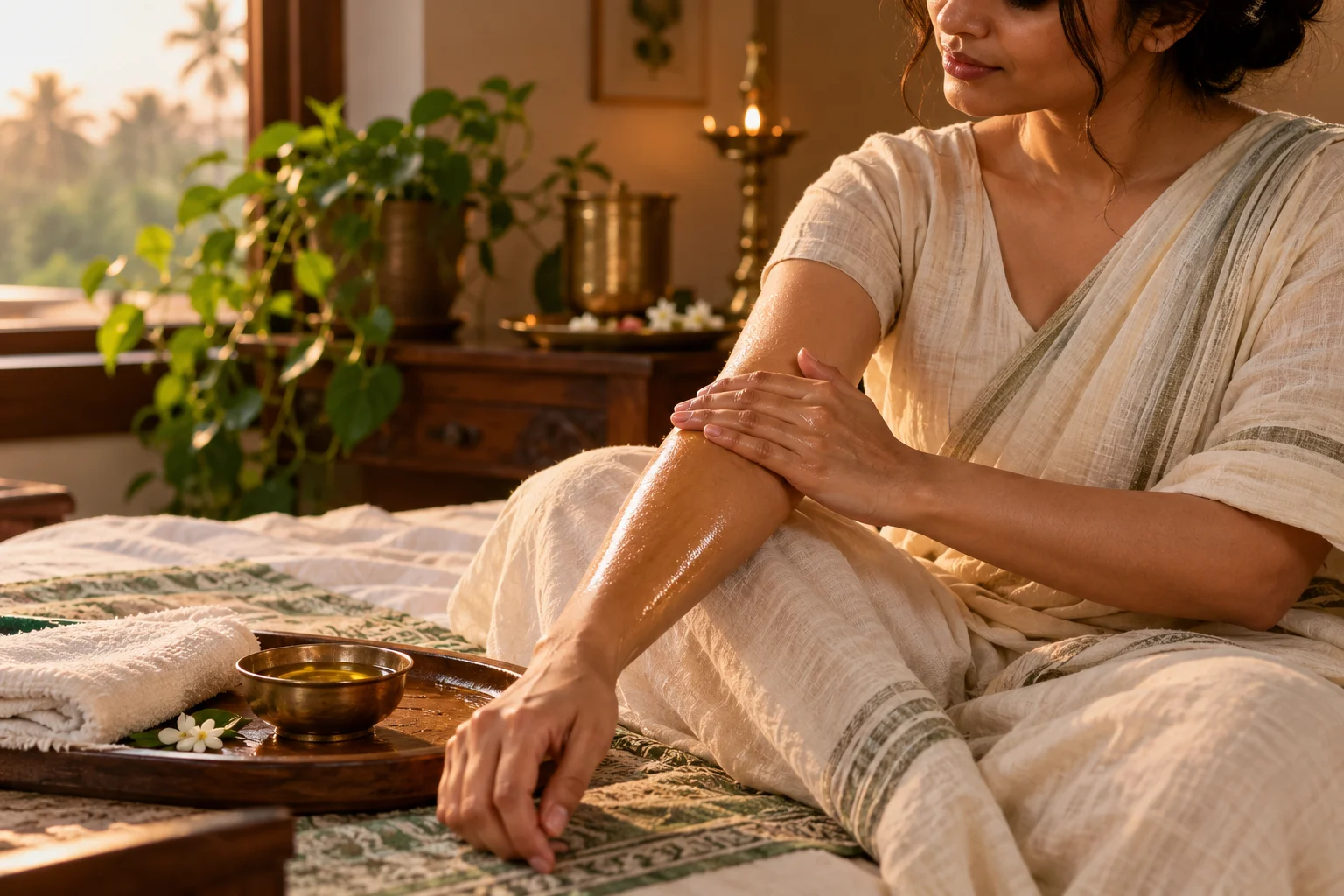
Abhyanga is the practice of massaging warm oil into the body, traditionally recommended as part of daily dinacharya, most often done in the morning before bathing. Classical texts describe it as particularly pacifying for Vata, which makes sense given Vata's association with dryness and overstimulation — the combination of oil (moist, grounding) and touch (slow, rhythmic) directly counters both. Traditional abhyanga uses long strokes along the length of the limbs and circular strokes over joints and the abdomen, typically working from the extremities inward, with a few minutes of extra attention to the scalp and soles of the feet — both considered especially significant in Ayurvedic touch. Oil choice is traditionally matched to constitution: warming sesame oil for Vata and Kapha, cooling coconut oil for Pitta, though sesame is the most classically default choice.
अभ्यंग शरीर पर गर्म तेल से मालिश करने की प्रथा है, जो पारंपरिक रूप से दैनिक दिनचर्या का हिस्सा है और सामान्यतः सुबह स्नान से पहले की जाती है। शास्त्रों में इसे विशेष रूप से वात-शामक बताया गया है, जो समझ में आता है क्योंकि वात सूखेपन और अत्यधिक उत्तेजना से जुड़ा है — तेल (नमी और स्थिरता देने वाला) और स्पर्श (धीमा, लयबद्ध) दोनों सीधे इसका प्रतिकार करते हैं। पारंपरिक अभ्यंग में अंगों की लंबाई में लंबे स्ट्रोक और जोड़ों व पेट पर गोलाकार स्ट्रोक का प्रयोग होता है, सामान्यतः बाहरी अंगों से शुरू करके भीतर की ओर, साथ ही सिर की त्वचा और पैरों के तलवों पर कुछ अतिरिक्त ध्यान — दोनों को आयुर्वेदिक स्पर्श में विशेष महत्वपूर्ण माना जाता है। तेल का चुनाव पारंपरिक रूप से प्रकृति के अनुसार होता है: वात और कफ के लिए उष्ण तिल का तेल, पित्त के लिए शीतल नारियल तेल, हालाँकि तिल का तेल सबसे शास्त्रीय डिफ़ॉल्ट विकल्प है।
Benefits
- Traditionally used to calm Vata, especially useful during stress or irregular routine.
- Regular practice is associated with softer, better-nourished skin.
- The slow, rhythmic touch is traditionally considered grounding for an overactive mind.
How to Practice
Warm a small amount of oil (sesame is the classical default) slightly, then massage it into the whole body — long strokes on limbs, circular strokes on joints and abdomen, and extra attention to the scalp and feet. Leave it on for 10-15 minutes if possible, then bathe with warm water. Three to four times a week is a common practical frequency, though daily practice is the classical ideal.
Part of a larger routine
Abhyanga is traditionally one piece of a fuller morning Dinacharya sequence, done after tongue scraping and before bathing. See Vata Dosha for more on why touch and oil are considered especially calming for this dosha.
Note: Avoid abhyanga on broken skin, during fever, or right after eating; use lighter oil and gentler pressure if you have very oily or acne-prone skin. Ayurvedic herbs and practices can interact with medication, pregnancy, and existing conditions — check with a qualified Ayurvedic practitioner or your doctor before starting something new.
Frequently Asked Questions
What is Abhyanga (Oil Self-Massage)?
Abhyanga is the practice of massaging warm oil into the body, traditionally recommended as part of daily dinacharya, most often done in the morning before bathing. Classical texts describe it as particularly pacifying for Vata, which makes sense given Vata's association with dryness and overstimulation — the combination of oil (moist, grounding) and touch (slow, rhythmic) directly counters both. Traditional abhyanga uses long strokes along the length of the limbs and circular strokes over joints and the abdomen, typically working from the extremities inward, with a few minutes of extra attention to the scalp and soles of the feet — both considered especially significant in Ayurvedic touch. Oil choice is traditionally matched to constitution: warming sesame oil for Vata and Kapha, cooling coconut oil for Pitta, though sesame is the most classically default choice.
What are the benefits of Abhyanga (Oil Self-Massage)?
Traditionally used to calm Vata, especially useful during stress or irregular routine. Regular practice is associated with softer, better-nourished skin. The slow, rhythmic touch is traditionally considered grounding for an overactive mind.
How to Practice for Abhyanga (Oil Self-Massage)?
Warm a small amount of oil (sesame is the classical default) slightly, then massage it into the whole body — long strokes on limbs, circular strokes on joints and abdomen, and extra attention to the scalp and feet. Leave it on for 10-15 minutes if possible, then bathe with warm water. Three to four times a week is a common practical frequency, though daily practice is the classical ideal.