
History & Mythology
The stories that
shaped a civilization.
Journey through kingdoms, empires, resistance, sacred narratives, and the ideas that have carried across generations—told with context and care.
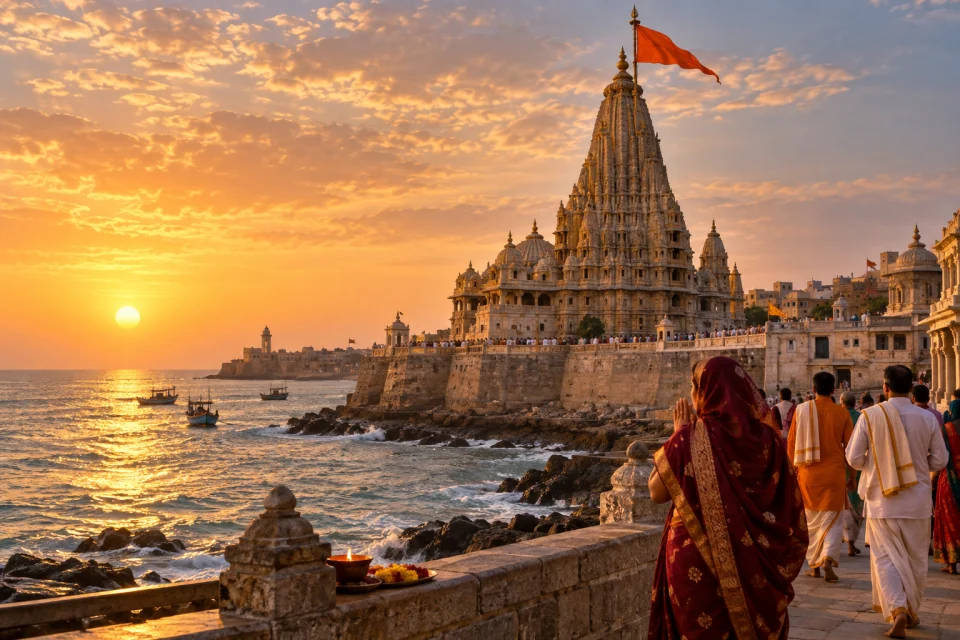
Regional accounts differ. We present the widely accepted narrative and flag where scholarship or tradition varies.
The archive
Stories worth lingering over
Long-form narratives that connect people, places, evidence, and tradition—without flattening their complexity.
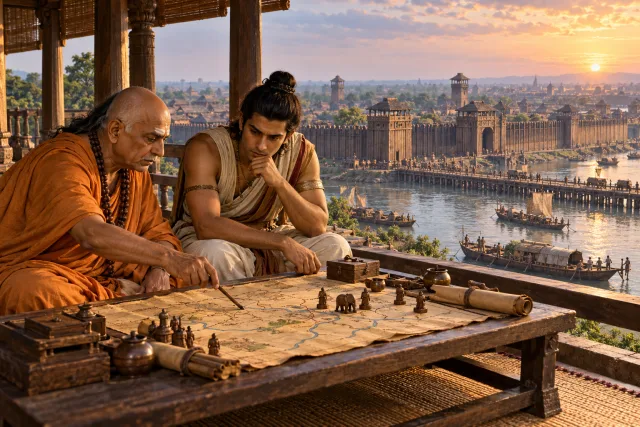
The Teacher and the Outcast Prince: How Chanakya and Chandragupta Maurya Built an Empire
Before Ashoka, there was Chandragupta — a young man with no kingdom, guided by a teacher who had been humiliated at court and never forgot it. Together they built the first empire to unite most of the Indian subcontinent.
Read the story →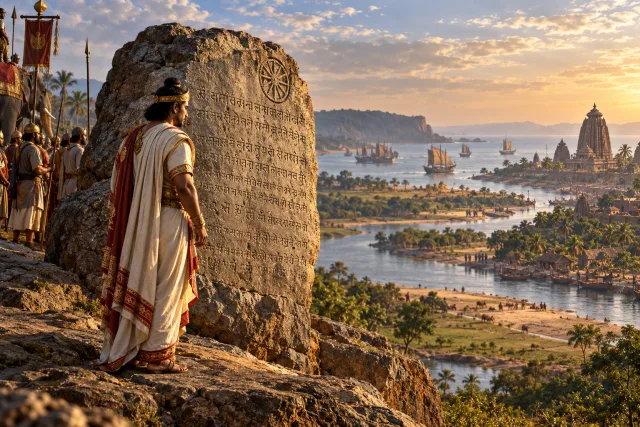
The Kingdom That Changed an Emperor: The History of Kalinga and Odisha
Ashoka won the Kalinga War — and the defeated kingdom changed the conqueror. From Kharavela's forgotten empire to the temples of Puri and Konark, this is the 2,000-year story of Kalinga and Odisha.
Read the story →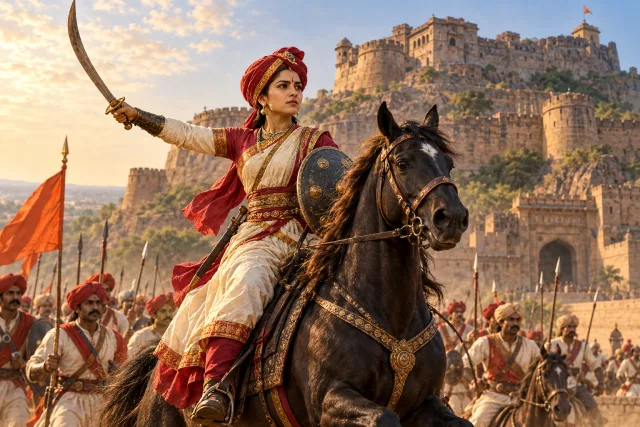
"I Shall Not Give Up My Jhansi": The Story of Rani Lakshmibai
Widowed, denied her adopted son's right to the throne, and ordered to surrender her kingdom, Rani Lakshmibai chose to fight instead. Her defence of Jhansi made her one of the most enduring symbols of resistance in Indian history.
Read the story →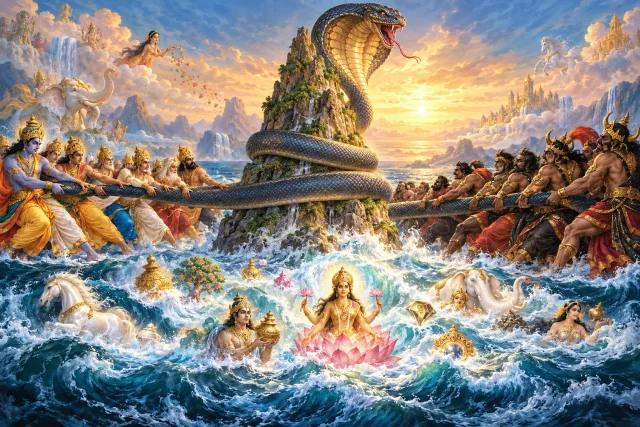
Neither Side Could Win Alone: The Myth of Samudra Manthan, the Churning of the Ocean
To win back their lost power, the devas needed help from the very asuras they were losing to. Samudra Manthan is the Puranic story of what it costs to churn an ocean for immortality — and who ends up drinking the poison along the way.
Read the story →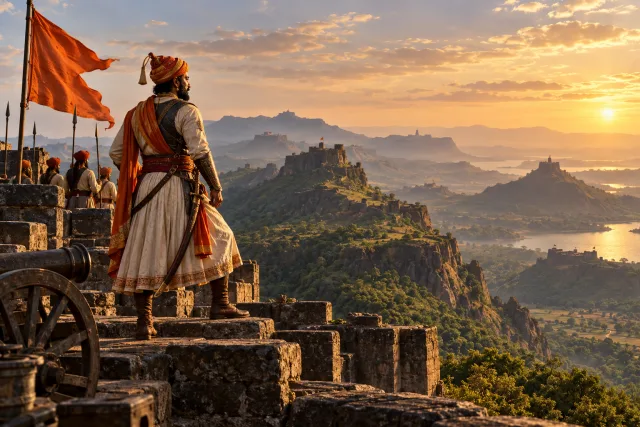
The Boy Who Was Crowned King of a Kingdom That Didn't Exist Yet: Shivaji and the Rise of the Marathas
At sixteen, Shivaji began capturing forts with a small band of followers. By the time he was crowned king at Raigad, he had built an empire that would outlast the Mughals — using terrain, timing, and an idea called Swarajya, self-rule.
Read the story →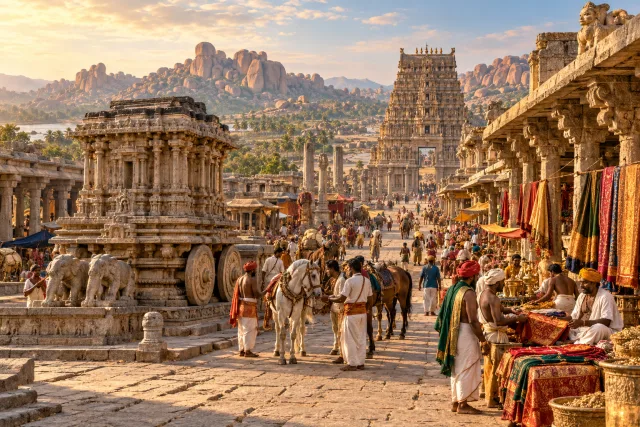
Hampi's Ruins Were Once a Living Empire: The Story of Vijayanagara
Founded by two brothers on the losing side of a war, Vijayanagara grew into an empire whose capital city amazed foreign travellers with its wealth. Its ruins at Hampi are what remain of one of medieval India's great civilizations.
Read the story →About this collection
Indian history and mythology, side by side
This collection covers two kinds of story that are often blended together in popular retellings. The first is history: the rise of the Mauryan empire under Chandragupta Maurya and Chanakya, the long story of Kalinga and Odisha, the Vijayanagara empire and its capital at Hampi, Shivaji and the founding of Maratha power, and Rani Lakshmibai of Jhansi in the uprising of 1857. These accounts draw on inscriptions, coins, travellers' records, archaeology, and the work of historians, and we note where the evidence is thin or contested.
The second is mythology: sacred narratives from the epics and the Puranas, such as the churning of the ocean, Samudra Manthan, that explain the origins of deities, festivals, and sacred places. These are presented as religious and cultural texts in their own right, with attention to what they mean to the traditions that preserve them rather than as literal chronology.
Many places and figures sit in both worlds, remembered through legend and also documented in the historical record. Where that happens, articles separate the two clearly so you can see what tradition holds and what the evidence shows. Start with any long read above, or follow a story path to read a period or theme in sequence.
Our approach
Clear narrative.
Careful boundaries.
HistoryBuilt from dates, inscriptions, scholarship, and the limits of available evidence.
MythologySacred narratives presented in their cultural, symbolic, and textual context.
VariationRegional and traditional differences noted where they materially shape the story.