
Ayurveda · आयुर्वेद
Ancient knowledge
for everyday balance.
A thoughtful introduction to India's science of life—doshas, digestion, herbs, daily routines, and the classical ideas that connect them.
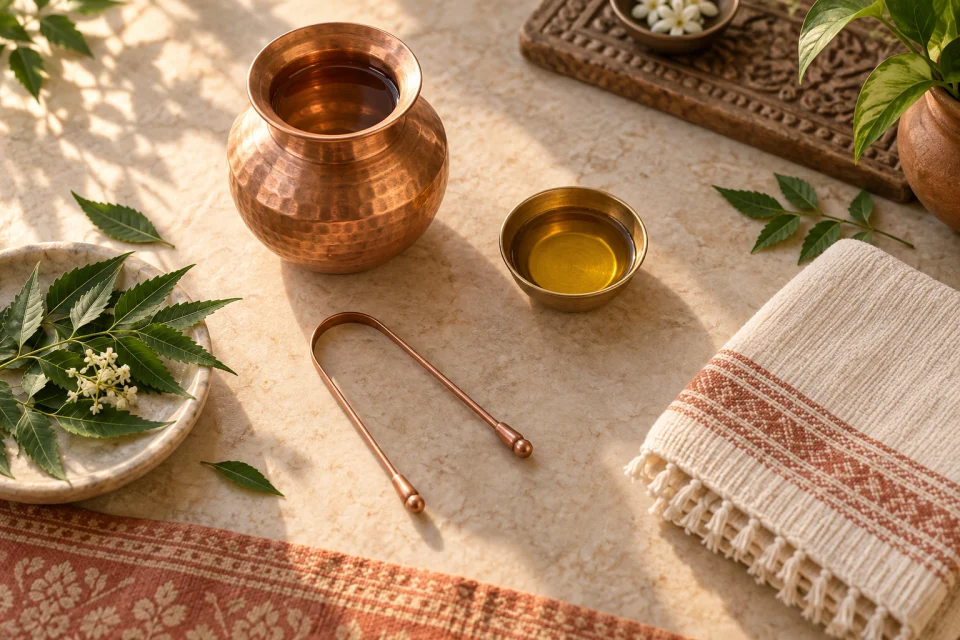
“Knowledge of life”—a tradition that considers constitution, season, digestion, routine, and diet together.
Build your foundation
Four paths into Ayurveda
Start with concepts, then move into herbs and routines. Each guide separates traditional use from modern medical advice.
Dinacharya: design a steadier day
Explore the traditional daily sequence—from waking and cleansing to movement, meals, and sleep—built around the body's natural rhythms.
Read the daily routine →Doshas & Core Concepts
Learn the language of Vata, Pitta, Kapha, agni, ojas, and constitution.
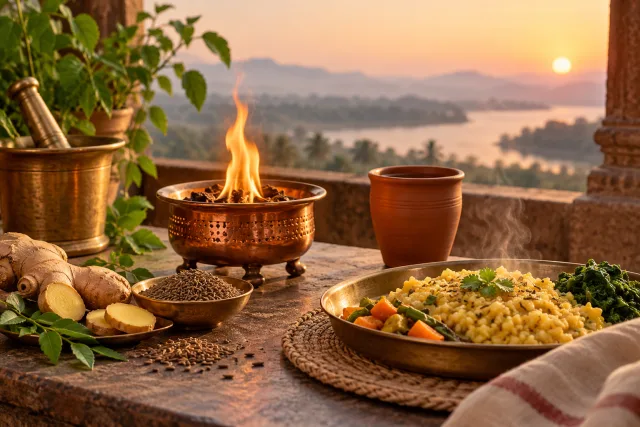
Agni (Digestive Fire) (अग्नि)
Agni is the digestive fire in Ayurveda — the body's capacity to digest food and absorb nutrients. Strong agni is considered central to health.
Explore guide →
Kapha Dosha (कफ दोष)
Kapha is the dosha of structure, made of earth and water — it governs the body's stability, lubrication, immunity, and emotional steadiness.
Explore guide →
Ojas (Vital Essence) (ओजस्)
Ojas is the subtle vital essence in Ayurveda, described as the refined end-product of good digestion — linked to immunity, vitality, and resilience.
Explore guide →
Pitta Dosha (पित्त दोष)
Pitta is the dosha of transformation, made of fire and water — it governs digestion, metabolism, and the sharpness of intellect.
Explore guide →
Prakriti (Body Constitution) (प्रकृति)
Prakriti is a person's unique, unchanging dosha constitution set at conception — the Ayurvedic idea closest to a personal baseline or 'body type'.
Explore guide →
Vata Dosha (वात दोष)
Vata is the dosha of movement, made of air and space — it governs breath, circulation, the nervous system, and the mind's activity.
Explore guide →Herbs & Ingredients
Traditional uses, preparation, and practical cautions for common Ayurvedic herbs.
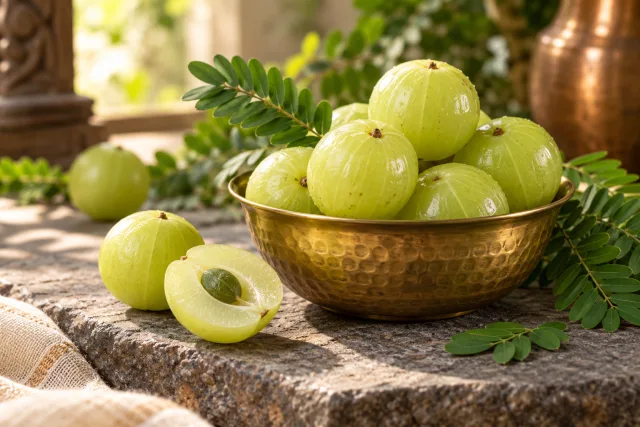
Amla (Indian Gooseberry) (आमलकी)
Amla, or Indian gooseberry, is one of Ayurveda's most valued rejuvenative fruits, prized for its exceptionally high natural vitamin C content.
Explore guide →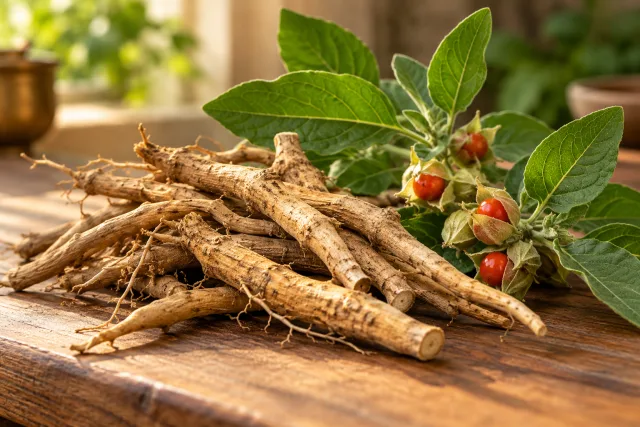
Ashwagandha (अश्वगंधा)
Ashwagandha is one of Ayurveda's best-known adaptogenic herbs, traditionally used to support resilience to stress, energy, and restful sleep.
Explore guide →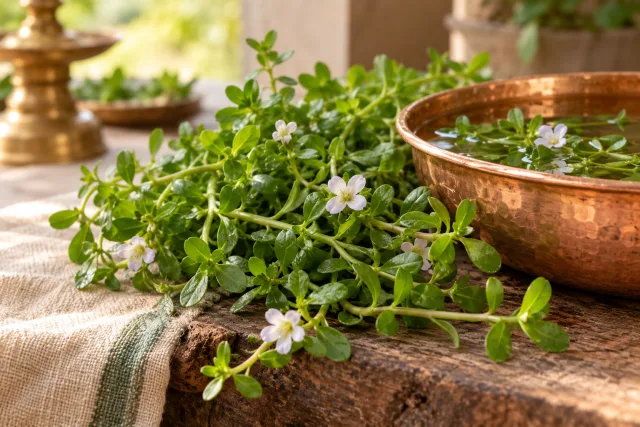
Brahmi (ब्राह्मी)
Brahmi is a creeping herb traditionally classified as medhya rasayana in Ayurveda — used to support memory, focus, and calm.
Explore guide →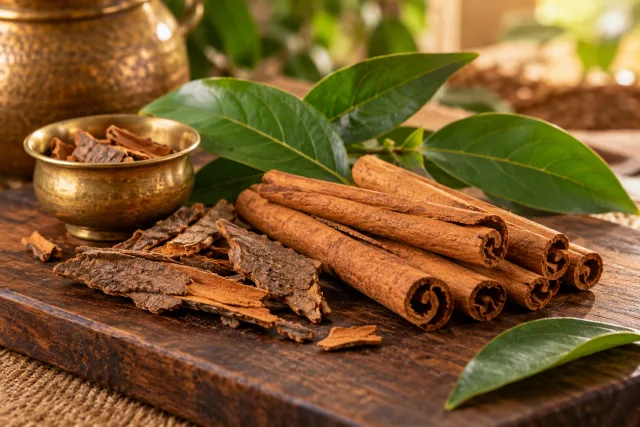
Cinnamon (त्वक्)
Cinnamon, known as dalchini, is a warming spice-bark used in Ayurveda to support digestion and circulation, especially in cold or damp conditions.
Explore guide →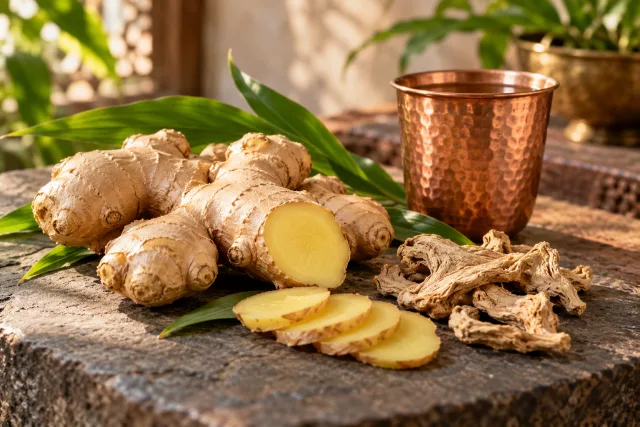
Ginger (शुण्ठी / आर्द्रक)
Ginger is one of Ayurveda's most everyday herbs, used fresh (ardraka) or dried (shunthi) to kindle digestion and ease nausea and cold symptoms.
Explore guide →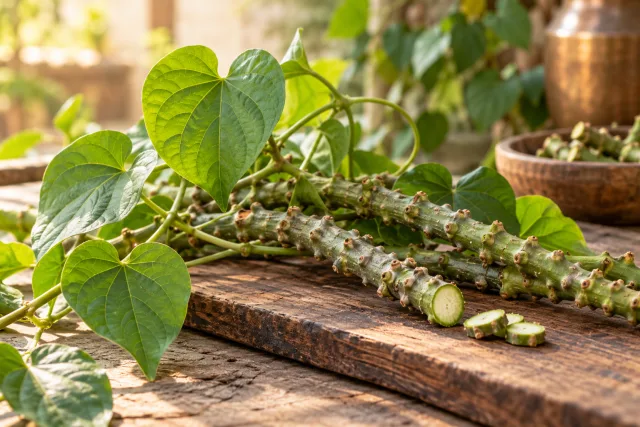
Guduchi (Giloy) (गुडूची)
Guduchi, known popularly as Giloy, is a climbing vine highly regarded in Ayurveda as a rasayana for immunity and general resistance to illness.
Explore guide →
Haritaki (हरीतकी)
Haritaki benefits in Ayurveda: the chebulic myrobalan fruit of Triphala, used for digestion, regularity and rejuvenation. Uses, dose and side effects.
Explore guide →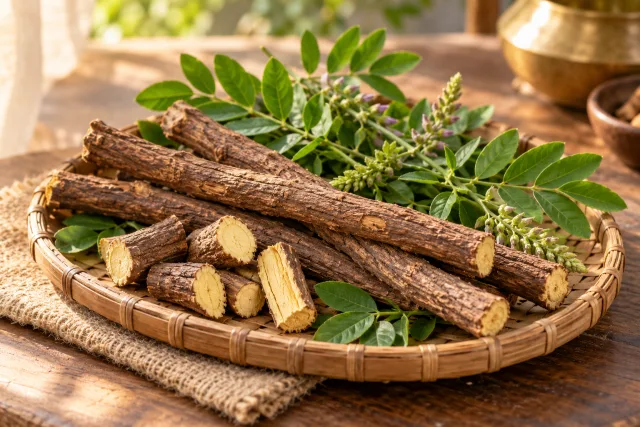
Licorice (Mulethi) (यष्टिमधु)
Licorice, known as mulethi or yashtimadhu, is a sweet-rooted herb traditionally used in Ayurveda to soothe the throat and support the digestive lining.
Explore guide →Manjistha (मञ्जिष्ठा)
Manjistha (Indian madder, Rubia cordifolia) is a red Ayurvedic root used for skin and as a 'blood purifier'. Benefits, how to use it and side effects.
Explore guide →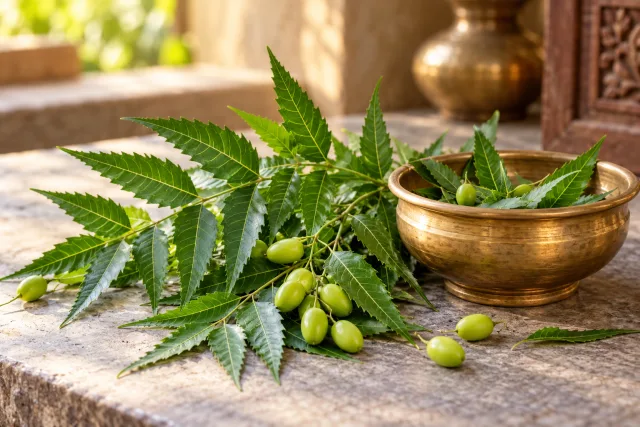
Neem (निम्ब)
Neem is a bitter-tasting tree used across Ayurvedic and household tradition in India, traditionally associated with skin health and cleansing.
Explore guide →Punarnava (पुनर्नवा)
Punarnava benefits in Ayurveda: the Boerhavia diffusa herb used for swelling, urinary health and the liver. Uses, dose, research and side effects.
Explore guide →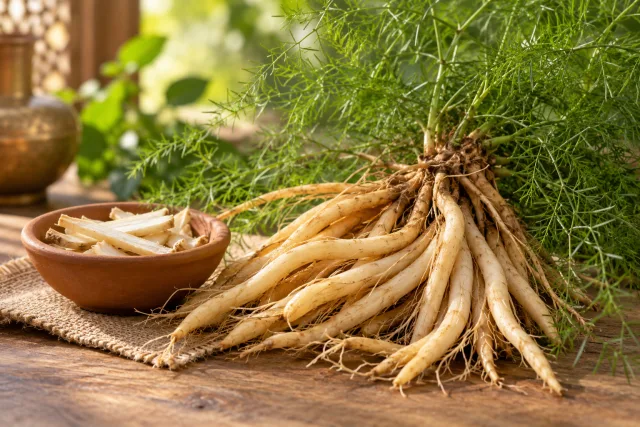
Shatavari (शतावरी)
Shatavari is a root herb traditionally classified as a rasayana for women's health in Ayurveda, associated with nourishment and reproductive wellness.
Explore guide →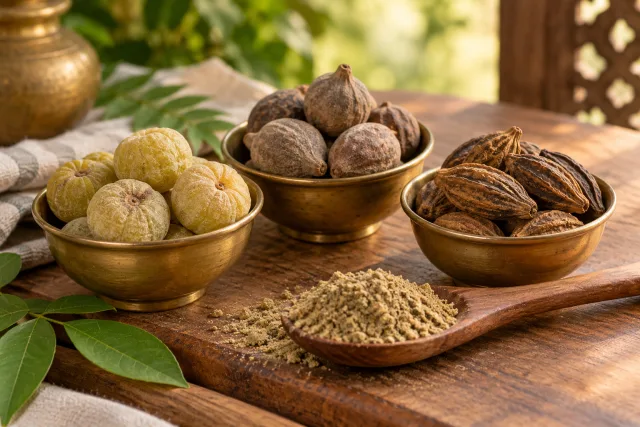
Triphala (त्रिफला)
Triphala is a classical Ayurvedic formula of three dried fruits, traditionally used to support digestion and regular elimination.
Explore guide →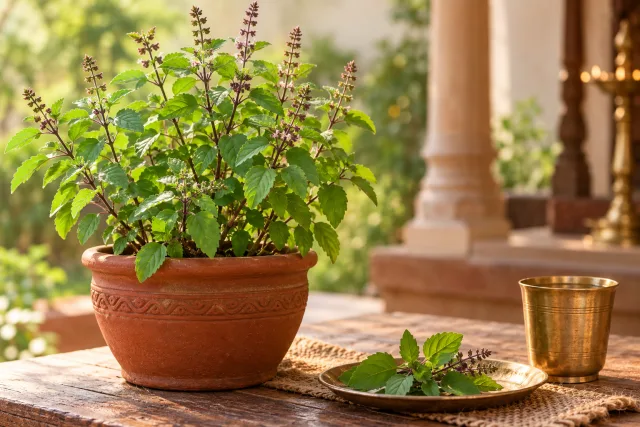
Tulsi (Holy Basil) (तुलसी)
Tulsi, or holy basil, is a sacred plant in Hindu households and a widely used Ayurvedic herb for respiratory health and stress resilience.
Explore guide →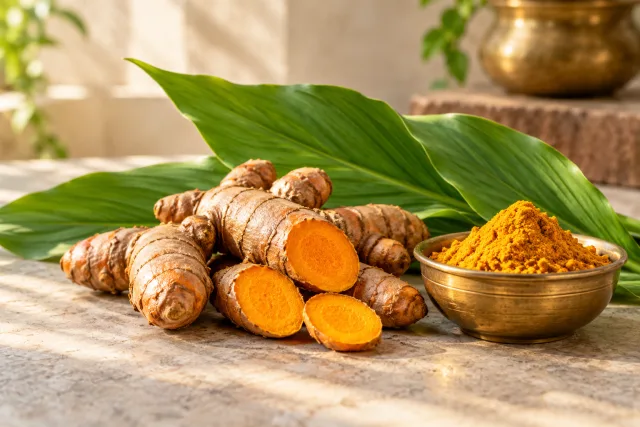
Turmeric (हरिद्रा)
Turmeric (haldi) is a golden root central to Indian cooking and Ayurvedic tradition, associated with skin healing, joint comfort, and general vitality.
Explore guide →Daily & Seasonal Routines
Small practices that work with the rhythm of the day, season, and body.

Abhyanga (Oil Self-Massage) (अभ्यंग)
Abhyanga is the Ayurvedic practice of warm oil self-massage, traditionally done before bathing to calm Vata and nourish the skin.
Explore guide →
Ayurveda for Better Sleep (निद्रा)
Nidra, or sleep, is one of Ayurveda's three foundational pillars of health, supported by a wind-down routine, consistent timing, and Vata-calming habits.
Explore guide →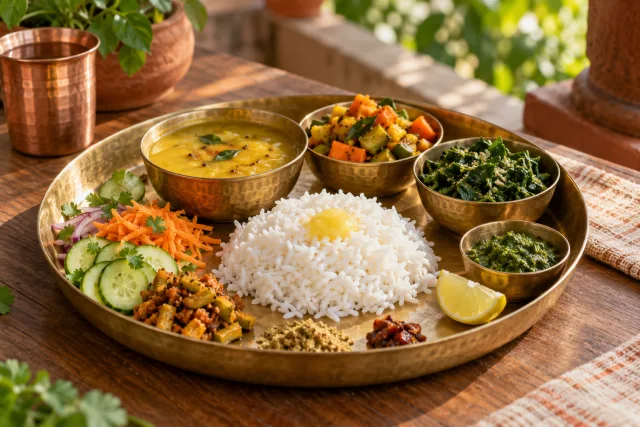
Ayurvedic Diet Basics (आहार)
Ahara, or diet, is one of Ayurveda's three foundational pillars of health, guided by taste, digestive fire, and eating habits — not a fixed food list.
Explore guide →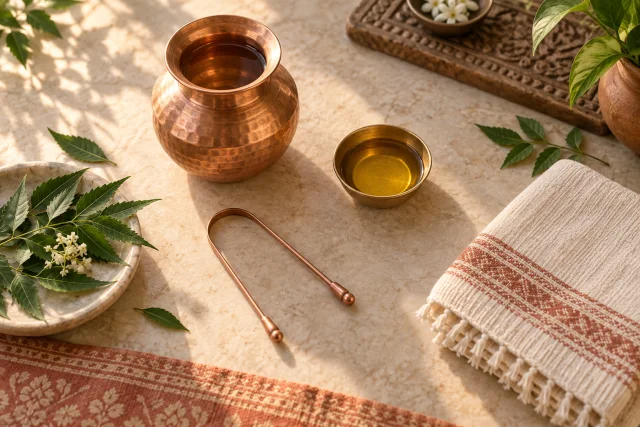
Dinacharya (Daily Routine) (दिनचर्या)
Dinacharya is the Ayurvedic practice of structuring the day around the body's natural rhythms, from wake time through sleep.
Explore guide →
Jala Neti (Nasal Cleansing) (जल नेति)
Jala neti is a traditional nasal-rinsing practice using a neti pot and saline water, used in Ayurveda and yoga tradition to clear the nasal passages.
Explore guide →
Oil Pulling (Gandusha) (गण्डूष / कवल)
Oil pulling is a classical Ayurvedic oral hygiene practice of swishing oil in the mouth, traditionally used to support oral health.
Explore guide →
Ritucharya (Seasonal Routine) (ऋतुचर्या)
Ritucharya is the Ayurvedic practice of adjusting diet and daily routine according to the season, based on how each season affects the doshas.
Explore guide →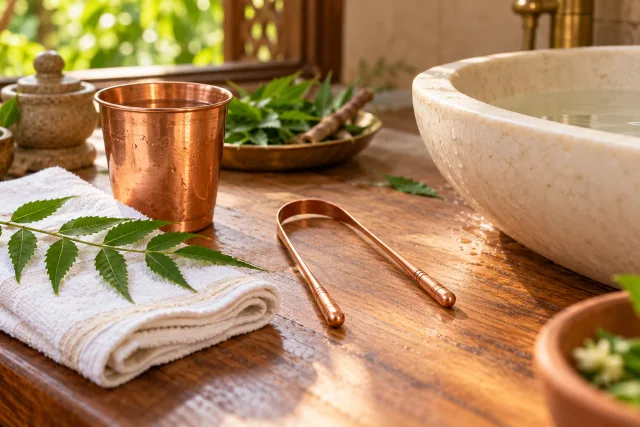
Tongue Scraping (Jihwa Prakshalana) (जिह्वा प्रक्षालन)
Tongue scraping is a simple morning practice in Ayurveda for removing overnight coating from the tongue, traditionally linked to fresh breath and clearer taste.
Explore guide →From the Classical Texts
Foundational Sanskrit verses with context and a clear English reading.

The Definition of Health (स्वास्थ्य की परिभाषा)
A foundational verse from the Sushruta Samhita defining swastha (a healthy person) as balance across doshas, digestion, tissues, and a contented mind.
Explore guide →
The Purpose of Ayurveda (आयुर्वेद का प्रयोजन)
A foundational verse from the Charaka Samhita stating the purpose of Ayurveda: to preserve the health of the healthy and to cure the disease of the diseased.
Explore guide →About Ayurveda
An introduction to the science of life
Ayurveda, from the Sanskrit ayus (life) and veda (knowledge), is the traditional medical system of India. Its foundational texts, the Charaka Samhita and the Sushruta Samhita, describe health as a balance between the body, the mind, the senses, and the environment, and they emphasise prevention through diet, daily routine, and seasonal adjustment.
Central to Ayurveda are the three doshas. Vata governs movement, Pitta governs transformation and heat, and Kapha governs structure and stability. Each person is said to have a natural constitution, or prakriti, made up of these three in a particular proportion. Other key ideas include agni, the digestive fire, and ojas, the essence of vitality that good digestion and steady habits are believed to build.
The guides on this page are organised into four learning paths. Core concepts explain the doshas and related ideas. Herb guides describe plants such as Ashwagandha, Turmeric, Tulsi, and Triphala, including how they are traditionally prepared and when they should be avoided. Routine guides cover dinacharya and ritucharya, the daily and seasonal practices. Classical text pages present foundational verses with a plain English reading. If you are new to Ayurveda, begin with the doshas and prakriti, then move on to routines.