
Ayurveda · Routine
Ayurvedic Diet Basics (आहार)
Ahara, or diet, is one of Ayurveda's three foundational pillars of health, guided by taste, digestive fire, and eating habits — not a fixed food list.
Overview
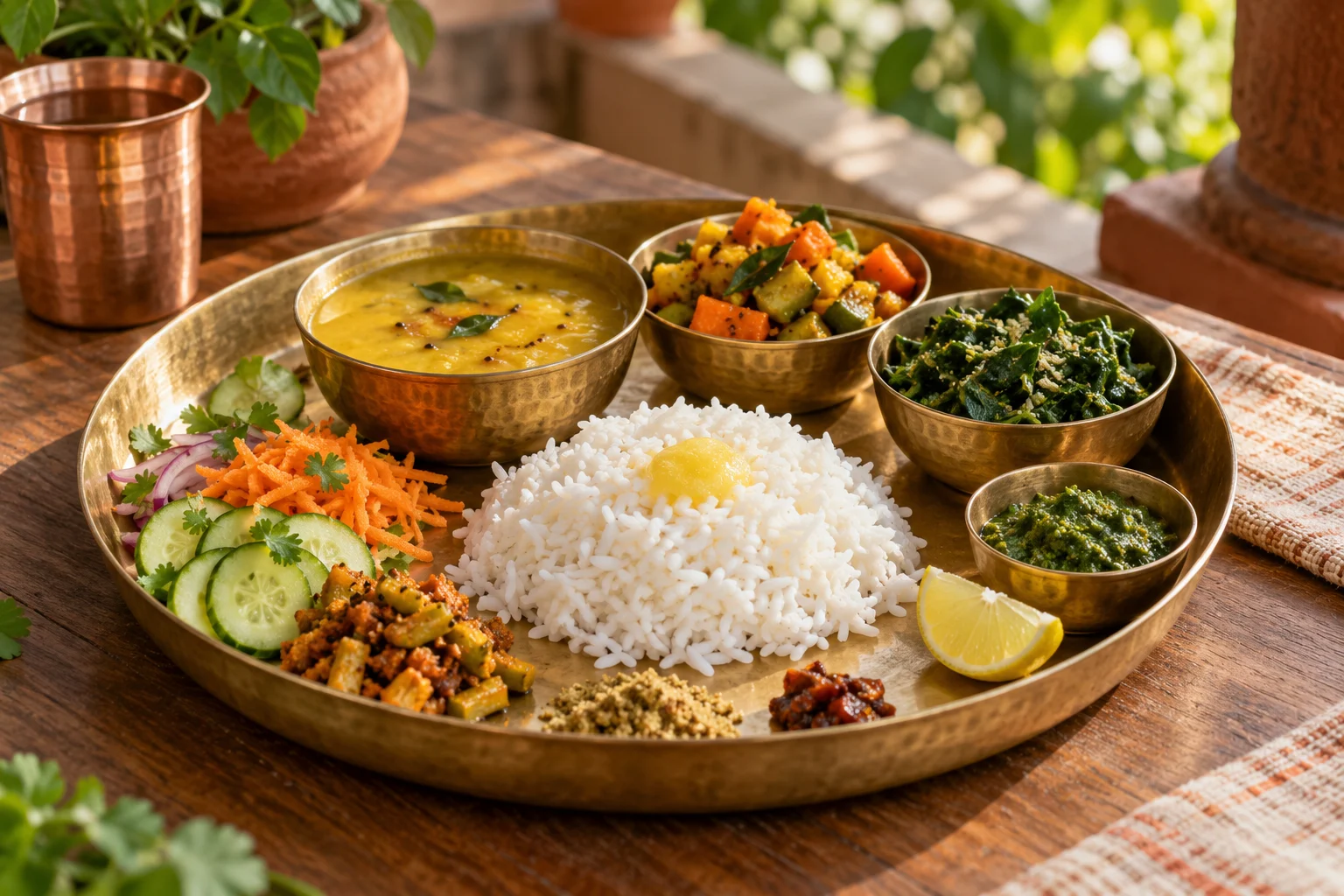
Ahara (diet) is one of the trayopastambha, the three sub-pillars of health in Ayurveda, alongside sleep and disciplined living. Rather than prescribing one universal diet, Ayurvedic dietary guidance is built around a few reusable principles: eating according to your constitution (prakriti) and current imbalance (vikriti), eating according to the strength of your digestive fire (agni), and paying attention to the six tastes (sweet, sour, salty, pungent, bitter, astringent), since a meal missing several tastes is considered less satisfying and less balancing. Beyond what to eat, Ayurveda places significant weight on how to eat: eating at regular times, eating the largest meal around midday when agni is considered strongest, eating in a calm setting without distraction, not overeating (traditionally, filling the stomach to roughly three-quarters capacity), and not eating again until the previous meal is digested. These habit-level guidelines are treated as being just as important as ingredient choice.
आहार आयुर्वेद के त्रयोपस्तंभ — यानी स्वास्थ्य के तीन उप-आधारों — में से एक है, नींद और अनुशासित जीवन के साथ। एक सार्वभौमिक आहार बताने के बजाय, आयुर्वेदिक आहार मार्गदर्शन कुछ पुनःप्रयोज्य सिद्धांतों पर आधारित है: अपनी प्रकृति और वर्तमान विकृति के अनुसार भोजन करना, अपनी पाचन अग्नि की शक्ति के अनुसार भोजन करना, और छह रसों (मीठा, खट्टा, नमकीन, तीखा, कड़वा, कषाय) पर ध्यान देना, क्योंकि जिस भोजन में कई रस अनुपस्थित हों उसे कम संतोषजनक और कम संतुलक माना जाता है। क्या खाएँ इससे परे, आयुर्वेद कैसे खाएँ इस पर भी काफी ज़ोर देता है: नियमित समय पर भोजन करना, दोपहर के आसपास सबसे बड़ा भोजन करना जब अग्नि सबसे मज़बूत मानी जाती है, बिना ध्यान भटकाए शांत वातावरण में भोजन करना, अधिक न खाना (पारंपरिक रूप से पेट को लगभग तीन-चौथाई भरना), और पिछला भोजन पचने तक दोबारा न खाना। ये आदत-स्तरीय दिशानिर्देश सामग्री चयन जितने ही महत्वपूर्ण माने जाते हैं।
Benefits
- Framework-based rather than list-based, so it adapts to different cuisines and constitutions.
- Emphasizes eating habits (timing, attention, portion) alongside food choice, which is often overlooked.
- The six-taste principle offers a simple check for whether a meal feels balanced.
How to Practice
Start with habits before ingredients: eat at consistent times, make midday your largest meal, avoid eating while distracted or stressed, stop at roughly three-quarters full, and leave a few hours between meals. Then layer in taste balance and dosha-specific adjustments — see the Vata, Pitta, and Kapha pages for what tends to aggravate or pacify each.
Diet as one of three pillars
Ahara is traditionally paired with nidra (sleep) and brahmacharya (disciplined living) as the three pillars of health. See Agni for the digestive-fire concept most of this dietary guidance is built around, and Dinacharya for how meal timing fits into the wider daily routine.
Note: This page is for educational purposes and is not medical advice. Ayurvedic herbs and practices can interact with medication, pregnancy, and existing conditions — check with a qualified Ayurvedic practitioner or your doctor before starting something new.
Frequently Asked Questions
What is Ayurvedic Diet Basics?
Ahara (diet) is one of the trayopastambha, the three sub-pillars of health in Ayurveda, alongside sleep and disciplined living. Rather than prescribing one universal diet, Ayurvedic dietary guidance is built around a few reusable principles: eating according to your constitution (prakriti) and current imbalance (vikriti), eating according to the strength of your digestive fire (agni), and paying attention to the six tastes (sweet, sour, salty, pungent, bitter, astringent), since a meal missing several tastes is considered less satisfying and less balancing. Beyond what to eat, Ayurveda places significant weight on how to eat: eating at regular times, eating the largest meal around midday when agni is considered strongest, eating in a calm setting without distraction, not overeating (traditionally, filling the stomach to roughly three-quarters capacity), and not eating again until the previous meal is digested. These habit-level guidelines are treated as being just as important as ingredient choice.
What are the benefits of Ayurvedic Diet Basics?
Framework-based rather than list-based, so it adapts to different cuisines and constitutions. Emphasizes eating habits (timing, attention, portion) alongside food choice, which is often overlooked. The six-taste principle offers a simple check for whether a meal feels balanced.
How to Practice for Ayurvedic Diet Basics?
Start with habits before ingredients: eat at consistent times, make midday your largest meal, avoid eating while distracted or stressed, stop at roughly three-quarters full, and leave a few hours between meals. Then layer in taste balance and dosha-specific adjustments — see the Vata, Pitta, and Kapha pages for what tends to aggravate or pacify each.