
Ayurveda · Herb
Neem (निम्ब)
Neem is a bitter-tasting tree used across Ayurvedic and household tradition in India, traditionally associated with skin health and cleansing.
Overview
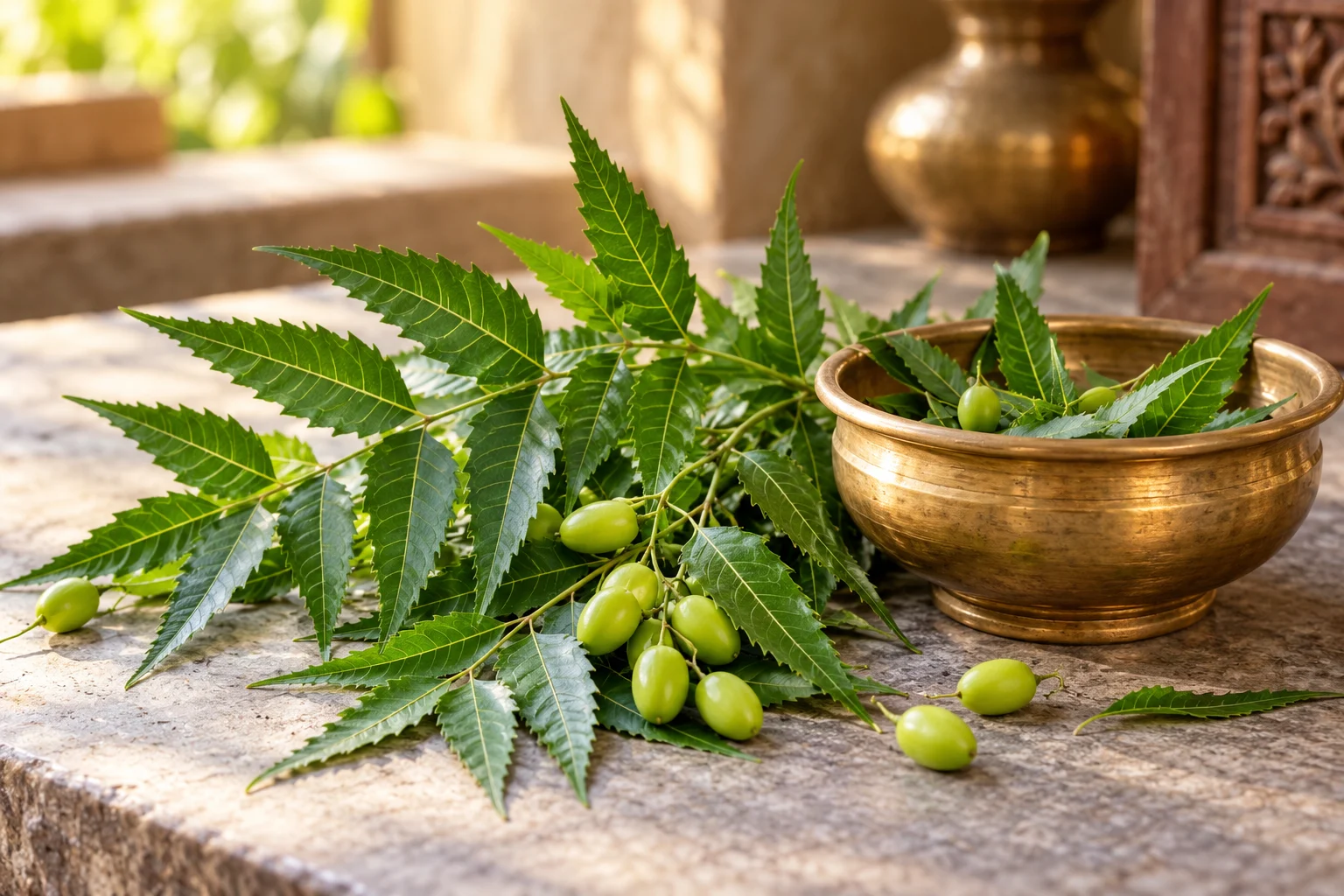
Neem (Azadirachta indica) is a fast-growing tree found across the Indian subcontinent, and one of the most widely used plants in Indian household and Ayurvedic tradition — the leaves, bark, and oil are all used in different preparations. Its taste is classified as intensely bitter and astringent, and it's traditionally considered cooling, which is part of why it's so strongly associated with Pitta-related skin concerns. Neem is one of the most common ingredients in traditional skin preparations, and neem-based oral care (neem twigs used as a natural toothbrush, or datun) is a long-standing rural Indian tradition predating modern toothbrushes. In classical Ayurvedic classification neem is grouped among herbs used for tvak (skin) and rakta (blood) support, reflecting its long traditional use for skin conditions and general cleansing.
नीम (आज़ादिरख्ता इंडिका) एक तेज़ी से बढ़ने वाला वृक्ष है जो भारतीय उपमहाद्वीप में सर्वत्र पाया जाता है, और भारतीय घरेलू व आयुर्वेदिक परंपरा में सबसे अधिक उपयोग होने वाले पौधों में से एक है — इसकी पत्तियाँ, छाल और तेल अलग-अलग रूपों में प्रयोग होते हैं। इसका स्वाद अत्यंत कड़वा और कषाय (कसैला) माना गया है, और इसे शीतल गुण वाला माना जाता है, जिस कारण यह पित्त-संबंधी त्वचा समस्याओं से गहराई से जुड़ा हुआ है। नीम त्वचा से जुड़ी पारंपरिक तैयारियों में सबसे सामान्य घटकों में से एक है, और नीम की टहनी को दातुन के रूप में उपयोग करना — आधुनिक टूथब्रश से पहले का — ग्रामीण भारत की एक पुरानी परंपरा है। शास्त्रीय आयुर्वेदिक वर्गीकरण में नीम को त्वचा और रक्त संबंधी सहायता देने वाली औषधियों में रखा गया है, जो त्वचा की समस्याओं और सामान्य शुद्धिकरण में इसके लंबे पारंपरिक उपयोग को दर्शाता है।
Benefits
- Long traditional use for supporting clear, healthy-looking skin.
- Traditional oral care use as datun (chew stick), an early form of dental hygiene.
- Classified as cooling and bitter, traditionally used to pacify aggravated Pitta.
How to Use
Neem is used in many forms: leaf paste or oil applied to skin, neem-infused water for topical use, neem powder or tablets taken internally in small amounts, and fresh twigs chewed as datun for oral care. Because of its intense bitterness, internal use is traditionally in small quantities rather than large doses.
Bitter as a taste category
Neem is one of the clearest examples of the bitter (tikta) taste in Ayurveda, which is traditionally considered Pitta- and Kapha-pacifying but aggravating to Vata in excess. See Pitta Dosha for more on the heat-related imbalances neem is traditionally paired with, and Manjistha for a skin herb often combined with neem.
Note: Neem is generally advised against during pregnancy and breastfeeding, and internal use should be in small amounts — excessive internal use is not traditionally recommended. Ayurvedic herbs and practices can interact with medication, pregnancy, and existing conditions — check with a qualified Ayurvedic practitioner or your doctor before starting something new.
Frequently Asked Questions
What is Neem?
Neem (Azadirachta indica) is a fast-growing tree found across the Indian subcontinent, and one of the most widely used plants in Indian household and Ayurvedic tradition — the leaves, bark, and oil are all used in different preparations. Its taste is classified as intensely bitter and astringent, and it's traditionally considered cooling, which is part of why it's so strongly associated with Pitta-related skin concerns. Neem is one of the most common ingredients in traditional skin preparations, and neem-based oral care (neem twigs used as a natural toothbrush, or datun) is a long-standing rural Indian tradition predating modern toothbrushes. In classical Ayurvedic classification neem is grouped among herbs used for tvak (skin) and rakta (blood) support, reflecting its long traditional use for skin conditions and general cleansing.
What are the benefits of Neem?
Long traditional use for supporting clear, healthy-looking skin. Traditional oral care use as datun (chew stick), an early form of dental hygiene. Classified as cooling and bitter, traditionally used to pacify aggravated Pitta.
How to Use for Neem?
Neem is used in many forms: leaf paste or oil applied to skin, neem-infused water for topical use, neem powder or tablets taken internally in small amounts, and fresh twigs chewed as datun for oral care. Because of its intense bitterness, internal use is traditionally in small quantities rather than large doses.