
Ayurveda · Routine
Oil Pulling (Gandusha) (गण्डूष / कवल)
Oil pulling is a classical Ayurvedic oral hygiene practice of swishing oil in the mouth, traditionally used to support oral health.
Overview
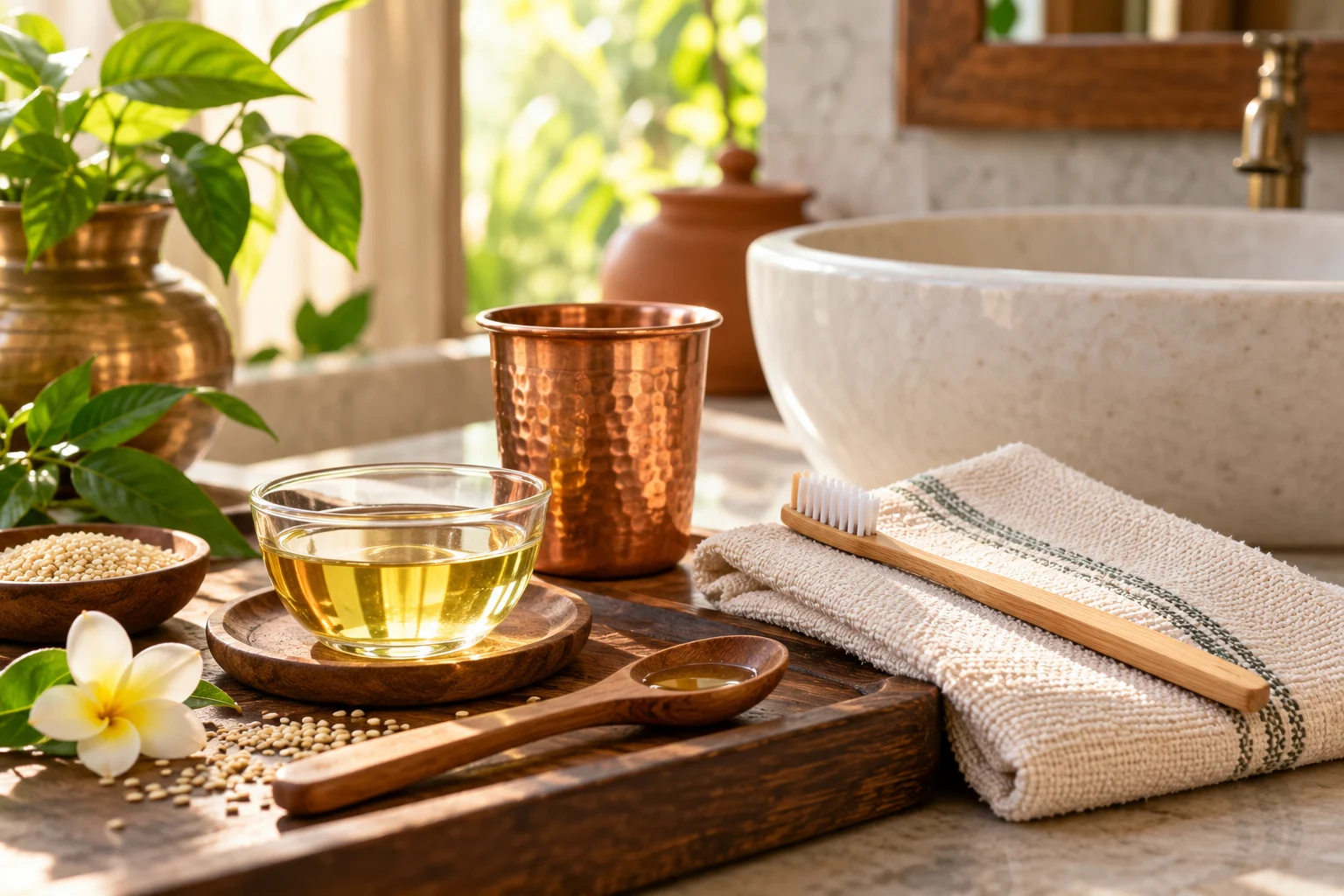
Oil pulling refers to two related classical practices: gandusha, holding oil in the mouth without moving it, and kavala, swishing or gargling oil more actively — both traditionally done first thing in the morning on an empty stomach as part of dinacharya. Sesame oil is the classical default, though coconut oil is a common and popular substitute today. Classical texts describe this practice as beneficial for the strength of the jaw and teeth, the clarity of the voice, and the general freshness of the mouth and throat. It's grouped among daily hygiene practices alongside tongue scraping, reflecting how much emphasis Ayurvedic dinacharya places on the mouth as an entry point connected to overall digestion and health.
ऑयल पुलिंग दो संबंधित शास्त्रीय प्रथाओं को दर्शाता है: गण्डूष, जिसमें तेल को बिना हिलाए मुँह में रखा जाता है, और कवल, जिसमें तेल से अधिक सक्रिय रूप से कुल्ला या गरारे किए जाते हैं — दोनों पारंपरिक रूप से सुबह खाली पेट, दिनचर्या के हिस्से के रूप में किए जाते हैं। तिल का तेल शास्त्रीय डिफ़ॉल्ट है, हालाँकि आजकल नारियल तेल एक सामान्य और लोकप्रिय विकल्प है। शास्त्रों में इस प्रथा को जबड़े और दाँतों की मज़बूती, आवाज़ की स्पष्टता, और मुँह व गले की सामान्य ताज़गी के लिए लाभदायक बताया गया है। इसे जीभ खुरचने जैसी दैनिक स्वच्छता प्रथाओं के साथ रखा गया है, जो दर्शाता है कि आयुर्वेदिक दिनचर्या मुँह को समग्र पाचन और स्वास्थ्य से जुड़े प्रवेश-बिंदु के रूप में कितना महत्व देती है।
Benefits
- Traditional practice for supporting oral freshness and gum health as part of daily hygiene.
- Classical texts associate it with jaw strength and vocal clarity.
- Simple to add to an existing morning routine — takes only a few minutes.
How to Practice
Take a tablespoon of sesame or coconut oil on an empty stomach in the morning. For kavala, swish it gently around the mouth for 5-15 minutes without swallowing, then spit it out (not down the sink, to avoid clogging) and rinse with warm water before brushing teeth as usual.
An overlooked piece of dinacharya
Oil pulling is often the least-known part of morning Dinacharya, usually done alongside tongue scraping as part of a short oral hygiene sequence before the rest of the morning routine.
Note: Spit the oil into a trash can or tissue rather than the sink, since it can solidify and clog pipes; discontinue if it causes jaw discomfort. Ayurvedic herbs and practices can interact with medication, pregnancy, and existing conditions — check with a qualified Ayurvedic practitioner or your doctor before starting something new.
Frequently Asked Questions
What is Oil Pulling (Gandusha)?
Oil pulling refers to two related classical practices: gandusha, holding oil in the mouth without moving it, and kavala, swishing or gargling oil more actively — both traditionally done first thing in the morning on an empty stomach as part of dinacharya. Sesame oil is the classical default, though coconut oil is a common and popular substitute today. Classical texts describe this practice as beneficial for the strength of the jaw and teeth, the clarity of the voice, and the general freshness of the mouth and throat. It's grouped among daily hygiene practices alongside tongue scraping, reflecting how much emphasis Ayurvedic dinacharya places on the mouth as an entry point connected to overall digestion and health.
What are the benefits of Oil Pulling (Gandusha)?
Traditional practice for supporting oral freshness and gum health as part of daily hygiene. Classical texts associate it with jaw strength and vocal clarity. Simple to add to an existing morning routine — takes only a few minutes.
How to Practice for Oil Pulling (Gandusha)?
Take a tablespoon of sesame or coconut oil on an empty stomach in the morning. For kavala, swish it gently around the mouth for 5-15 minutes without swallowing, then spit it out (not down the sink, to avoid clogging) and rinse with warm water before brushing teeth as usual.