
🔱 Practice Guides
Durga Saptashati: Meaning, Structure, and How It's Traditionally Recited
The Durga Saptashati is the classical source text behind most Durga worship. Here's its structure, its three central stories, and why it's central to Navratri.
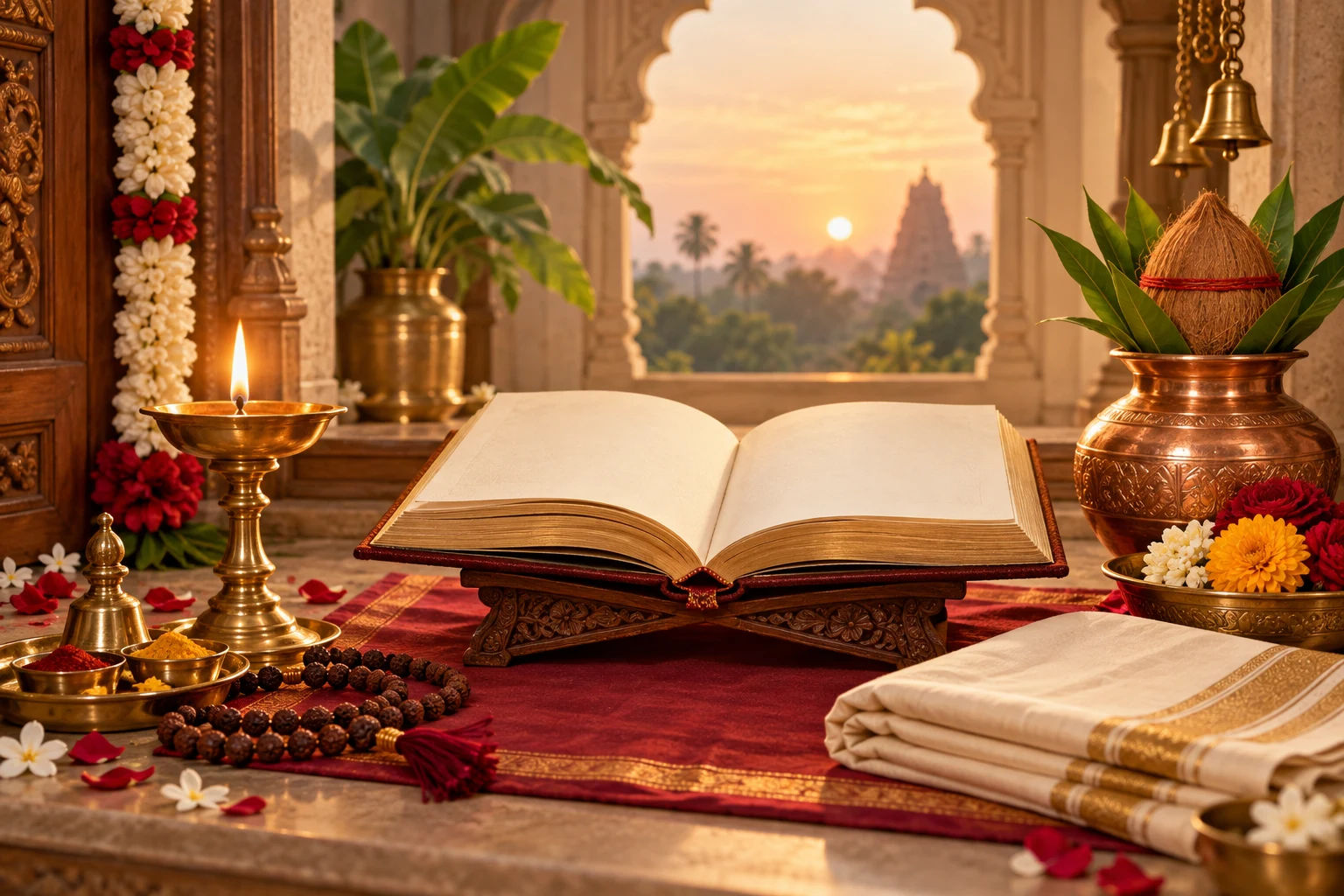
The Durga Saptashati — also known as the Devi Mahatmyam or Chandi Path — is the classical Sanskrit text most Durga worship draws from, including the themes praised in the Durga Chalisa. This guide covers its structure and traditional recitation, without reproducing the full 700 verses — for the complete text, look for an edition from a trusted publisher, such as those commonly used during Navratri recitation.
Where it comes from
The Durga Saptashati is found within the Markandeya Purana, one of the eighteen major Puranas. “Saptashati” means “seven hundred,” referring to the roughly 700 verses that make up the text, spread across thirteen chapters.
The three central stories
The text is traditionally divided into three charitas (episodes), each describing the Goddess’s triumph over a different set of demonic forces: her defeat of Madhu and Kaitabha in the first episode, her battle with the buffalo-demon Mahishasura — the story behind Durga’s most iconic imagery — in the second, and her confrontation with the demons Shumbha and Nishumbha in the third, the longest and most detailed section. Each episode is read as addressing a different register of obstruction, from the subtlest to the most outwardly visible, which is part of why traditional recitation moves through all three in sequence rather than treating them as separate, unrelated stories.
Why it’s central to Navratri
Reciting the complete Durga Saptashati — known as a full “path” (recitation) — is one of the central practices of Navratri, the nine-night festival honoring Durga’s nine forms. Some devotees recite the entire text once during the festival; others spread it across the nine nights, or recite select chapters daily throughout the year. It’s often recited alongside the Durga Kavach (a protective verse sequence) and the Argala Stotra, texts traditionally paired with it as part of a complete recitation sequence.
Common questions
What does “Saptashati” mean?
“Seven hundred” — referring to the approximate number of verses in the text.
Is the Durga Saptashati the same as the Durga Chalisa?
No — the Durga Saptashati is a much longer classical Sanskrit text from the Markandeya Purana; the Durga Chalisa is a later, shorter forty-verse Hindi devotional hymn drawing on similar themes.
What are the three charitas?
The three sections of the text, each describing a different battle: against Madhu and Kaitabha, against Mahishasura, and against Shumbha and Nishumbha.
Where can I find the complete text?
Look for an edition from a trusted publisher, commonly available for Navratri recitation — this guide focuses on meaning and structure rather than reproducing the full verses.