
🧘 Practice Guides
Gomukhasana: Meaning, Steps, and Benefits of Cow Face Pose
Gomukhasana looks unusual at first glance, but it's one of the most effective seated poses for opening tight hips and shoulders at the same time.
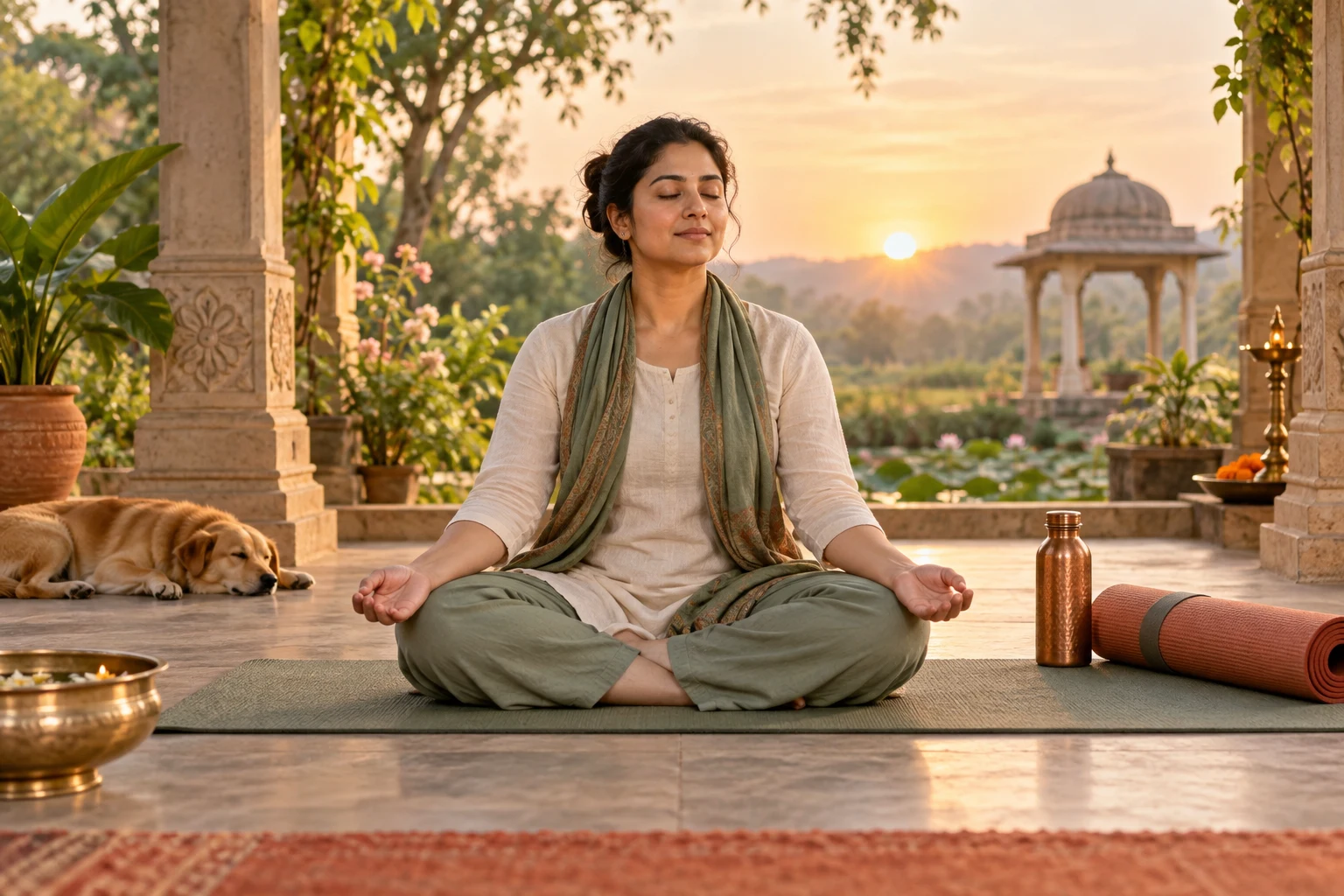
Gomukhasana, “cow face pose,” is a seated posture named for the shape the crossed legs and arms are said to resemble — a cow’s face, with the crossed knees as the mouth and the elbows as the ears. It’s one of the more effective seated poses for addressing tightness in both the hips and shoulders in a single position.
How it’s practiced
Sit with the legs extended, then bend the knees and stack the right knee directly over the left, tucking the feet out to either side so the shins cross closely, with the sit bones grounded evenly. For the arms, reach the right arm up and bend the elbow so the hand drops behind the head, and reach the left arm behind the back from below, trying to clasp the hands together — using a strap between the hands if they don’t yet meet, which is very common and not a sign of doing the pose incorrectly. Hold for several breaths, then switch both the leg and arm position to the other side.
Traditional benefits
Gomukhasana is traditionally associated with stretching the hips, thighs, shoulders, and triceps, and improving posture through the shoulder-opening arm position — useful for anyone who spends long periods with rounded shoulders from desk work or phone use.
A note on the arm position
Most people find one arm direction (right arm up, left arm below, or the reverse) noticeably easier than the other — this asymmetry is completely normal and reflects typical differences in shoulder mobility between sides, not something to force into matching immediately.
Common questions
What does “Gomukhasana” mean?
“Cow face pose” — go meaning cow, mukha meaning face, referring to the shape the crossed limbs are said to resemble.
What if my hands don’t reach each other behind my back?
Use a strap or a piece of cloth between the hands — this is extremely common and not a sign of doing the pose incorrectly.
Why does one side feel easier than the other in Gomukhasana?
Most people have naturally different shoulder mobility between their left and right sides, so one arm direction typically feels more accessible than the other.
What does Gomukhasana help with?
Traditionally, tightness in the hips, thighs, and shoulders — particularly useful for those who sit for long periods or hold tension in the upper back and shoulders.