
Ayurveda · Herb
Amla (Indian Gooseberry) (आमलकी)
Last reviewed: 9 October 2026
Amla, or Indian gooseberry, is one of Ayurveda's most valued rejuvenative fruits, prized for its exceptionally high natural vitamin C content.
Overview
Amla (Emblica officinalis / Phyllanthus emblica), known as Indian gooseberry in English and amalaki in Sanskrit, is a small, sour fruit considered one of the most important rejuvenative (rasayana) substances in the entire Ayurvedic materia medica. It's the primary ingredient in Triphala and in Chyawanprash, a classical jam-like rasayana formula traditionally taken for general vitality, especially through the colder months. Amla is unusual in Ayurvedic classification for containing five of the six recognized tastes (sour, sweet, bitter, pungent, and astringent — all but salty), and is considered cooling despite its sour taste, which normally aggravates Pitta. This combination is part of why it's traditionally considered suitable across all three doshas. It's also naturally very high in vitamin C, which aligns with its long traditional reputation for supporting immunity, skin, and hair.
आमलकी (एम्ब्लिका ऑफिसिनैलिस / फिलैंथस एम्ब्लिका), जिसे हिंदी में आँवला कहा जाता है, एक छोटा, खट्टा फल है जिसे संपूर्ण आयुर्वेदिक औषधि-सूची में सबसे महत्वपूर्ण रसायन पदार्थों में से एक माना जाता है। यह त्रिफला का मुख्य घटक है, और च्यवनप्राश का भी — जो एक शास्त्रीय जैम-जैसा रसायन सूत्र है, जिसे पारंपरिक रूप से सामान्य जीवनशक्ति के लिए, विशेष रूप से ठंड के मौसम में लिया जाता है। आयुर्वेदिक वर्गीकरण में आँवला असामान्य है क्योंकि इसमें छह में से पाँच रस (खट्टा, मीठा, कड़वा, तीखा और कषाय — केवल नमकीन को छोड़कर) पाए जाते हैं, और खट्टे स्वाद के बावजूद इसे शीतल माना जाता है, जबकि सामान्यतः खट्टा रस पित्त बढ़ाता है। यही संयोजन इसे तीनों दोषों के लिए उपयुक्त बनाता है। यह स्वाभाविक रूप से विटामिन सी से अत्यंत भरपूर भी है, जो प्रतिरक्षा, त्वचा और बालों के लिए इसकी लंबे समय से चली आ रही प्रतिष्ठा से मेल खाता है।
Benefits
- One of the richest natural sources of vitamin C, aligning with traditional immunity claims.
- Traditionally used to support hair and skin health.
- Considered suitable for all three doshas, unlike most sour-tasting foods.
How to Use
Amla is eaten fresh or dried, taken as juice, or used as a powder mixed into water or honey. It's also consumed as Chyawanprash, a classical jam-like preparation, or as the core ingredient in Triphala. Amla oil is a separate, widely used topical preparation for hair.
The core of two classical formulas
Amla’s unusual all-dosha suitability is why it anchors two of Ayurveda’s most recommended formulas. See Triphala for the digestive combination it’s part of, and Agni for the digestive-fire concept both formulas are meant to support.
Gooseberry and amla: are they the same fruit?
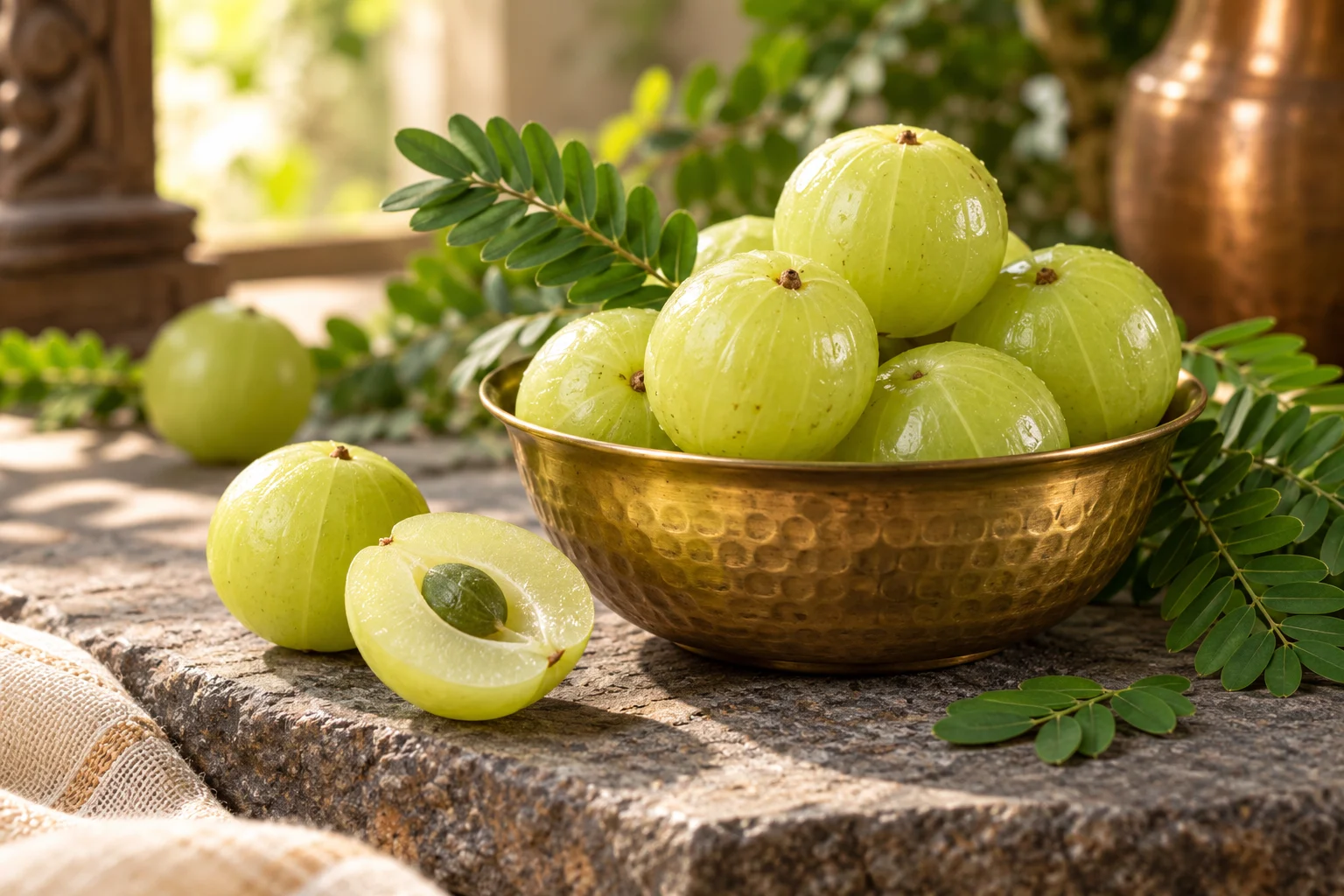
Amla is the Indian gooseberry (Phyllanthus emblica, formerly Emblica officinalis). It is not the same plant as the European gooseberry (Ribes uva-crispa) or the cape gooseberry (Physalis peruviana), even though all three share the English name. The Indian gooseberry is a hard, pale green, six-segmented fruit with a stone in the centre, grown on a medium-sized deciduous tree across India and South-East Asia. When an Indian recipe or Ayurvedic text mentions “gooseberry”, it almost always means amla.
| Name | Plant | Where it is common |
|---|---|---|
| Amla / Indian gooseberry / amalaki | Phyllanthus emblica | India, South-East Asia |
| European gooseberry | Ribes uva-crispa | Europe, North America |
| Cape gooseberry / rasbhari | Physalis peruviana | South America, India (as rasbhari) |
Amla in Ayurveda
In Sanskrit texts amla is called amalaki and dhatri (“the nurse” or “mother”), a name that reflects how it was regarded as a nourishing, protective fruit. The Charaka Samhita lists amalaki among the best rasayana (rejuvenative) substances, and it is the central ingredient of Chyawanprash.
- Rasa (tastes): five of six — sour dominant, with sweet, bitter, pungent, and astringent
- Virya (potency): cooling
- Vipaka (post-digestive effect): sweet
- Dosha effect: traditionally balancing for Vata, Pitta, and Kapha
Its cooling potency is why amla is especially favoured for Pitta, while its sourness supports Vata and its astringency helps balance Kapha.
Amla benefits: tradition and research
Traditional benefits of amla, together with what modern research says:
- Vitamin C and antioxidants — fresh amla is one of the richest fruit sources of vitamin C and is also rich in polyphenols such as tannins and gallic acid. This is the best-supported claim.
- Immunity — the traditional rasayana reputation lines up with its vitamin C content, though amla is not a substitute for vaccination or medical treatment.
- Hair — amla oil and amla powder are long used in Indian hair care. Evidence for regrowth is limited; most of the benefit people notice is conditioning and scalp care.
- Skin — antioxidants and vitamin C are linked with skin health, mainly through diet.
- Digestion — as part of Triphala, amla is used for regularity and supporting agni.
- Blood sugar and cholesterol — small clinical studies suggest amla may help lower fasting blood sugar and improve lipids. These are early findings, not a replacement for prescribed treatment.
How to eat amla
- Fresh: a slice with salt or a pinch of black pepper, especially in winter when amla is in season (roughly November to February in North India).
- Juice: 15–30 ml of amla juice diluted in water, usually in the morning.
- Powder (churna): ¼ to ½ teaspoon in warm water or honey.
- Murabba and pickle: sweet-preserved and spiced forms common in Indian households; note the added sugar and salt.
- Chyawanprash: a teaspoon a day, traditionally through the colder months.
- Amla oil: applied to the scalp before washing.
Amla is also central to Hindu worship on Amla Navami (Akshaya Navami) in Kartika, when families worship the amla tree. For a Hindi guide, read Amla ke fayde.
Frequently asked questions
Is amla the same as gooseberry?
Amla is the Indian gooseberry. It is a different plant from the European gooseberry and the cape gooseberry, though all three are called “gooseberry” in English.
How much amla can I eat a day?
One or two fresh fruits, or a modest serving of juice or powder, is a common traditional amount for healthy adults. Concentrated supplements are stronger; follow the label and medical advice.
Can amla be eaten on an empty stomach?
Many people take amla juice in the morning, but its sourness can cause acidity in some. If it bothers your stomach, take it after food or dilute it more.
Note: Amla is a food and is generally well tolerated, but concentrated powders, extracts, and juices are stronger than the fresh fruit. Its sour, astringent nature can aggravate acidity or loosen stools in some people. Amla may lower blood sugar and has mild antiplatelet effects, so check with a clinician if you take diabetes medication or blood thinners, are pregnant, or have surgery planned. Ayurvedic herbs and practices can interact with medication, pregnancy, and existing conditions — check with a qualified Ayurvedic practitioner or your doctor before starting something new.
Frequently Asked Questions
What is Amla (Indian Gooseberry)?
Amla (Emblica officinalis / Phyllanthus emblica), known as Indian gooseberry in English and amalaki in Sanskrit, is a small, sour fruit considered one of the most important rejuvenative (rasayana) substances in the entire Ayurvedic materia medica. It's the primary ingredient in Triphala and in Chyawanprash, a classical jam-like rasayana formula traditionally taken for general vitality, especially through the colder months. Amla is unusual in Ayurvedic classification for containing five of the six recognized tastes (sour, sweet, bitter, pungent, and astringent — all but salty), and is considered cooling despite its sour taste, which normally aggravates Pitta. This combination is part of why it's traditionally considered suitable across all three doshas. It's also naturally very high in vitamin C, which aligns with its long traditional reputation for supporting immunity, skin, and hair.
What are the benefits of Amla (Indian Gooseberry)?
One of the richest natural sources of vitamin C, aligning with traditional immunity claims. Traditionally used to support hair and skin health. Considered suitable for all three doshas, unlike most sour-tasting foods.
How to Use for Amla (Indian Gooseberry)?
Amla is eaten fresh or dried, taken as juice, or used as a powder mixed into water or honey. It's also consumed as Chyawanprash, a classical jam-like preparation, or as the core ingredient in Triphala. Amla oil is a separate, widely used topical preparation for hair.