
Ayurveda · Herb
Triphala (त्रिफला)
Triphala is a classical Ayurvedic formula of three dried fruits, traditionally used to support digestion and regular elimination.
Overview
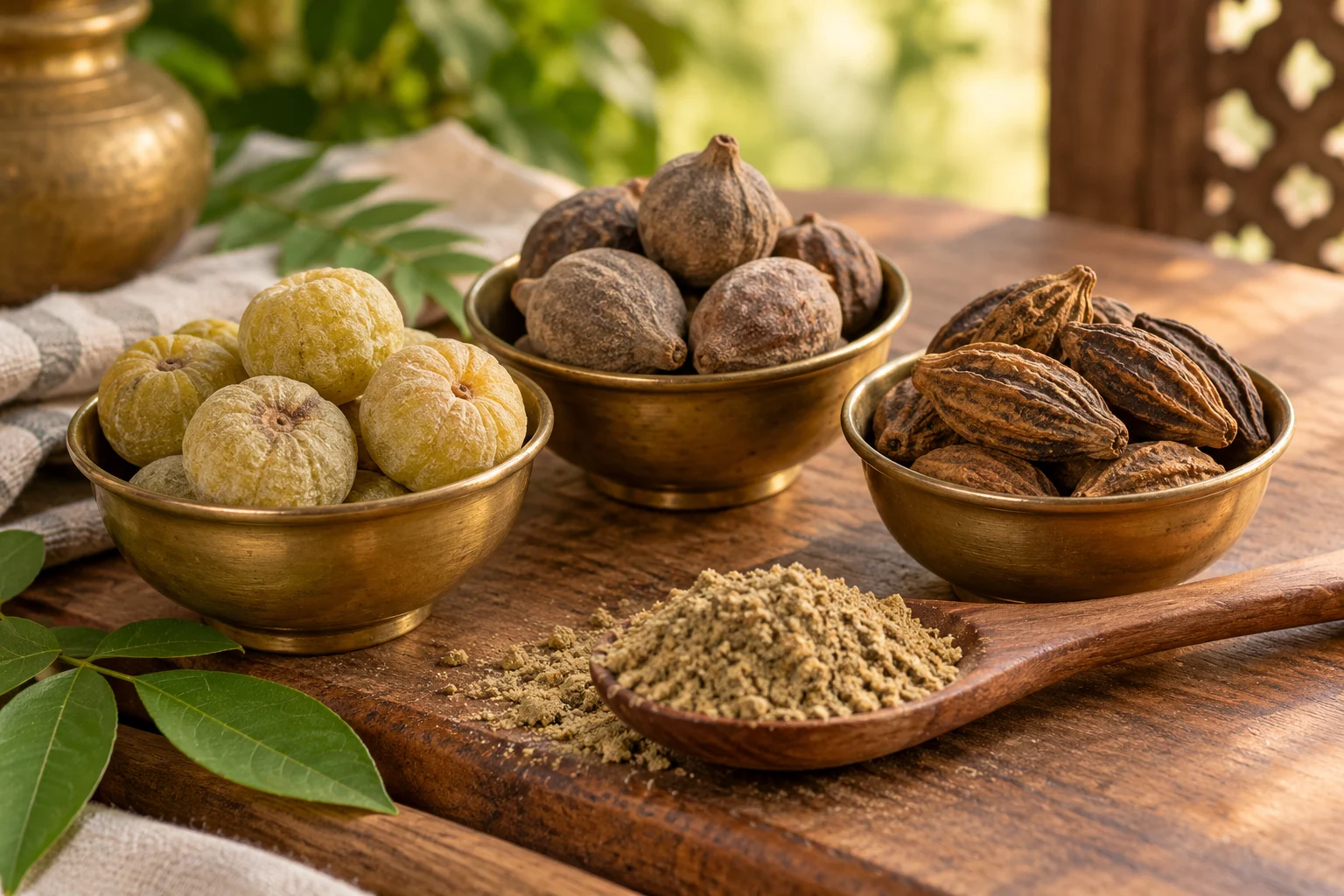
Triphala means "three fruits" — it's not a single herb but a classical combination of Amalaki (Indian gooseberry), Bibhitaki, and Haritaki in roughly equal parts. It's one of the most commonly recommended formulas in Ayurveda, credited in classical texts with supporting digestion, gentle and regular elimination, and general tissue nourishment, without being classified as strongly heating or cooling — which is part of why it's traditionally considered suitable for all three doshas. Each of the three fruits is traditionally associated with a different dosha and taste profile — Amalaki with Pitta, Bibhitaki with Kapha, and Haritaki with Vata — so the combination is described as balancing across all three rather than aggressively correcting just one. It's most commonly taken at night as a mild, gentle support for regular bowel movements the next morning.
त्रिफला का अर्थ है "तीन फल" — यह कोई एक जड़ी-बूटी नहीं, बल्कि आमलकी (आँवला), बिभीतकी और हरीतकी का लगभग समान भागों में बना एक शास्त्रीय संयोजन है। यह आयुर्वेद के सबसे अधिक सुझाए जाने वाले सूत्रों में से एक है, जिसे शास्त्रों में पाचन, सहज और नियमित मलत्याग, तथा सामान्य ऊतक-पोषण में सहायक बताया गया है। इसे न तो अधिक गर्म और न ही अधिक ठंडा माना जाता है, इसलिए यह पारंपरिक रूप से तीनों दोषों के लिए उपयुक्त समझा जाता है। तीनों फलों में से प्रत्येक को अलग दोष और रस से जोड़ा गया है — आमलकी को पित्त से, बिभीतकी को कफ से, और हरीतकी को वात से — इसलिए इस संयोजन को किसी एक दोष को तीव्रता से ठीक करने के बजाय तीनों को संतुलित करने वाला बताया गया है। इसे सबसे अधिक रात में लिया जाता है, जिससे अगली सुबह सहज मलत्याग में सहायता मिलती है।
Benefits
- Traditionally used to support regular, comfortable bowel movements.
- Described in classical texts as gentle enough for long-term, daily use.
- Credited with general digestive support since it's considered mild rather than aggressively cleansing.
How to Use
Triphala is most commonly taken as a powder mixed into warm water, often at night before bed, or as tablets/capsules for convenience. Traditional practice is to start with a smaller amount and adjust based on effect, since individual sensitivity to its mild laxative action varies.
A formula, not a single herb
Triphala is a good example of how much of Ayurvedic herbalism works through combinations rather than single herbs — see Amla for a closer look at Amalaki, one of its three components, Haritaki for the strongest of the three fruits, and Agni for the digestive-fire concept that triphala is traditionally used to support.
Note: Because triphala has a mild laxative effect, it's generally advised to start with a low dose, and to use caution during pregnancy or if you have a diagnosed digestive condition. Ayurvedic herbs and practices can interact with medication, pregnancy, and existing conditions — check with a qualified Ayurvedic practitioner or your doctor before starting something new.
Frequently Asked Questions
What is Triphala?
Triphala means "three fruits" — it's not a single herb but a classical combination of Amalaki (Indian gooseberry), Bibhitaki, and Haritaki in roughly equal parts. It's one of the most commonly recommended formulas in Ayurveda, credited in classical texts with supporting digestion, gentle and regular elimination, and general tissue nourishment, without being classified as strongly heating or cooling — which is part of why it's traditionally considered suitable for all three doshas. Each of the three fruits is traditionally associated with a different dosha and taste profile — Amalaki with Pitta, Bibhitaki with Kapha, and Haritaki with Vata — so the combination is described as balancing across all three rather than aggressively correcting just one. It's most commonly taken at night as a mild, gentle support for regular bowel movements the next morning.
What are the benefits of Triphala?
Traditionally used to support regular, comfortable bowel movements. Described in classical texts as gentle enough for long-term, daily use. Credited with general digestive support since it's considered mild rather than aggressively cleansing.
How to Use for Triphala?
Triphala is most commonly taken as a powder mixed into warm water, often at night before bed, or as tablets/capsules for convenience. Traditional practice is to start with a smaller amount and adjust based on effect, since individual sensitivity to its mild laxative action varies.