
Ayurveda · Herb
Ashwagandha (अश्वगंधा)
Ashwagandha is one of Ayurveda's best-known adaptogenic herbs, traditionally used to support resilience to stress, energy, and restful sleep.
Overview
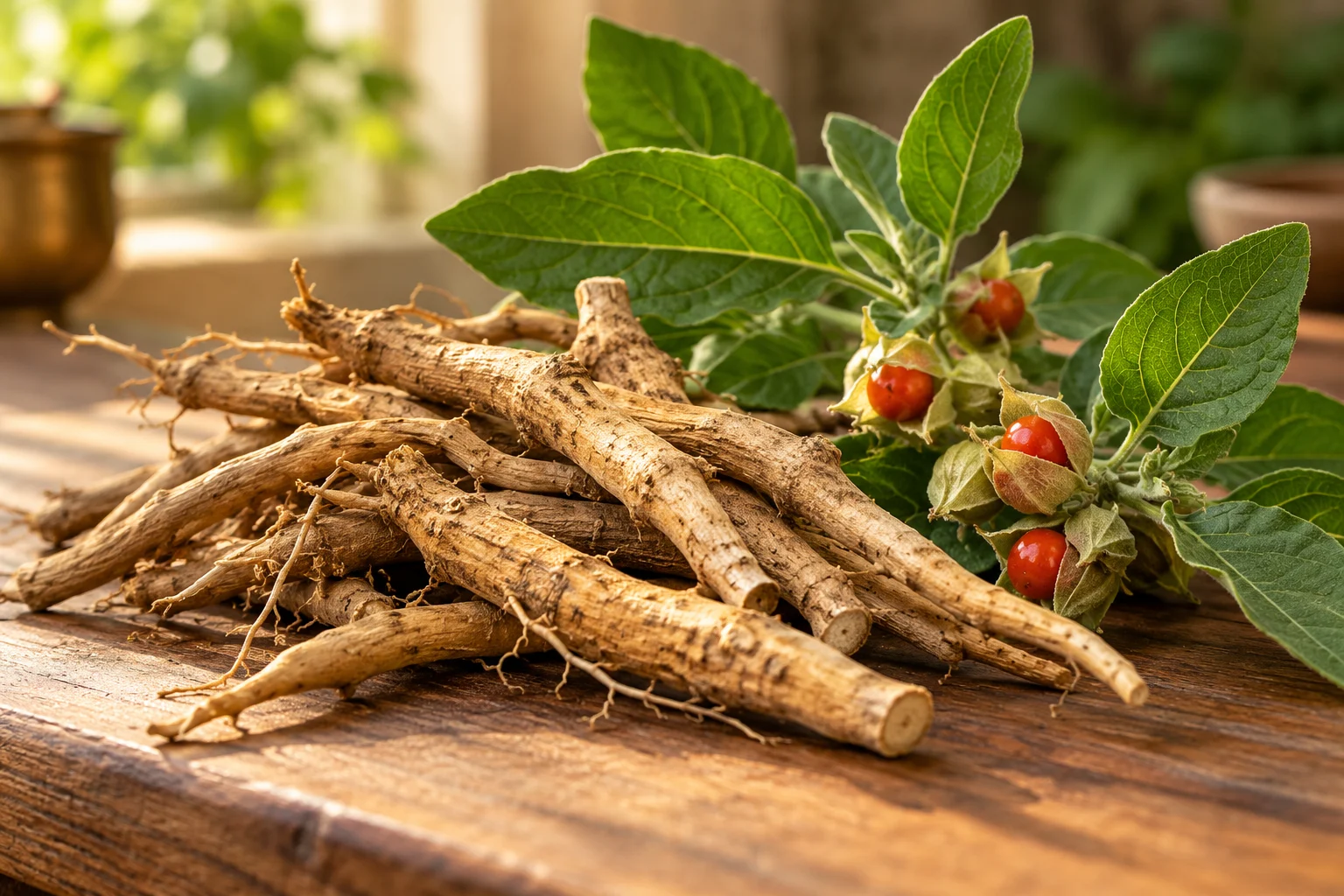
Ashwagandha (Withania somnifera) is a small shrub whose root is one of the most widely used herbs in Ayurveda, classified as a rasayana — a rejuvenative traditionally taken to build strength and resilience over time rather than treat a single symptom. Its Sanskrit name is often explained as meaning "smell of a horse," referring both to the root's distinctive odor and to a traditional association with the strength and vitality of a horse. In classical use, ashwagandha is grouped as a balya (strength-promoting) and medhya (mind-supporting) herb, traditionally taken to support the body's response to stress and fatigue, steady energy, and restful sleep. It's considered particularly balancing for Vata, and is one of the most heavily studied Ayurvedic herbs in modern research, especially around stress and sleep.
अश्वगंधा (विथानिया सोम्निफेरा) एक छोटा झाड़ीनुमा पौधा है जिसकी जड़ आयुर्वेद में सबसे अधिक प्रयोग होने वाली जड़ी-बूटियों में से एक है। इसे रसायन वर्ग में रखा गया है — यानी ऐसी औषधि जो किसी एक लक्षण के इलाज के बजाय समय के साथ शक्ति और सहनशीलता बढ़ाने के लिए पारंपरिक रूप से ली जाती है। इसके संस्कृत नाम का अर्थ अक्सर "घोड़े जैसी गंध" बताया जाता है, जो जड़ की विशिष्ट गंध और घोड़े जैसी शक्ति व स्फूर्ति से इसके पारंपरिक जुड़ाव दोनों को दर्शाता है। शास्त्रीय उपयोग में अश्वगंधा को बल्य (शक्तिवर्धक) और मेध्य (बुद्धिवर्धक) औषधि माना गया है, जो पारंपरिक रूप से तनाव व थकान के प्रति शरीर की सहनशीलता, स्थिर ऊर्जा और अच्छी नींद के लिए ली जाती है। इसे विशेष रूप से वात-संतुलक माना जाता है, और यह आधुनिक शोध में सबसे अधिक अध्ययन की गई आयुर्वेदिक जड़ी-बूटियों में से एक है, विशेषकर तनाव और नींद के संदर्भ में।
Benefits
- Traditionally used to support the body's resilience to stress and fatigue.
- Associated with steady energy and strength when taken consistently over weeks.
- Traditionally used to support restful sleep, especially when taken in the evening.
How to Use
Ashwagandha root is traditionally taken as a powder (churna) mixed into warm milk or water, often with a little honey or ghee, commonly at night to support sleep. It's also widely available today as capsules or standardized extracts. Traditional texts describe it as a rasayana meant to be taken consistently over weeks rather than as a one-time remedy.
Where ashwagandha fits
Ashwagandha is one of the most Vata-pacifying herbs in the Ayurvedic materia medica, which fits its traditional use for stress, fatigue, and sleep — all areas where aggravated Vata tends to show up. It’s often paired in classical formulas with other rasayana herbs; see Triphala for another widely used rejuvenative with a very different role.
Note: Ashwagandha belongs to the nightshade family and is generally advised against during pregnancy, and should be used cautiously with thyroid medication, sedatives, or by anyone with an autoimmune condition. Ayurvedic herbs and practices can interact with medication, pregnancy, and existing conditions — check with a qualified Ayurvedic practitioner or your doctor before starting something new.
Frequently Asked Questions
What is Ashwagandha?
Ashwagandha (Withania somnifera) is a small shrub whose root is one of the most widely used herbs in Ayurveda, classified as a rasayana — a rejuvenative traditionally taken to build strength and resilience over time rather than treat a single symptom. Its Sanskrit name is often explained as meaning "smell of a horse," referring both to the root's distinctive odor and to a traditional association with the strength and vitality of a horse. In classical use, ashwagandha is grouped as a balya (strength-promoting) and medhya (mind-supporting) herb, traditionally taken to support the body's response to stress and fatigue, steady energy, and restful sleep. It's considered particularly balancing for Vata, and is one of the most heavily studied Ayurvedic herbs in modern research, especially around stress and sleep.
What are the benefits of Ashwagandha?
Traditionally used to support the body's resilience to stress and fatigue. Associated with steady energy and strength when taken consistently over weeks. Traditionally used to support restful sleep, especially when taken in the evening.
How to Use for Ashwagandha?
Ashwagandha root is traditionally taken as a powder (churna) mixed into warm milk or water, often with a little honey or ghee, commonly at night to support sleep. It's also widely available today as capsules or standardized extracts. Traditional texts describe it as a rasayana meant to be taken consistently over weeks rather than as a one-time remedy.