
Ayurveda · Herb
Cinnamon (त्वक्)
Cinnamon, known as dalchini, is a warming spice-bark used in Ayurveda to support digestion and circulation, especially in cold or damp conditions.
Overview
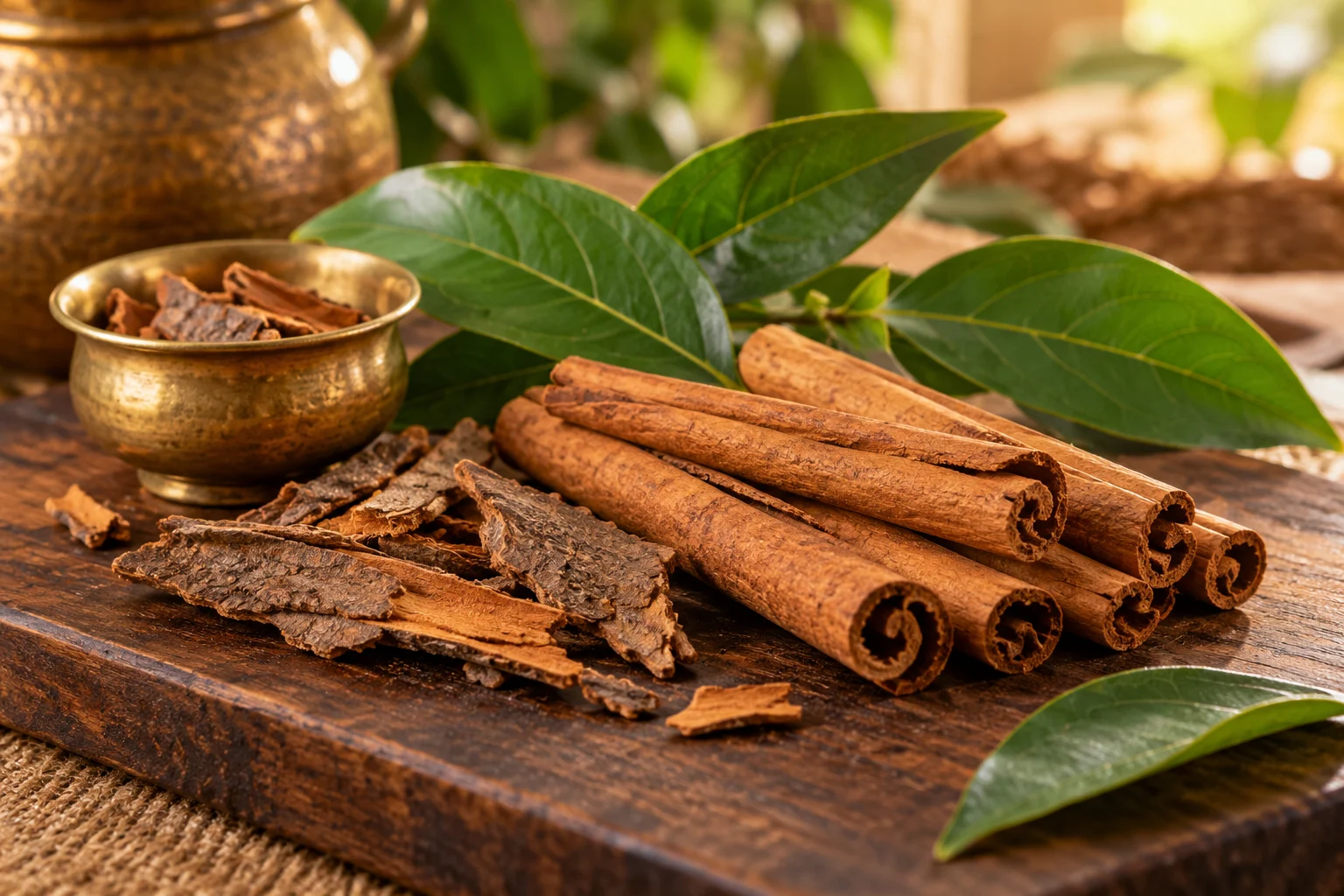
Cinnamon (Cinnamomum verum/cassia), known in Hindi as dalchini and in Sanskrit as twak (literally "bark"), is the dried inner bark of a tropical evergreen tree, used across Ayurveda both as a kitchen spice and a targeted remedy. Its Sanskrit name reflects that it's used specifically for its bark, unlike many Ayurvedic herbs that use root, leaf, or fruit. Cinnamon is classified as pungent and sweet in taste with a strongly heating effect, and is traditionally used to stimulate circulation, support digestion, and counter cold and damp conditions in the body — making it especially suited to Vata and Kapha imbalance. It's a common ingredient in warming herbal teas and in classical formulas aimed at sluggish digestion or cold-related joint discomfort.
दालचीनी (सिनामोमम वेरम/कैसिया), जिसे संस्कृत में त्वक् (शाब्दिक अर्थ "छाल") कहा जाता है, एक उष्णकटिबंधीय सदाबहार वृक्ष की सूखी भीतरी छाल है, जो आयुर्वेद में रसोई मसाले और लक्षित औषधि दोनों रूपों में प्रयोग होती है। इसका संस्कृत नाम दर्शाता है कि इसमें विशेष रूप से छाल का उपयोग होता है, जबकि अधिकांश आयुर्वेदिक जड़ी-बूटियों में जड़, पत्ती या फल प्रयोग होते हैं। दालचीनी को तीखे और मीठे रस तथा अत्यंत उष्ण गुण वाली औषधि माना गया है, जो पारंपरिक रूप से रक्त संचार को उद्दीप्त करने, पाचन को सहायता देने और शरीर में ठंडक व नमी की स्थितियों को संतुलित करने के लिए प्रयोग की जाती है — जिससे यह विशेष रूप से वात और कफ असंतुलन के लिए उपयुक्त है। यह गर्म हर्बल चाय और सुस्त पाचन या ठंड-जनित जोड़ों की असुविधा के लिए बनाए गए शास्त्रीय सूत्रों में एक सामान्य घटक है।
Benefits
- Traditionally used to stimulate circulation and warm the body in cold or damp conditions.
- Common digestive aid, especially for sluggish or Kapha-type digestion.
- Widely used in warming herbal tea blends alongside ginger and other spices.
How to Use
Cinnamon is used as a cooking spice, steeped as tea (often with ginger and cloves), or taken as powder mixed with honey. Given its heating strength, it's traditionally used in moderate amounts rather than large quantities at once.
A warming spice in cold-weather routines
Cinnamon’s heating quality makes it a natural fit for the seasonal routine advice in Ayurveda. See Ritucharya for how seasonal changes shape dietary choices like this one, and Ginger for another warming digestive spice it’s commonly paired with.
Note: Cassia-type cinnamon (the common commercial variety) contains coumarin, which in large amounts can affect the liver, so long-term high-dose use is generally not recommended, and caution is advised with blood-thinning or diabetes medication. Ayurvedic herbs and practices can interact with medication, pregnancy, and existing conditions — check with a qualified Ayurvedic practitioner or your doctor before starting something new.
Frequently Asked Questions
What is Cinnamon?
Cinnamon (Cinnamomum verum/cassia), known in Hindi as dalchini and in Sanskrit as twak (literally "bark"), is the dried inner bark of a tropical evergreen tree, used across Ayurveda both as a kitchen spice and a targeted remedy. Its Sanskrit name reflects that it's used specifically for its bark, unlike many Ayurvedic herbs that use root, leaf, or fruit. Cinnamon is classified as pungent and sweet in taste with a strongly heating effect, and is traditionally used to stimulate circulation, support digestion, and counter cold and damp conditions in the body — making it especially suited to Vata and Kapha imbalance. It's a common ingredient in warming herbal teas and in classical formulas aimed at sluggish digestion or cold-related joint discomfort.
What are the benefits of Cinnamon?
Traditionally used to stimulate circulation and warm the body in cold or damp conditions. Common digestive aid, especially for sluggish or Kapha-type digestion. Widely used in warming herbal tea blends alongside ginger and other spices.
How to Use for Cinnamon?
Cinnamon is used as a cooking spice, steeped as tea (often with ginger and cloves), or taken as powder mixed with honey. Given its heating strength, it's traditionally used in moderate amounts rather than large quantities at once.