
Ayurveda · Herb
Ginger (शुण्ठी / आर्द्रक)
Ginger is one of Ayurveda's most everyday herbs, used fresh (ardraka) or dried (shunthi) to kindle digestion and ease nausea and cold symptoms.
Overview
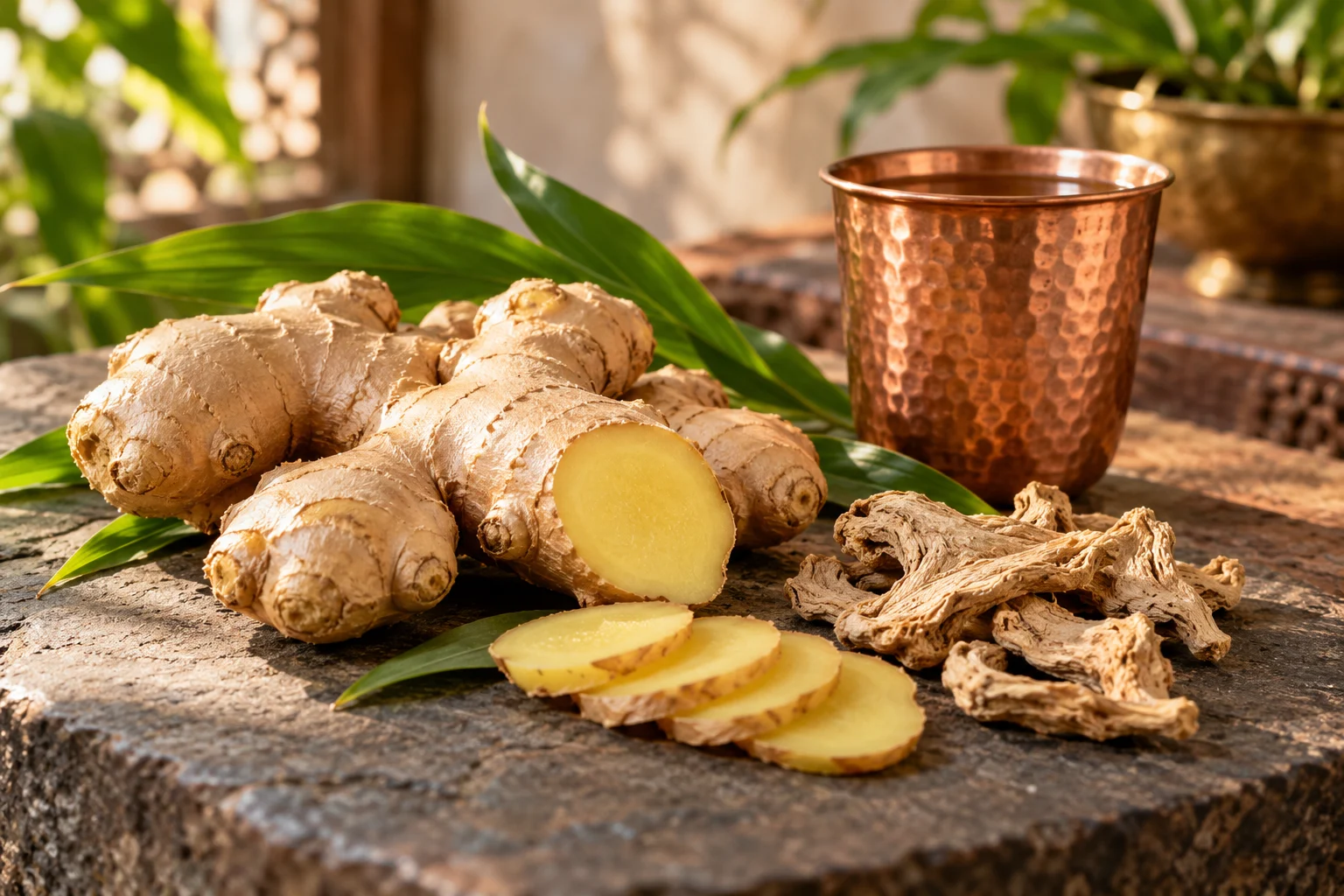
Ginger (Zingiber officinale) holds a distinction in Ayurveda that few herbs share: it has separate Sanskrit names for its fresh form (ardraka) and its dried form (shunthi), and classical texts treat them as having slightly different qualities — fresh ginger is considered gentler, while dried ginger is considered more heating and more specifically kindling for digestive fire. Dried ginger is sometimes called vishwabheshaja, "the universal medicine," reflecting how central it is across Ayurvedic formulas. Ginger is classified as pungent in taste and heating in effect, and is one of the primary herbs used to stimulate sluggish agni — making it a very common addition to meals (as a pre-meal digestive aid) and to remedies for nausea, cold-related congestion, and general digestive discomfort. It's considered particularly good for Vata and Kapha, and used more cautiously for those with strong Pitta or active inflammation, given its heating nature.
अदरक (ज़िंजिबर ऑफिसिनेल) आयुर्वेद में एक विशेष स्थान रखता है: इसके ताज़े रूप (आर्द्रक) और सूखे रूप (शुण्ठी) के लिए अलग-अलग संस्कृत नाम हैं, और शास्त्रों में इन्हें थोड़े अलग गुणों वाला माना गया है — ताज़ा अदरक अधिक सौम्य माना जाता है, जबकि सूखा अदरक अधिक उष्ण और पाचन अग्नि को प्रज्वलित करने में अधिक प्रभावी माना जाता है। सूखे अदरक को कभी-कभी विश्वभेषज भी कहा जाता है, यानी "सार्वभौमिक औषधि," जो आयुर्वेदिक सूत्रों में इसकी केंद्रीय भूमिका को दर्शाता है। अदरक को तीखे रस और उष्ण गुण वाली औषधि माना गया है, और यह सुस्त अग्नि को उद्दीप्त करने वाली प्रमुख औषधियों में से एक है — इसलिए इसे भोजन से पहले पाचन-सहायक के रूप में और मतली, ज़ुकाम-जनित जकड़न व सामान्य पाचन असुविधा के उपचार में व्यापक रूप से प्रयोग किया जाता है। इसे विशेष रूप से वात और कफ के लिए अच्छा माना जाता है, जबकि तीव्र पित्त या सक्रिय सूजन वाले व्यक्तियों को इसके उष्ण स्वभाव के कारण सावधानी से उपयोग करना चाहिए।
Benefits
- Traditionally used before meals to kindle a sluggish digestive fire (agni).
- Long household use for nausea and general digestive discomfort.
- Common ingredient in cold and cough remedies, especially combined with tulsi and honey.
How to Use
A common Ayurvedic pre-meal practice is a small piece of fresh ginger with a pinch of salt or a few drops of lime, taken to stimulate appetite and digestion before eating. Dried ginger powder (sonth) is used in warm water or milk, and both forms are common in kadha (herbal decoctions) for colds.
A digestive herb with two forms
Ginger’s fresh-versus-dried distinction is a good illustration of how much nuance Ayurveda applies even to common kitchen herbs. See Agni for the digestive-fire concept it’s most closely tied to, and Turmeric for another everyday spice with a parallel dual role.
Note: High doses of ginger can have a mild blood-thinning effect, so caution is advised alongside blood-thinning medication, and those with gallstones or active acid reflux should use it in moderation. Ayurvedic herbs and practices can interact with medication, pregnancy, and existing conditions — check with a qualified Ayurvedic practitioner or your doctor before starting something new.
Frequently Asked Questions
What is Ginger?
Ginger (Zingiber officinale) holds a distinction in Ayurveda that few herbs share: it has separate Sanskrit names for its fresh form (ardraka) and its dried form (shunthi), and classical texts treat them as having slightly different qualities — fresh ginger is considered gentler, while dried ginger is considered more heating and more specifically kindling for digestive fire. Dried ginger is sometimes called vishwabheshaja, "the universal medicine," reflecting how central it is across Ayurvedic formulas. Ginger is classified as pungent in taste and heating in effect, and is one of the primary herbs used to stimulate sluggish agni — making it a very common addition to meals (as a pre-meal digestive aid) and to remedies for nausea, cold-related congestion, and general digestive discomfort. It's considered particularly good for Vata and Kapha, and used more cautiously for those with strong Pitta or active inflammation, given its heating nature.
What are the benefits of Ginger?
Traditionally used before meals to kindle a sluggish digestive fire (agni). Long household use for nausea and general digestive discomfort. Common ingredient in cold and cough remedies, especially combined with tulsi and honey.
How to Use for Ginger?
A common Ayurvedic pre-meal practice is a small piece of fresh ginger with a pinch of salt or a few drops of lime, taken to stimulate appetite and digestion before eating. Dried ginger powder (sonth) is used in warm water or milk, and both forms are common in kadha (herbal decoctions) for colds.