
Ayurveda · Herb
Turmeric (हरिद्रा)
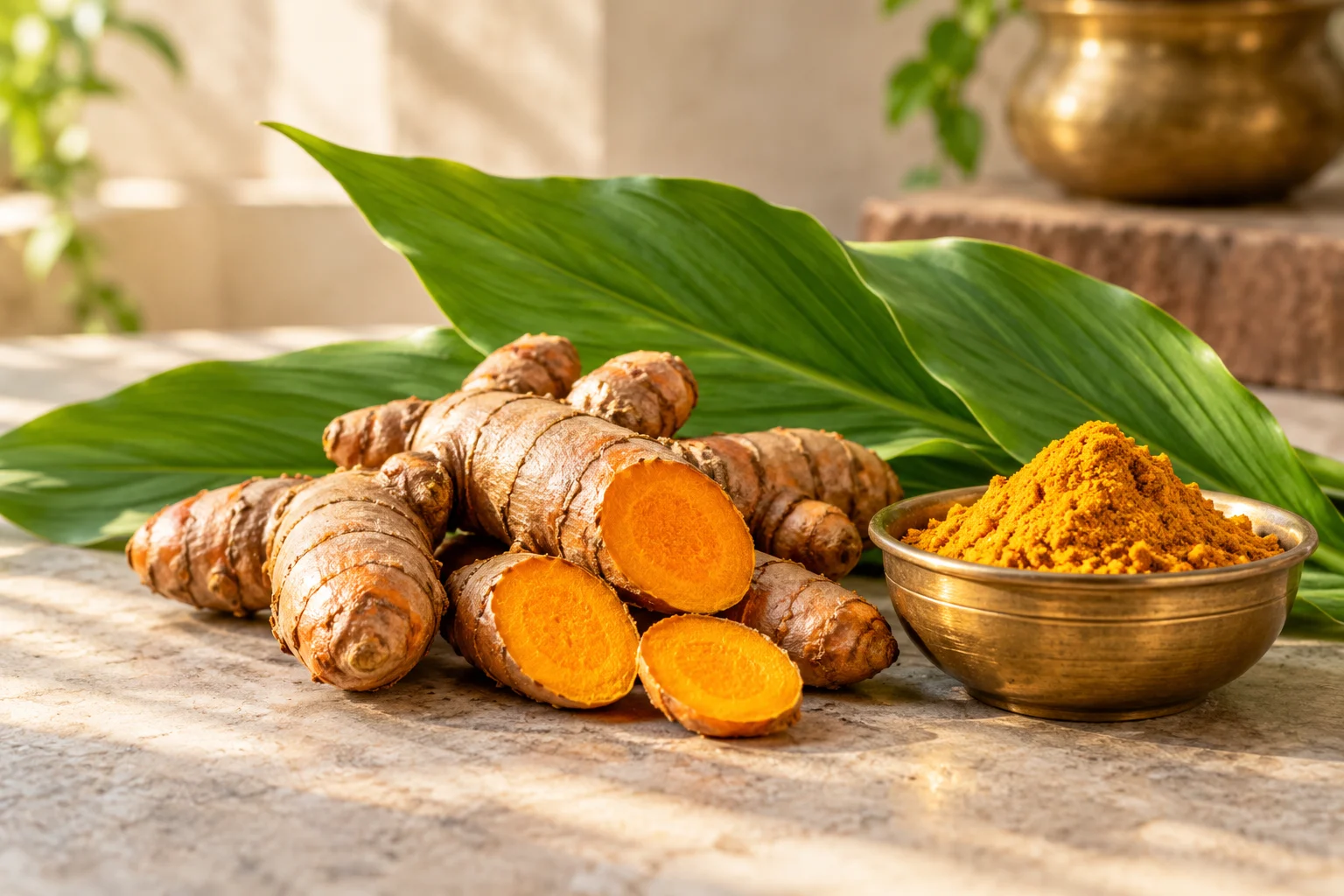
Turmeric (haldi) is a golden root central to Indian cooking and Ayurvedic tradition, associated with skin healing, joint comfort, and general vitality.
Overview
Turmeric (Curcuma longa), known in Hindi as haldi and in Sanskrit as haridra, is a rhizome that's both a kitchen staple across India and one of the most classically used Ayurvedic herbs. It's woven into daily life beyond medicine — turmeric paste is applied at weddings for its association with auspiciousness and skin glow, and turmeric milk (haldi doodh) is a household remedy passed down through generations for minor colds, coughs, and general recovery. In Ayurvedic classification, turmeric is considered pungent and bitter in taste, heating in effect, and is grouped among herbs traditionally used for skin (twak), blood (rakta), and wound-related support. Its use for joint comfort and general inflammation-related complaints is one of the most heavily studied aspects of Ayurvedic herbalism in modern research, largely due to curcumin, its primary active compound.
हल्दी (कुरकुमा लोंगा), जिसे संस्कृत में हरिद्रा कहा जाता है, एक कंद है जो भारत की रसोई और आयुर्वेदिक परंपरा दोनों में केंद्रीय स्थान रखता है। यह चिकित्सा से परे भी दैनिक जीवन में गहराई से जुड़ी है — विवाह में हल्दी का उबटन शुभता और त्वचा की चमक के लिए लगाया जाता है, और हल्दी वाला दूध पीढ़ियों से चली आ रही एक घरेलू विधि है जो सामान्य सर्दी, खाँसी और स्वास्थ्य-लाभ में सहायक मानी जाती है। आयुर्वेदिक वर्गीकरण में हल्दी को तीखे और कड़वे रस वाली, उष्ण गुण वाली औषधि माना गया है, जो परंपरागत रूप से त्वचा, रक्त और घाव-संबंधी सहायता देने वाली औषधियों में रखी गई है। जोड़ों के आराम और सूजन-संबंधी शिकायतों में इसका उपयोग आधुनिक शोध में सबसे अधिक अध्ययन किए गए आयुर्वेदिक पहलुओं में से एक है, जिसका मुख्य कारण इसका सक्रिय तत्व कुरकुमिन है।
Benefits
- Widely used in household tradition (haldi doodh) for minor colds and general recovery.
- Traditionally applied topically for skin glow and minor wound care.
- Traditionally associated with joint comfort, one of the most researched uses of turmeric today.
How to Use
Turmeric is used both as a cooking spice (which itself contributes to daily intake) and as a targeted remedy — most commonly as haldi doodh, turmeric simmered in warm milk, often with a pinch of black pepper, which is traditionally believed to improve absorption. It's also applied as a paste for topical skin use.
A household herb first
Turmeric is a good example of how thin the line is in Indian tradition between “kitchen spice” and “Ayurvedic herb” — most households use it as both without thinking of the two as separate. See Ginger for another spice with the same dual role.
Note: High-dose turmeric or curcumin supplements can interact with blood-thinning medication and are generally advised against before surgery; those with gallstones should also use it cautiously. Ayurvedic herbs and practices can interact with medication, pregnancy, and existing conditions — check with a qualified Ayurvedic practitioner or your doctor before starting something new.
Frequently Asked Questions
What is Turmeric?
Turmeric (Curcuma longa), known in Hindi as haldi and in Sanskrit as haridra, is a rhizome that's both a kitchen staple across India and one of the most classically used Ayurvedic herbs. It's woven into daily life beyond medicine — turmeric paste is applied at weddings for its association with auspiciousness and skin glow, and turmeric milk (haldi doodh) is a household remedy passed down through generations for minor colds, coughs, and general recovery. In Ayurvedic classification, turmeric is considered pungent and bitter in taste, heating in effect, and is grouped among herbs traditionally used for skin (twak), blood (rakta), and wound-related support. Its use for joint comfort and general inflammation-related complaints is one of the most heavily studied aspects of Ayurvedic herbalism in modern research, largely due to curcumin, its primary active compound.
What are the benefits of Turmeric?
Widely used in household tradition (haldi doodh) for minor colds and general recovery. Traditionally applied topically for skin glow and minor wound care. Traditionally associated with joint comfort, one of the most researched uses of turmeric today.
How to Use for Turmeric?
Turmeric is used both as a cooking spice (which itself contributes to daily intake) and as a targeted remedy — most commonly as haldi doodh, turmeric simmered in warm milk, often with a pinch of black pepper, which is traditionally believed to improve absorption. It's also applied as a paste for topical skin use.