
Ayurveda · Herb
Guduchi (Giloy) (गुडूची)
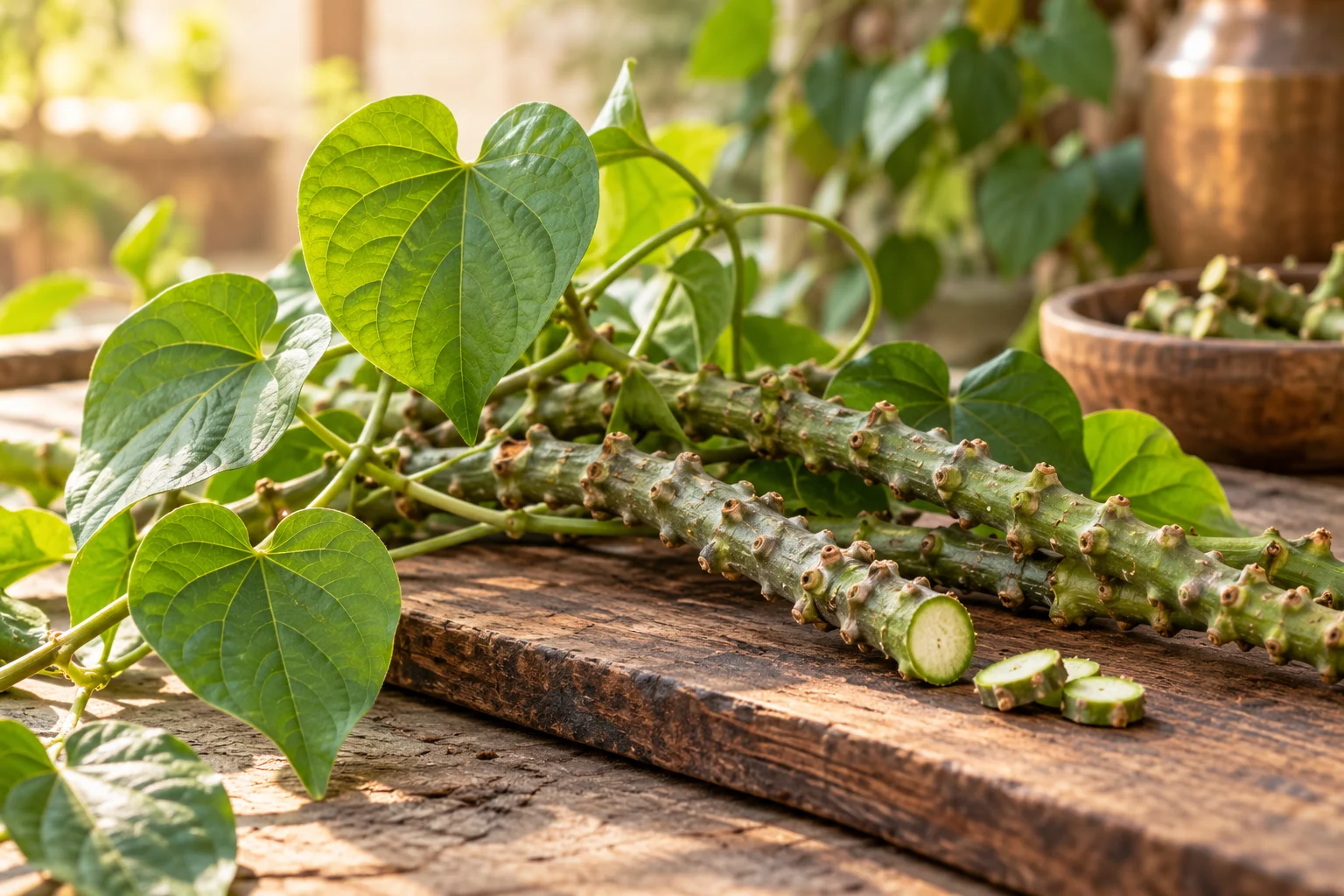
Guduchi, known popularly as Giloy, is a climbing vine highly regarded in Ayurveda as a rasayana for immunity and general resistance to illness.
Overview
Guduchi (Tinospora cordifolia), widely known in Hindi as Giloy, is a heart-leaved climbing shrub whose stem is one of the most respected rasayana herbs in Ayurveda. One of its Sanskrit epithets, amrita, means "nectar of immortality" — a name reflecting the very high traditional regard for its rejuvenating and protective properties. Guduchi is classified as bitter and astringent in taste, with a heating effect, and is traditionally used to support the body's general resistance to illness, recovery after fever, and healthy digestion. It's considered balancing for all three doshas, and became especially well known publicly during recent years as a widely used household herb for general immune support during seasonal illness.
गुडूची (टिनोस्पोरा कॉर्डिफोलिया), जिसे हिंदी में गिलोय के नाम से जाना जाता है, एक हृदयाकार पत्तों वाली बेल है जिसका तना आयुर्वेद के सबसे सम्मानित रसायन औषधियों में से एक है। इसके संस्कृत नामों में से एक, अमृता, का अर्थ है "अमरता का रस" — यह नाम इसके कायाकल्प और सुरक्षात्मक गुणों के प्रति पारंपरिक रूप से अत्यंत उच्च सम्मान को दर्शाता है। गुडूची को कड़वे और कषाय रस वाली, उष्ण गुण वाली औषधि माना गया है, जो पारंपरिक रूप से शरीर की सामान्य रोग-प्रतिरोधक क्षमता, बुखार के बाद स्वास्थ्य-लाभ और स्वस्थ पाचन के लिए प्रयोग की जाती है। इसे तीनों दोषों के लिए संतुलक माना जाता है, और हाल के वर्षों में मौसमी बीमारियों के दौरान सामान्य प्रतिरक्षा सहायता के लिए एक व्यापक रूप से प्रयुक्त घरेलू जड़ी-बूटी के रूप में विशेष रूप से प्रसिद्ध हुई।
Benefits
- Traditionally regarded as one of the strongest rasayana herbs for general immunity.
- Classical use for supporting recovery after fever and seasonal illness.
- Considered balancing across all three doshas rather than aggravating any one.
How to Use
Guduchi is traditionally taken as a stem decoction (kadha), as juice extracted from the fresh stem, or as a powder or tablet made from the dried stem. It's commonly combined with other immune-supporting herbs like tulsi and ginger in household preparations during seasonal illness.
Immunity as a recurring theme
Guduchi is often used alongside other Ayurvedic immune-support herbs. See Tulsi for the more respiratory-focused counterpart it’s commonly paired with, and Ojas for the broader concept of vitality and resilience that rasayana herbs like guduchi are traditionally meant to support.
Note: Guduchi may lower blood sugar and interact with immunosuppressant or diabetes medication, so it should be used cautiously alongside those, and its use during pregnancy should be guided by a practitioner. Ayurvedic herbs and practices can interact with medication, pregnancy, and existing conditions — check with a qualified Ayurvedic practitioner or your doctor before starting something new.
Frequently Asked Questions
What is Guduchi (Giloy)?
Guduchi (Tinospora cordifolia), widely known in Hindi as Giloy, is a heart-leaved climbing shrub whose stem is one of the most respected rasayana herbs in Ayurveda. One of its Sanskrit epithets, amrita, means "nectar of immortality" — a name reflecting the very high traditional regard for its rejuvenating and protective properties. Guduchi is classified as bitter and astringent in taste, with a heating effect, and is traditionally used to support the body's general resistance to illness, recovery after fever, and healthy digestion. It's considered balancing for all three doshas, and became especially well known publicly during recent years as a widely used household herb for general immune support during seasonal illness.
What are the benefits of Guduchi (Giloy)?
Traditionally regarded as one of the strongest rasayana herbs for general immunity. Classical use for supporting recovery after fever and seasonal illness. Considered balancing across all three doshas rather than aggravating any one.
How to Use for Guduchi (Giloy)?
Guduchi is traditionally taken as a stem decoction (kadha), as juice extracted from the fresh stem, or as a powder or tablet made from the dried stem. It's commonly combined with other immune-supporting herbs like tulsi and ginger in household preparations during seasonal illness.