
Ayurveda · Herb
Tulsi (Holy Basil) (तुलसी)
Last reviewed: 9 October 2026
Tulsi, or holy basil, is a sacred plant in Hindu households and a widely used Ayurvedic herb for respiratory health and stress resilience.
Overview
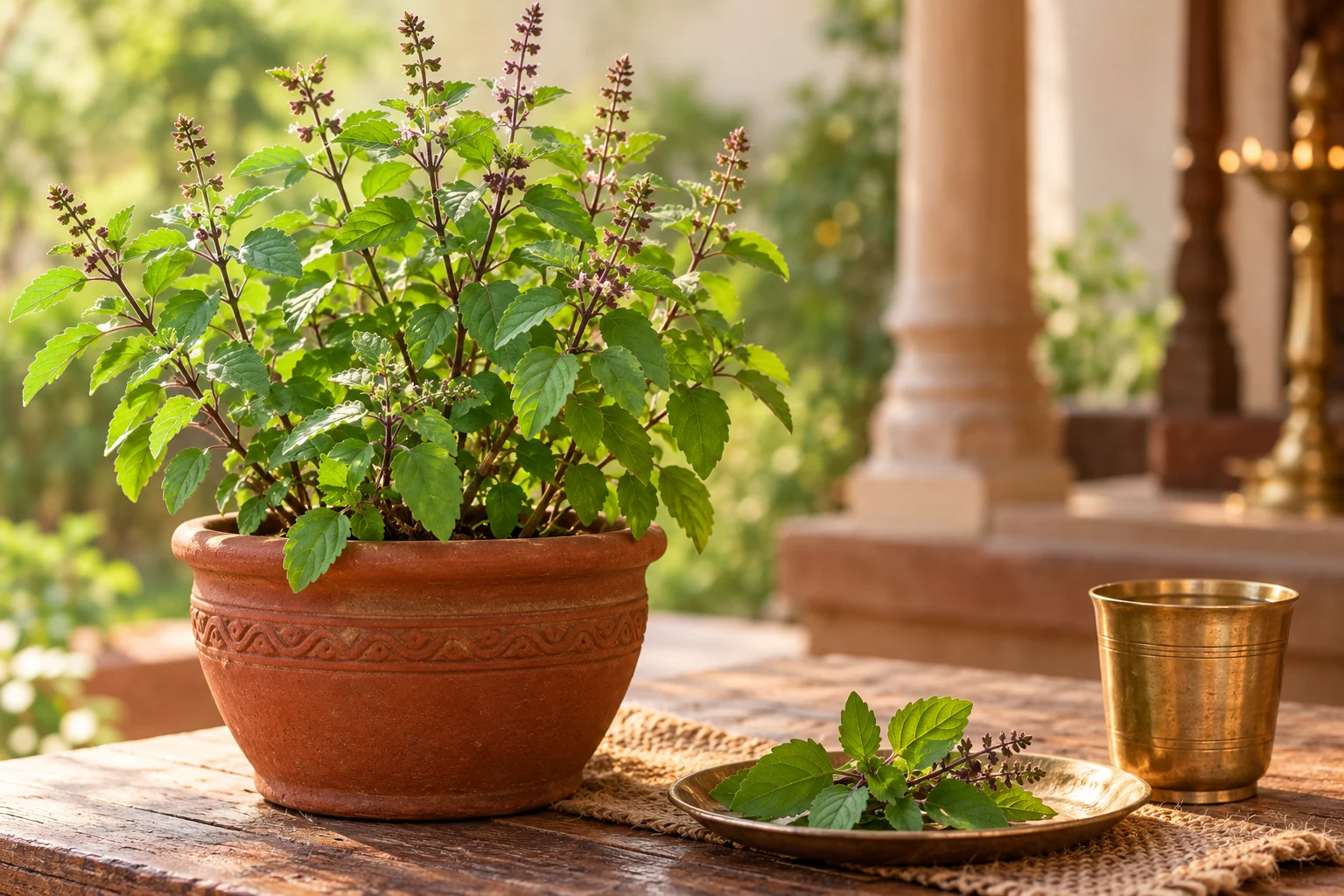
Tulsi (Ocimum tenuiflorum), commonly called holy basil in English, holds a dual status in Indian life — it's grown in a dedicated pot (tulsi vrindavan) in many Hindu homes as a plant of religious significance associated with the goddess Tulsi and worshipped daily, and it's simultaneously one of the most commonly used herbs in household Ayurvedic remedies, especially for coughs, colds, and seasonal respiratory complaints. Classified in Ayurveda as pungent and bitter in taste with a heating effect, tulsi is grouped as a kasa-shwasahara herb — traditionally used for cough and breathing-related discomfort — and is also described as a rasayana with adaptogenic qualities, supporting the body's resilience to everyday stress. Tulsi tea has become one of the most globally recognized Ayurvedic preparations.
तुलसी (ऑसिमम टेन्युइफ्लोरम) भारतीय जीवन में दोहरा स्थान रखती है — अनेक हिंदू घरों में इसे तुलसी वृंदावन में लगाया जाता है और देवी तुलसी से जुड़े धार्मिक महत्व के कारण प्रतिदिन पूजा जाता है, और साथ ही यह घरेलू आयुर्वेदिक उपचारों में सबसे अधिक प्रयोग होने वाली जड़ी-बूटियों में से एक है, विशेष रूप से खाँसी, ज़ुकाम और मौसमी श्वास संबंधी शिकायतों के लिए। आयुर्वेद में तुलसी को तीखे और कड़वे रस तथा उष्ण गुण वाली औषधि माना गया है, जो कास-श्वासहर वर्ग में आती है — यानी पारंपरिक रूप से खाँसी और श्वास संबंधी असुविधा के लिए प्रयोग की जाती है — और इसे रसायन गुणों वाली भी बताया गया है, जो दैनिक तनाव के प्रति शरीर की सहनशीलता में सहायक मानी जाती है। तुलसी की चाय आज विश्वभर में सबसे अधिक पहचानी जाने वाली आयुर्वेदिक तैयारियों में से एक बन चुकी है।
Benefits
- Long household tradition of use for cough, cold, and seasonal respiratory discomfort.
- Traditionally regarded as an adaptogen supporting resilience to everyday stress.
- Widely used as a daily tea, making it one of the easiest herbs to build into a routine.
How to Use
Fresh tulsi leaves are traditionally chewed or boiled into a tea (kadha), often with ginger, black pepper, and honey, especially at the first sign of a cold. Dried tulsi tea and tulsi drops/extracts are also widely available for regular use.
Sacred plant and household remedy
Tulsi’s dual religious and medicinal role is common in Ayurvedic tradition, where plants used in worship are often the same ones kept in the kitchen for everyday remedies. For another commonly paired cough-and-cold combination, see Ginger and Licorice.
Holy basil vs sweet basil
Tulsi is holy basil (Ocimum tenuiflorum, formerly Ocimum sanctum). It belongs to the same genus as the sweet basil used in Italian cooking (Ocimum basilicum), but the two are different plants. Holy basil has a peppery, clove-like aroma from compounds such as eugenol, while sweet basil is milder and sweeter. In Ayurveda and Hindu worship, “basil” means tulsi.
Types of tulsi
| Type | Appearance | Notes |
|---|---|---|
| Rama tulsi | Green leaves | Milder and cooler; the most common household tulsi |
| Krishna (Shyama) tulsi | Purple stems and leaves | More pungent and peppery; traditionally prized in remedies |
| Vana tulsi | Lighter green, wild | Grows wild in the Himalayas and plains; strongly aromatic |
Tulsi in Ayurveda
- Rasa (tastes): pungent and bitter
- Virya (potency): heating
- Dosha effect: traditionally reduces Kapha and Vata; can increase Pitta in excess
This warming, pungent profile is why tulsi appears so often in remedies for cold, cough, and congestion — classic Kapha conditions.
Tulsi benefits: tradition and research
- Cough, cold, and sore throat — the best-known household use, usually as tulsi tea or kadha.
- Stress — tulsi is described as an adaptogen. Small human studies report modest improvements in stress scores, though larger trials are needed.
- Blood sugar — some small studies suggest a mild lowering effect; people on diabetes medication should monitor carefully.
- Oral health — tulsi is used in traditional mouth rinses, and its essential oils have antimicrobial activity in laboratory studies.
- A daily ritual — watering and circling the tulsi plant each morning is itself part of a calm dinacharya.
How to make tulsi tea
Boil 6–8 fresh tulsi leaves (or 1 teaspoon dried) in a cup and a half of water with a slice of ginger and two crushed black peppercorns for five minutes. Strain, let it cool slightly, and add honey if you like. Do not add honey to boiling water — Ayurveda advises against heating honey.
Tulsi in Hindu worship
Tulsi is revered as a form of Goddess Lakshmi and as Vrinda, beloved of Vishnu. Most Hindu homes keep a tulsi plant in a raised tulsi vrindavan in the courtyard, offering water and a lamp at dusk. Tulsi leaves are offered to Vishnu and Krishna, and the plant’s ceremonial marriage to Vishnu is celebrated as Tulsi Vivah. For a Hindi guide, read Tulsi ke fayde.
Frequently asked questions
Is tulsi the same as basil?
Tulsi is holy basil, a close relative of the sweet basil used in cooking, but a different species with a stronger, clove-like flavour.
How many tulsi leaves can I eat daily?
Chewing 4–5 fresh leaves or drinking one to two cups of tulsi tea a day is a common traditional amount. Some traditions prefer steeping rather than chewing the leaves.
Can tulsi be taken in pregnancy?
Tulsi is commonly used in food amounts, but concentrated extracts are not well studied in pregnancy. Speak with your doctor before using it as a supplement.
Note: Tulsi may have mild blood-thinning and blood-sugar-lowering effects, so it should be used cautiously alongside blood thinners or diabetes medication, and is generally used in moderation during pregnancy. Ayurvedic herbs and practices can interact with medication, pregnancy, and existing conditions — check with a qualified Ayurvedic practitioner or your doctor before starting something new.
Frequently Asked Questions
What is Tulsi (Holy Basil)?
Tulsi (Ocimum tenuiflorum), commonly called holy basil in English, holds a dual status in Indian life — it's grown in a dedicated pot (tulsi vrindavan) in many Hindu homes as a plant of religious significance associated with the goddess Tulsi and worshipped daily, and it's simultaneously one of the most commonly used herbs in household Ayurvedic remedies, especially for coughs, colds, and seasonal respiratory complaints. Classified in Ayurveda as pungent and bitter in taste with a heating effect, tulsi is grouped as a kasa-shwasahara herb — traditionally used for cough and breathing-related discomfort — and is also described as a rasayana with adaptogenic qualities, supporting the body's resilience to everyday stress. Tulsi tea has become one of the most globally recognized Ayurvedic preparations.
What are the benefits of Tulsi (Holy Basil)?
Long household tradition of use for cough, cold, and seasonal respiratory discomfort. Traditionally regarded as an adaptogen supporting resilience to everyday stress. Widely used as a daily tea, making it one of the easiest herbs to build into a routine.
How to Use for Tulsi (Holy Basil)?
Fresh tulsi leaves are traditionally chewed or boiled into a tea (kadha), often with ginger, black pepper, and honey, especially at the first sign of a cold. Dried tulsi tea and tulsi drops/extracts are also widely available for regular use.