
Ayurveda · Herb
Shatavari (शतावरी)
Shatavari is a root herb traditionally classified as a rasayana for women's health in Ayurveda, associated with nourishment and reproductive wellness.
Overview
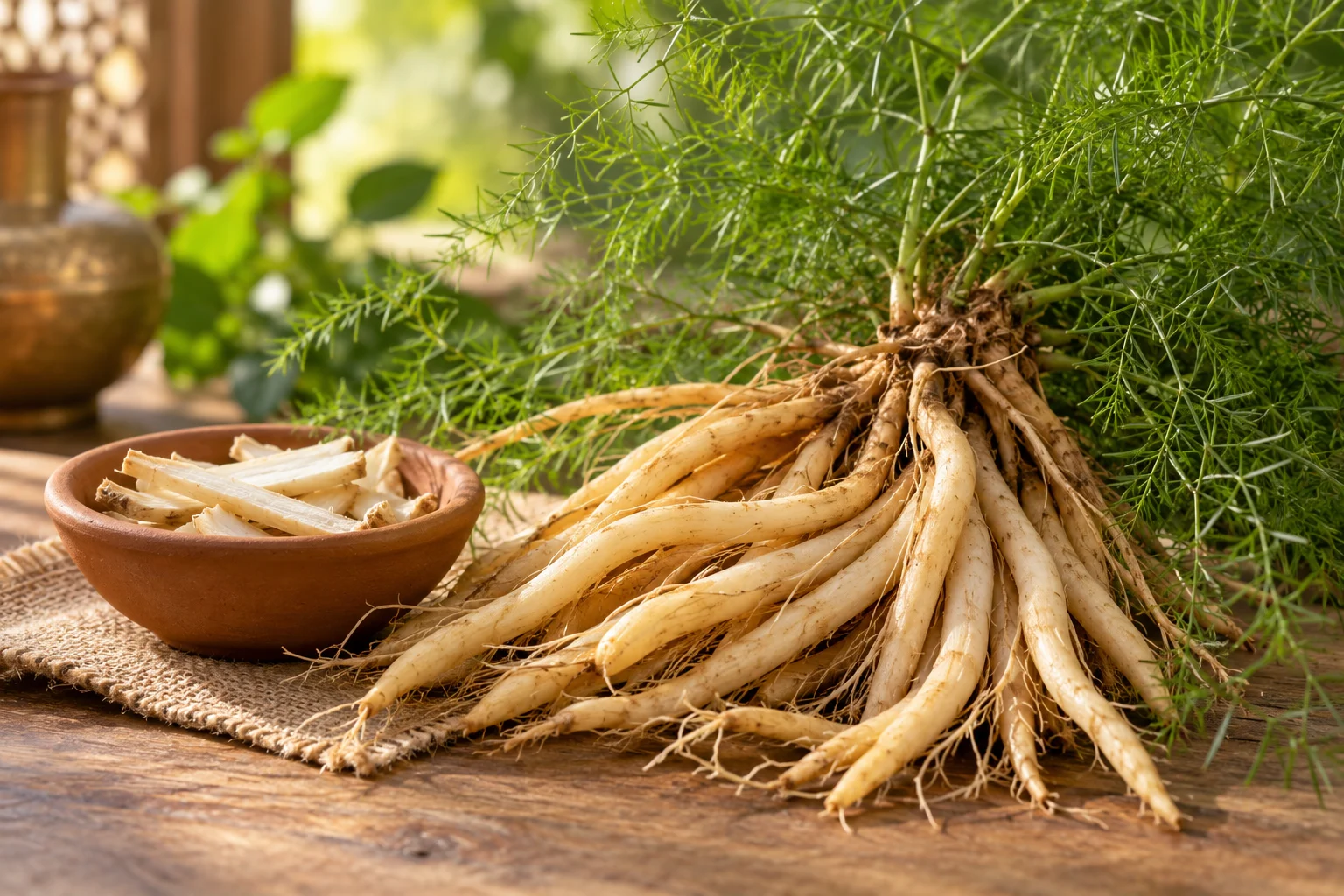
Shatavari (Asparagus racemosus) is a climbing plant whose root is one of the most classically important herbs for women's health in Ayurveda. Its Sanskrit name is traditionally translated as "she who possesses a hundred roots," and by some interpretations, "she who has a hundred husbands" — a reference to its reputation as a herb that supports vitality and reproductive wellness across life stages. Shatavari is classified as sweet and slightly bitter in taste, cooling in effect, and is grouped as a rasayana traditionally used to nourish reproductive tissue, support hormonal balance, and aid lactation in nursing mothers. It's considered Vata- and Pitta-pacifying, and is also used more broadly — beyond women's health specifically — as a general nourishing tonic for depleted or underweight individuals.
शतावरी (एस्पेरागस रेसीमोसस) एक बेल जैसा पौधा है जिसकी जड़ आयुर्वेद में स्त्री स्वास्थ्य के लिए सबसे महत्वपूर्ण शास्त्रीय औषधियों में से एक मानी जाती है। इसके संस्कृत नाम का पारंपरिक अर्थ "सौ जड़ों वाली" बताया जाता है, और कुछ व्याख्याओं में "सौ पतियों वाली" भी — जो जीवन के विभिन्न चरणों में जीवनशक्ति और प्रजनन स्वास्थ्य को सहारा देने वाली औषधि के रूप में इसकी प्रतिष्ठा को दर्शाता है। शतावरी को मीठे और हल्के कड़वे रस वाली, शीतल गुण वाली औषधि माना गया है, और इसे रसायन वर्ग में रखा गया है जो पारंपरिक रूप से प्रजनन ऊतकों को पोषण देने, हार्मोनल संतुलन में सहायता करने और स्तनपान कराने वाली माताओं में दुग्धवृद्धि हेतु प्रयोग की जाती है। इसे वात और पित्त शामक माना जाता है, और इसे स्त्री स्वास्थ्य से परे भी कमज़ोर या दुबले व्यक्तियों के लिए सामान्य पोषक टॉनिक के रूप में उपयोग किया जाता है।
Benefits
- Classical use for supporting reproductive tissue health and hormonal balance.
- Traditionally used to support lactation in nursing mothers.
- Used more broadly as a cooling, nourishing tonic for general depletion.
How to Use
Shatavari is traditionally taken as a powder mixed into warm milk, often with ghee, or as part of classical formulas. It's also available today as capsules or standardized extract. As a rasayana, consistent use over weeks is traditional rather than occasional use.
A rasayana for nourishment
Shatavari’s cooling, nourishing profile makes it a common counterpart to heating tonics in classical formulas. See Ashwagandha for the more Vata-focused, warming rasayana it’s frequently compared to.
Note: Shatavari has estrogen-like activity in some studies, so those with hormone-sensitive conditions should use it only under practitioner guidance, and it should be introduced during pregnancy or nursing only with professional advice. Ayurvedic herbs and practices can interact with medication, pregnancy, and existing conditions — check with a qualified Ayurvedic practitioner or your doctor before starting something new.
Frequently Asked Questions
What is Shatavari?
Shatavari (Asparagus racemosus) is a climbing plant whose root is one of the most classically important herbs for women's health in Ayurveda. Its Sanskrit name is traditionally translated as "she who possesses a hundred roots," and by some interpretations, "she who has a hundred husbands" — a reference to its reputation as a herb that supports vitality and reproductive wellness across life stages. Shatavari is classified as sweet and slightly bitter in taste, cooling in effect, and is grouped as a rasayana traditionally used to nourish reproductive tissue, support hormonal balance, and aid lactation in nursing mothers. It's considered Vata- and Pitta-pacifying, and is also used more broadly — beyond women's health specifically — as a general nourishing tonic for depleted or underweight individuals.
What are the benefits of Shatavari?
Classical use for supporting reproductive tissue health and hormonal balance. Traditionally used to support lactation in nursing mothers. Used more broadly as a cooling, nourishing tonic for general depletion.
How to Use for Shatavari?
Shatavari is traditionally taken as a powder mixed into warm milk, often with ghee, or as part of classical formulas. It's also available today as capsules or standardized extract. As a rasayana, consistent use over weeks is traditional rather than occasional use.