
🌅 Hindu Festivals
Chhath Puja Vidhi and Prayer Guide: Meaningful Home Preparation
Last updated: September 26, 2026
Chhath Puja honours Surya and Chhathi Maiya through purity, gratitude, discipline, offerings, and prayers for wellbeing. Customs vary by region and family.
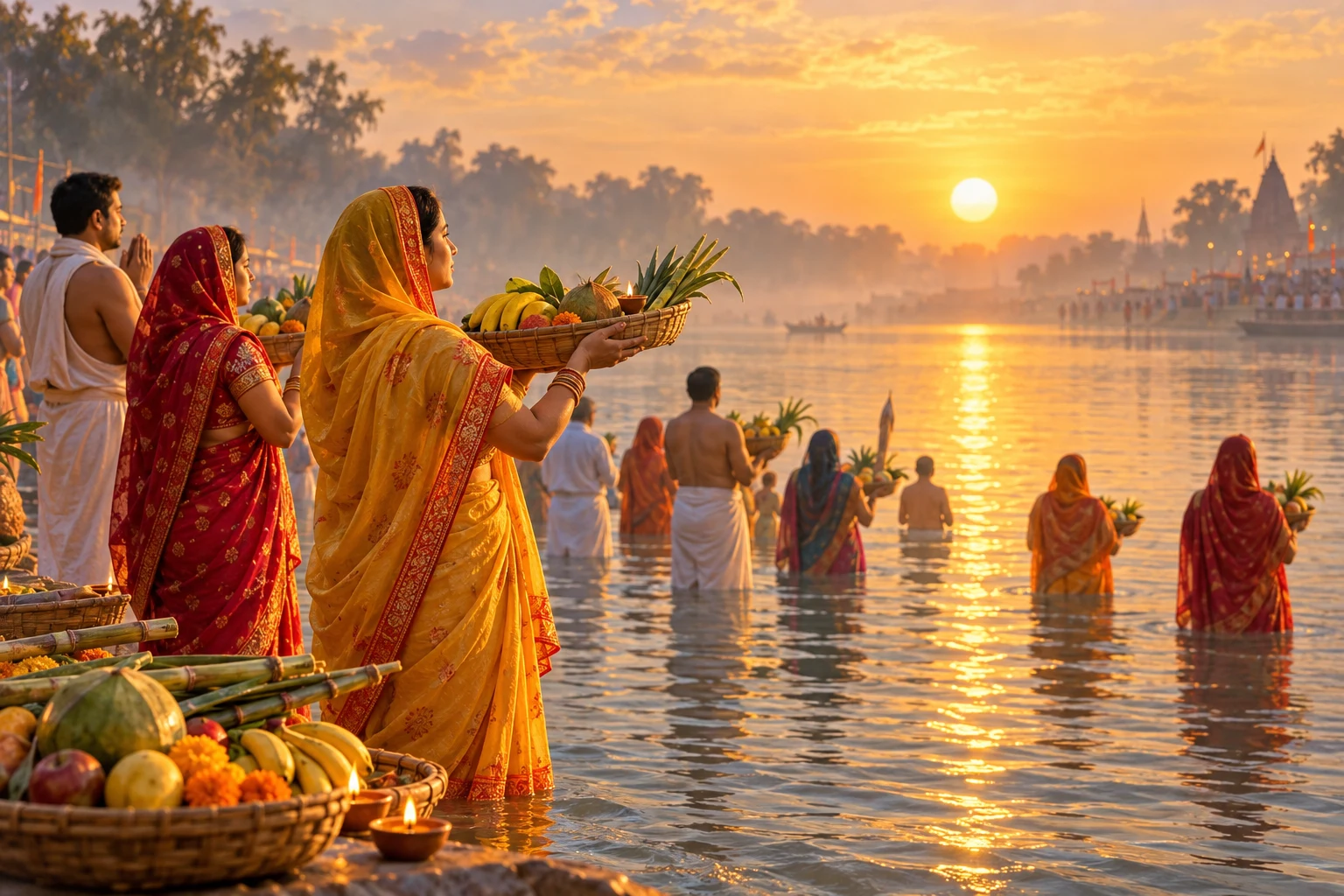
Chhath Puja is a four-day devotional observance dedicated to Surya, the Sun, and Chhathi Maiya. It is especially important in Bihar, Jharkhand, eastern Uttar Pradesh, Nepal’s Madhesh region, and diaspora communities. The festival brings together cleanliness, home-prepared offerings, rigorous vows, folk songs, and prayers made beside water at sunset and sunrise.
There is no single Chhath vidhi followed by every family. The vrati—the person undertaking the vow—usually follows inherited household rules with great care. Beginners can use this overview to understand the sequence, but should ask an experienced elder or community priest before making a formal fasting vow.
The four-day Chhath sequence
Nahay Khay begins the observance with bathing, thorough cleaning, and a simple purified meal. Kharna, also called Lohanda in some communities, is a day of fasting followed by evening worship and prasad, often including jaggery kheer and roti. The third day culminates in Sandhya Arghya, the offering to the setting Sun. On the fourth morning, devotees offer Usha Arghya to the rising Sun, pray, and complete the fast.
The pairing of sunset and sunrise is one of Chhath’s most distinctive features. Gratitude is offered not only to brightness at its height, but at transition—when light recedes and when it returns.
Preparing the home and offerings
Families clean cooking and worship areas and may reserve utensils for the observance. Common offerings include thekua, seasonal fruit, coconut, sugarcane, and other foods prescribed by the household tradition. They are often arranged in bamboo soop or baskets. Ingredients and handling rules differ, so do not present one family’s method as the only correct one.
Plan practical details early: safe transport to the ghat, drinking water for accompanying family members, weather-appropriate clothes, medication, and a meeting point in case the group is separated. Keep offerings covered during travel and use reusable containers where possible.
How arghya is offered
At the appointed time, devotees stand in water or at its edge while baskets of offerings are held nearby. Water is offered toward Surya as prayers and traditional songs are recited. Follow the lead of the vrati and local organisers; crowded ghats are not the place to improvise ritual steps.
A simple personal prayer may express gratitude for light, food, health, family, and the natural systems that sustain life. Those unable to reach a river or pond may use a clean home courtyard, terrace, community tank, or carefully arranged vessel where their tradition permits. The prayer’s sincerity does not require risking unsafe water, overcrowding, or difficult travel.
Fasting care and family support
Chhath fasting can be physically demanding, and some vratis undertake a period without food or water. This should never become a test imposed on another person. Anyone who is pregnant or breastfeeding, elderly, unwell, taking medication, or managing diabetes, kidney disease, or another relevant condition should consult a qualified clinician before fasting.
Family members can support the vrati by sharing preparation, reducing unnecessary work, managing transport, and watching for confusion, fainting, severe weakness, or other warning signs. Seek medical help when needed. Breaking a fast for health is not a moral failure.
Ghat etiquette and environmental care
Use designated entry routes and obey local crowd-control instructions. Supervise children continuously near water. Avoid soap, synthetic cloth, plastic packets, foam decoration, and painted objects that pollute the ghat. Take packaging home, use bins, and never enter deep or fast-moving water merely to obtain a photograph.
Photography should not interrupt prayer. Ask permission before making close portraits, and do not treat the vrati’s difficult observance as a spectacle.
Prayer that continues after sunrise
Chhath makes dependence visible: human life relies on sunlight, water, soil, crops, family labour, and community cooperation. Carry that insight into the year by wasting less food, protecting water, and recognising the people who grow and prepare what you eat.
For narrative context, read the Chhath Puja story and significance. The Surya mantra guide offers a short daily prayer, while the Government of India’s Chhath Puja overview confirms the four-day sequence and regional context.
Frequently Asked Questions
What are the four days of Chhath Puja?
The usual sequence is Nahay Khay, Kharna, Sandhya Arghya to the setting Sun, and Usha Arghya to the rising Sun. Family and regional details vary.
What is offered during Chhath Puja?
Common offerings include seasonal fruit, sugarcane, coconut, and thekua arranged in a bamboo basket or tray. Prepare and offer only what accords with your family's tradition.
Can Chhath Puja be observed at home?
Yes. When travel to a ghat is unsafe or impractical, many families prepare a clean household space or water vessel. Seek guidance from an experienced family member for formal vows.
Is the Chhath fast compulsory?
No one should undertake a demanding fast without considering health and capacity. The vrati's discipline deserves support, but children, pregnant people, older adults, and people with medical conditions should follow medical advice.