
🌺 Hindu Festivals
Navratri Puja Guide for Beginners: Simple Nine-Day Worship
Last updated: September 26, 2026
Navratri worship can be simple and sincere: prayer, cleanliness, reflection on Durga's qualities, and compassionate action through the nine days.
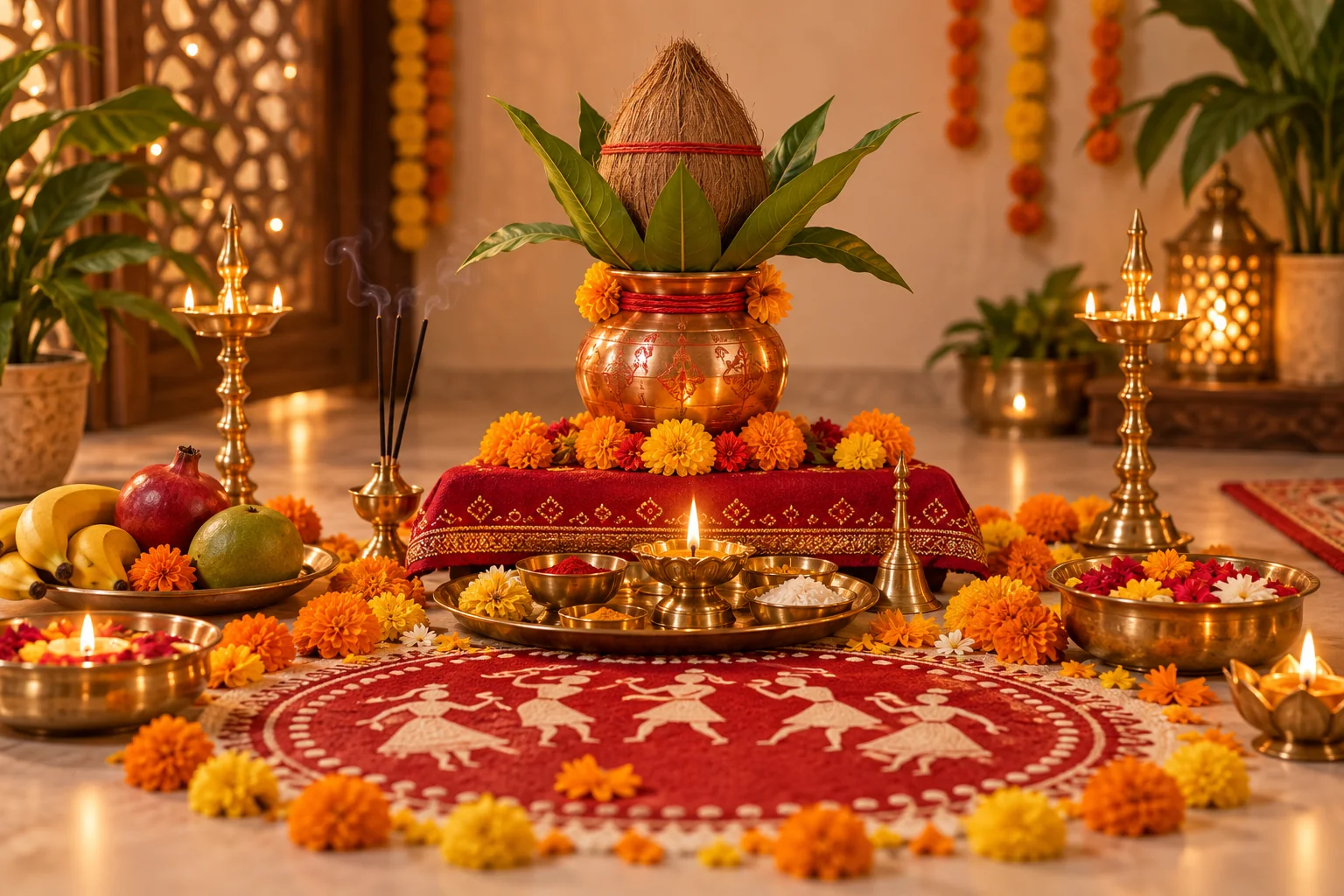
Navratri means “nine nights.” During the festival, devotees honour the Divine Mother through prayer, fasting, music, dance, scripture, and service. Many households follow the Navadurga sequence—nine forms of Durga across nine days—but Navratri is remarkably diverse. Gujarat is known for garba, West Bengal for Durga Puja, northern communities for Ramlila, and parts of southern India for golu or kolu displays. A beginner should follow the customs of their household or temple rather than assume that one regional method is universal.
This guide offers a simple daily framework. It is not a substitute for instructions from a family elder or priest when you are undertaking formal kalash sthapana, fire ritual, or a lineage-specific vow.
Prepare a calm, safe puja space
Choose a clean shelf or table. Place an image or murti of Durga, or another form of the Goddess honoured in your tradition. You may add a small bowl of clean water, fresh flowers, fruit, and a lamp. Keep cloth and decorations away from the flame, use a stable holder, and never leave a diya unattended. An LED lamp is a reasonable alternative where fire is unsafe.
Wash your hands, silence distractions, and decide on a manageable length—ten or fifteen focused minutes can be more meaningful than an elaborate ritual performed in haste.
A simple daily Navratri puja
- Sit quietly and take three comfortable breaths.
- Light the lamp safely, if using one, and mentally invite the presence of the Goddess.
- Offer water, a flower, fruit, or simply joined palms.
- Recite a familiar prayer, read a short passage, or chant a Durga mantra. The Durga mantra meaning guide explains beginner-friendly choices.
- Reflect on one quality—courage, patience, wise protection, or compassion—and name one way to practise it that day.
- Conclude with gratitude. Share edible offerings respectfully as prasad and dispose of flowers without littering waterways.
The nine forms and a daily reflection
A common Navadurga order is Shailaputri, Brahmacharini, Chandraghanta, Kushmanda, Skandamata, Katyayani, Kalaratri, Mahagauri, and Siddhidatri. Rather than reducing each form to a colour or shopping list, use the sequence for reflection: grounded purpose, disciplined learning, courageous calm, creative vitality, nurturing responsibility, principled action, facing fear, clarity, and fulfilment through wisdom.
The exact day-colour lists circulating online are not universal and often change by year or community. Wear a prescribed colour if it helps you participate, but it is not the measure of devotion. See the nine forms of Durga for a fuller explanation.
Fasting without turning it into a contest
Navratri fasting ranges from avoiding meat, alcohol, onion, garlic, or grains to eating one simple meal or following region-specific vrat foods. Some devotees do not fast at all. Children, older adults, pregnant or breastfeeding people, those with diabetes or eating-disorder histories, and anyone taking medication should not adopt a restrictive fast without appropriate medical advice.
If fasting is suitable for you, plan hydration and balanced meals from permitted foods. The spiritual discipline is restraint and attention—not dizziness, dehydration, or judging another person’s plate.
Evening worship and community celebrations
An evening practice can include a lamp, Durga aarti, devotional singing, or a few verses from a text honoured by your tradition. If you attend garba, Durga Puja, Ramlila, or a temple programme as a guest, observe local etiquette. Ask before taking close photographs, do not block worship, and follow rules about footwear and offerings.
Ashtami or Navami may include kanya pujan in some households. Treat every child with dignity: invite rather than compel, involve guardians, accommodate allergies, and avoid photographing or posting children without consent.
Make the nine days visible in daily life
Navratri celebrates divine power, but power is most convincing when it protects rather than dominates. Pair worship with action: speak up without humiliating someone, share a meal, support women’s safety or education through a trustworthy organisation, repair an unfair habit, or give a household worker paid time to celebrate.
For the wider narrative setting, read the stories of Goddess Durga and the Durga Puja story and significance. The Government of India’s tourism portal also documents regional Navratri traditions, which is useful when planning a respectful visit.
Frequently Asked Questions
What do I need for a simple Navratri puja at home?
A clean surface, an image or symbol of the Goddess, water, flowers or fruit, and a safely placed lamp are enough. Use only the items appropriate to your family tradition and home.
Do beginners have to install a kalash?
No. Kalash sthapana is important in many traditions, but it should be done according to family or priestly guidance. A beginner may keep a simpler daily prayer without it.
Is fasting compulsory during Navratri?
Fasting customs vary and are not safe for everyone. Choose a health-appropriate observance, and seek medical advice if you are pregnant, take medication, or have a relevant condition.
Which form of Durga is worshipped on each day?
A common Navadurga sequence is Shailaputri, Brahmacharini, Chandraghanta, Kushmanda, Skandamata, Katyayani, Kalaratri, Mahagauri, and Siddhidatri, though regional practice can differ.