
🛕 Krishna
Dwarka Krishna Temple History and Pilgrimage Guide
Last updated: September 26, 2026
Dwarka is one of the major Krishna pilgrimage centres. Its traditions connect the city with Krishna's later life, temple worship, coastal history, and sacred travel.
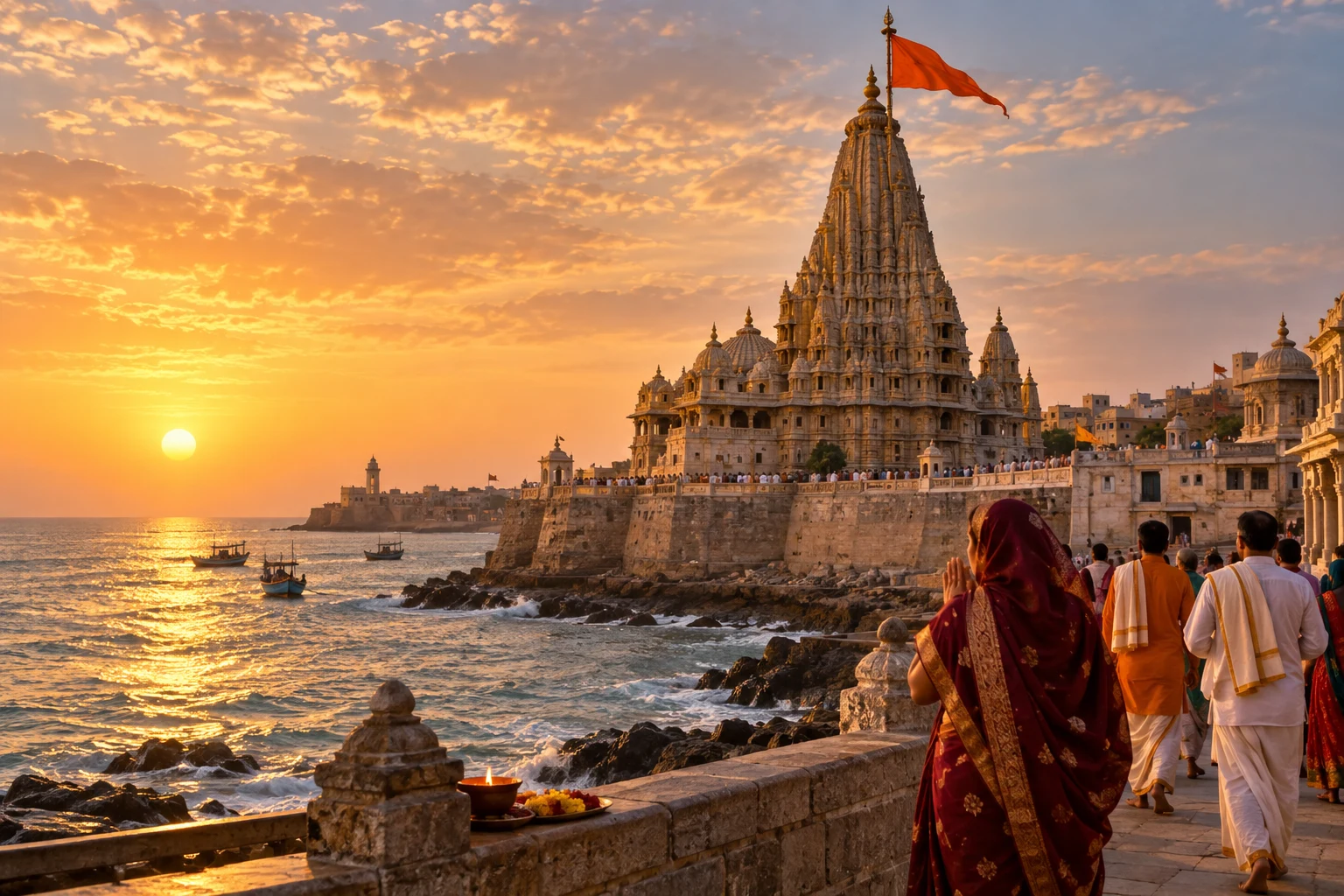
Dwarka, on Gujarat’s Arabian Sea coast, is revered as the city of Krishna’s kingdom in Hindu epic and Puranic tradition. Its principal shrine, Dwarkadhish Temple, is also known as Jagat Mandir. Pilgrims visit for darshan of Krishna as Dwarkadhish—the Lord or King of Dwarka—and to experience a sacred landscape that includes Gomti Creek and several nearby temples.
Sacred narrative, architectural history and archaeology answer different questions about Dwarka. A careful guide respects the Krishna tradition without claiming that every detail has been historically proved.
Dwarka in Krishna tradition
The Mahabharata and later traditions connect Krishna and the Yadavas with a fortified coastal city established after leaving Mathura. Krishna’s Dwarka represents not only royal power but responsibility: the playful child of Braj is also remembered here as statesman, protector and householder.
Devotees identify the present pilgrimage city with that sacred memory. The stories of Lord Krishna give a wider narrative setting, while the Bhagavad Gita presents Krishna’s teaching to Arjuna. Reading both helps a visitor see why Krishna worship embraces affection, wisdom and duty.
What is known about Dwarkadhish Temple?
The Devbhumi Dwarka district’s official temple page places Jagat Mandir on Gomti Creek and describes its carved limestone structure, sanctum and pillared spaces. The temple has two well-known gateways traditionally called Swarga Dwar and Moksha Dwar.
Temple tradition attributes an early shrine to Vajranabha, described as Krishna’s great-grandson. The building seen today reflects later construction, patronage and rebuilding. Official government pages themselves give different shorthand ages for the temple, which is a good reason not to repeat a single “exact” construction year as settled history.
Marine and land archaeology has identified evidence of old settlement and port activity around Dwarka. Those findings support the region’s long coastal history, but debates continue about how archaeological remains relate to the epic city. Devotional identification and archaeological interpretation should not be confused or used to dismiss one another.
Planning a respectful pilgrimage
Check live details shortly before departure:
- current opening periods and festival schedule;
- security, bag, phone and photography restrictions;
- expected crowds and any official queue arrangements;
- coastal weather, heat and monsoon conditions;
- verified road and rail information and accessible accommodation;
- transport requirements for any additional sites.
The Devbhumi Dwarka district website is a useful government starting point for destination information. Temple access details can still change on special days, so confirm locally through official channels. Carry water where permitted, protect yourself from heat, and leave enough time that delays do not turn into pushing or conflict.
A simple darshan practice
Before joining the queue, choose one Krishna name or a short prayer. Put away the pressure to manufacture a dramatic spiritual experience. During darshan, look attentively, offer the prepared prayer, and move when staff direct you so others can worship.
You might reflect on Krishna as Dwarkadhish by asking: Where do I exercise authority? Is it guided by protection, fairness and self-restraint? The Krishna mantra guide can support a simple daily practice before and after the journey.
Nearby sacred places without rushing
Pilgrimage itineraries often include Gomti Ghat, Rukmini Devi Temple, Bet Dwarka and Nageshwar. Each has its own traditions, travel requirements and access conditions. It is better to visit fewer places attentively than race through a checklist. Treat ritual bathing cautiously: assess currents, weather, water conditions and official safety guidance rather than entering water from social pressure.
Respect photography rules and active worship. Use authorised transport, agree on fares or tickets clearly, keep valuables secure, and avoid anyone promising unofficial priority access.
Bring Dwarka home
After the journey, continue one practice for a month: read a short Gita passage, sing the Krishna aarti, share food, or keep a daily promise with greater care. Record one insight from the temple and one action it demands.
Sacred travel is not made meaningful by distance alone. Dwarka becomes part of a devotee’s life when reverence for Krishna as king is translated into responsible conduct, truthful speech and service after returning home.
Frequently Asked Questions
Why is Dwarka sacred to Krishna devotees?
Hindu epic and Puranic traditions associate Dwarka with Krishna's kingdom and later life after Mathura. The living city, Dwarkadhish Temple, Gomti waterfront and surrounding sacred sites make it a major Krishna pilgrimage centre.
Is Dwarkadhish Temple also called Jagat Mandir?
Yes. The main Krishna temple at Dwarka is widely called Dwarkadhish Temple and Jagat Mandir. It stands near Gomti Creek and is the principal focus of pilgrimage in the city.
How old is Dwarkadhish Temple?
Tradition attributes an early shrine to Vajranabha, Krishna's descendant, while the visible structure reflects later construction and rebuilding. Government descriptions and archaeological estimates differ, so one exact age should not be presented as uncontested fact.
What should I check before visiting Dwarka?
Verify current temple hours, security and photography rules, festival crowd conditions, local weather and transport through official sources. Allow time for queues and avoid relying on an old itinerary for live access details.