
🌸 Krishna
Radha Krishna Love and Devotion: Meaning, Story, and Spiritual Symbolism
Last updated: September 26, 2026
Radha Krishna devotion is often understood as longing for the divine, loving remembrance, surrender, and joy—not merely as a romantic story.
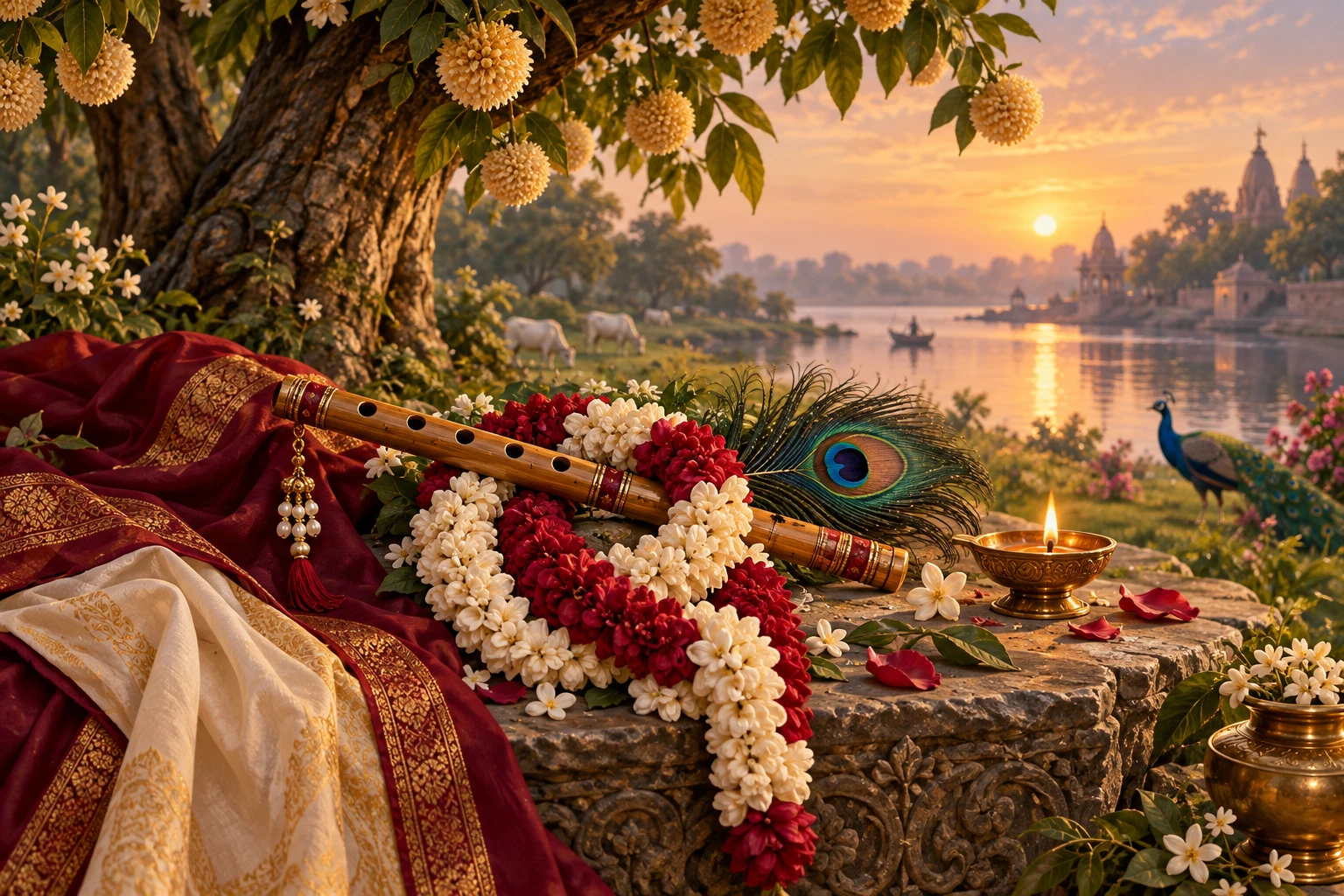
Radha and Krishna are among the most beloved figures in devotional Hindu traditions. Their relationship is expressed through poetry, music, dance, painting, temple worship, and stories of Vrindavan. Many bhakti traditions understand Radha’s love as the fullest image of longing for the Divine, but no single short explanation represents every community.
Radha and Krishna in sacred literature
Krishna’s youthful life among the cowherds of Vraja and the devotion of the gopis are celebrated in the Bhagavata Purana. That text does not simply present Radha by name in the fully developed way familiar from later devotion. Her distinctive literary presence becomes especially influential through later works, including Jayadeva’s Gita Govinda, Sanskrit devotional theology, and vernacular poetry.
This development does not make Radha unimportant. It explains why her story carries several layers: scripture, poetry, theology, performance, and regional memory. Readers should be cautious about treating every modern quotation or episode as if it came from the same ancient source.
Love as devotion, not possession
In bhakti interpretation, Radha’s love is not ownership of Krishna. It is attention so complete that the Divine is remembered in joy, work, separation, and uncertainty. Krishna is not reduced to an object that fulfils personal desire, and Radha is not merely a supporting character in his biography. She becomes the exemplary devotee—and in several traditions, divine power inseparable from Krishna.
This is why romantic imagery can carry spiritual meaning. Human language of meeting, music, beauty, jealousy, waiting, and reconciliation makes an invisible relationship with God emotionally imaginable. The poetry invites contemplation; it should not be used to excuse dishonesty, manipulation, or disrespect in human relationships.
Joy and longing: union and separation
Radha Krishna poetry often moves between sambhoga, the joy of meeting, and viraha or vipralambha, the pain of separation. Bhakti can hold both. A devotee may experience delight in prayer and then dryness, doubt, or distance. Longing need not be treated as failure; it can sharpen remembrance and reveal what the heart truly seeks.
The rasa-lila is also interpreted within this devotional horizon. It is not responsible to detach it from Krishna theology and present it as ordinary social conduct. In the Bhagavata narrative, the episode belongs to a sacred portrayal of divine play and the gopis’ absolute attraction to Krishna. Traditions differ in how literally, symbolically, or ritually they approach it.
How traditions understand Radha
Gaudiya Vaishnava theology gives Radha an especially central place as Krishna’s supreme devotee and his internal spiritual potency. The Radha Vallabha tradition and Nimbarka tradition express the divine pair through their own theological languages. Braj poetry, temple traditions in Vrindavan and Barsana, and dance forms such as Odissi and Manipuri offer still other emphases.
These are not interchangeable labels. A respectful introduction can state the shared theme of divine love while allowing each sampradaya to explain its own doctrine. Regional songs and festivals may emphasise Radha’s childhood landscape, her companions, Krishna’s flute, Holi, Jhulan, or Radhashtami.
Symbols in Radha Krishna art
The flute calls the attention away from distraction; the forest and Yamuna evoke sacred Vraja; flowers and spring suggest love awakening; and the circular dance expresses a divine centre present to every devotee. These meanings are interpretive, not a rigid dictionary. Artists and communities combine symbols differently.
When viewing an image, ask what mood it creates. Is it playful, peaceful, expectant, or marked by separation? Bhakti aesthetics treats such devotional emotion—bhava and rasa—as a way of directing feeling toward the Divine.
Practising the teaching
Choose a short divine name or bhajan and repeat it with attention. Read a few lines of poetry with reliable context rather than collecting decontextualised quotes. Offer flowers, water, or vegetarian food according to your practice. Then perform one act of care without seeking praise. This joins feeling with conduct.
Devotion should make relationships more truthful and compassionate, not less. Respect consent and boundaries, reject possessiveness, and do not force a theological reading on someone else’s life.
Read the stories of Lord Krishna, the Krishna mantra guide, and who Krishna is in the Bhagavad Gita for connected perspectives.
Frequently Asked Questions
What does Radha Krishna love symbolize?
Many bhakti traditions understand it as the soul's wholehearted longing for and delight in the Divine. It can symbolize remembrance, surrender, intimacy, and love free from possessiveness.
Is the Radha Krishna story only romantic?
No. Poetry and art use romantic language, but devotional teachers often read the relationship theologically as divine love and the devotee's longing. Interpretations vary across texts, regions, and sampradayas.
Is Radha mentioned in the Bhagavata Purana?
The Bhagavata Purana narrates Krishna's rasa-lila and the gopis' devotion but does not straightforwardly name Radha in the familiar later manner. Her distinct literary and theological prominence develops across later Sanskrit and regional traditions.
How can someone practise Radha Krishna devotion?
A beginner can repeat the divine names, sing a bhajan, read a short passage with context, offer simple food or flowers, and perform an act of service without seeking recognition.