
🪔 Hanuman
Hanuman Tuesday Puja Guide: Simple Prayer, Offerings, and Meaning
Last updated: September 26, 2026
Tuesday Hanuman worship can be simple: clean preparation, sincere prayer, Chalisa or mantra recitation, and a commitment to courageous service.
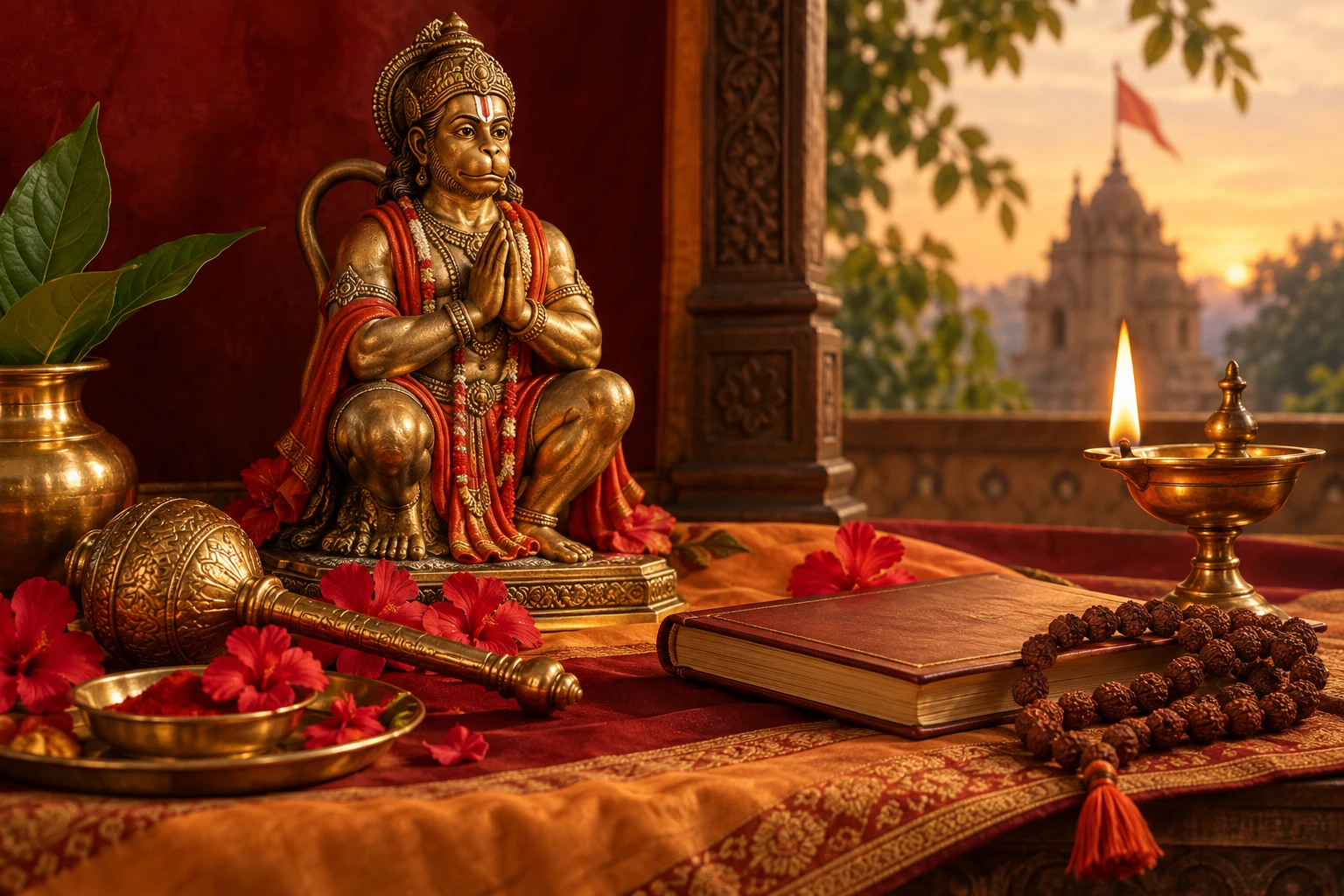
Many devotees reserve Tuesday for Hanuman worship, seeking courage, discipline, protection and strength of character. A home puja does not require expensive ingredients or advanced ritual knowledge. Cleanliness, attention, remembrance of Rama and useful action form a sound foundation.
Tuesday worship is a recurring discipline, not a transaction that guarantees a particular result. Its value lies in returning each week to the qualities Hanuman embodies: strength governed by wisdom, confidence without ego, and devotion expressed as service.
What to prepare
Use a clean, stable place with an image or murti of Hanuman, water, flowers, fruit or a simple sweet, and a safe diya or electric lamp. Keep a Hanuman Chalisa or prayer text nearby. Some families offer particular foods, oils or coloured substances; those customs are not universal. Do not apply anything to a household image unless you know it is appropriate and will not cause damage.
Wear clean, comfortable clothes and choose a time you can keep consistently. Morning or evening can both work. A ten-minute attentive puja is better than an elaborate schedule that quickly becomes impossible.
A simple Tuesday Hanuman puja
- Settle the space. Wash your hands and face, put away the phone and sit steadily.
- Name an intention. Ask for courage to meet a real duty, not merely for a difficulty to disappear.
- Remember Rama. Repeat Rama’s name briefly, recognising that Hanuman’s strength is oriented toward devoted service.
- Offer respectfully. Light the lamp safely, then offer water, flowers and fruit one by one.
- Recite. Read the Hanuman Chalisa or a trusted mantra. Use the recitation practice guide if you are building fluency.
- Understand one line. Read a section of the Hanuman Chalisa meaning rather than treating the text as an unexplained formula.
- Sit silently. Take a minute to connect prayer to the day’s action.
- Conclude. Offer thanks and share the food as prasad.
If flame, incense or smoke is unsuitable for your home, use an electric lamp and a flower. Safety and consideration for others are part of respectful practice.
What to pray for
Instead of a long wish list, focus on qualities that change how you meet difficulty:
- courage without aggression;
- discipline without harshness;
- speech that is both truthful and useful;
- intelligence before action;
- loyalty without loss of moral judgment;
- strength used to protect rather than dominate.
The powerful Hanuman mantras guide explains several prayers and their context. Beginners should choose one stable practice instead of collecting many mantras or using beej mantras without appropriate guidance.
Tuesday fasting: a careful approach
Some devotees observe a Tuesday fast or avoid particular foods. The rules vary by family and region. Do not fast if it conflicts with medical advice, medication, pregnancy, growth, demanding work or a history of disordered eating. A health-appropriate simple meal, restraint from angry speech, or reduced digital distraction can also support the day’s discipline.
Fasting should make conduct clearer and kinder. If it produces unsafe symptoms or harms other people through irritability, stop and reassess.
Turn prayer into one act of service
At the end of puja, choose one specific task: finish work you have avoided, help someone carry a burden, defend a colleague fairly, exercise with patience, or apologise without excuses. The Hanuman and Rama story shows devotion expressed through capable action rather than passive wishing.
Keep a small weekly note: “What required courage?” and “Where did ego interfere with service?” This turns Tuesday into a useful rhythm of review.
Common questions and cautions
There is no need to chase an enormous recitation count, purchase costly objects or accept fear-based claims. Rules about gender, food and temple entry may differ among particular communities, but internet statements should not be presented as universal Hindu law. Ask a trusted elder or teacher when a family custom matters.
Regularity is the heart of this practice. A clean altar, Rama’s name, one careful Chalisa reading and a courageous act of service make a complete Tuesday observance.
Frequently Asked Questions
How do I perform Hanuman puja on Tuesday at home?
Clean the altar, remember Rama, light a lamp safely, offer water, flowers and fruit, recite the Hanuman Chalisa or a familiar prayer, sit quietly, and conclude with gratitude and prasad. Keep the practice simple and regular.
What can I offer Hanuman on Tuesday?
Flowers, fruit and a simple sweet are appropriate in many homes. Other offerings differ by region and lineage, so follow trusted family or temple guidance and avoid copying unfamiliar ritual details from unsourced posts.
Can I read the Hanuman Chalisa at night on Tuesday?
Yes, many devotees read it at a time when they can be clean, attentive and undisturbed. There is no need to force an inconvenient hour; household tradition may provide more specific guidance.
Do women or beginners face restrictions on Tuesday Hanuman worship?
Practices differ among households and temples, but broad claims excluding all women or beginners should not be treated as universal. Respect local rules while seeking guidance from a trusted teacher rather than fear-based social media claims.