
🦚 Festivals
Janmashtami Story and Significance: The Birth of Krishna
Last updated: August 31, 2026
Janmashtami celebrates Krishna's birth in Mathura and the hope that appears when injustice seems strongest.
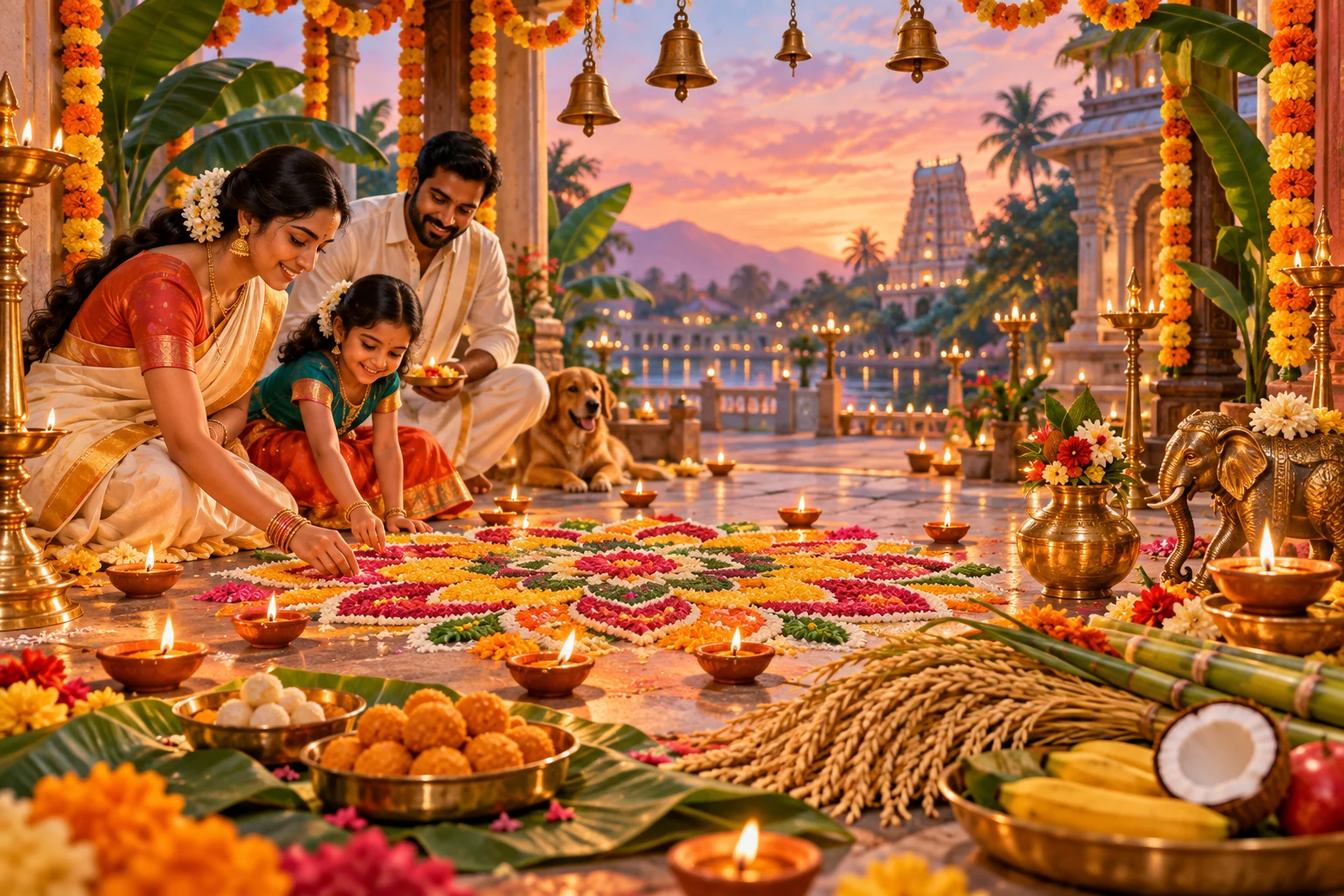
Janmashtami celebrates the birth of Krishna, one of the most beloved figures in Hindu tradition. The Janmashtami story tells how Krishna was born to Devaki and Vasudeva in Mathura, was carried to safety in Gokul, and grew into a guide who restores dharma. The festival is observed with fasting, devotional singing, temple decoration, readings from Krishna’s life, and a midnight celebration of his birth.
When is Janmashtami celebrated?
Janmashtami is observed on Krishna Paksha Ashtami in the month of Bhadrapada, with the exact Gregorian date and midnight worship window determined locally. Check a current panchang or temple calendar for your city before planning a fast or puja, especially when the tithi spans two civil dates.
The birth in Mathura
Krishna was born to Devaki and Vasudeva in Mathura, where Devaki’s brother Kamsa had become a cruel ruler. A prophecy warned Kamsa that Devaki’s eighth child would bring about his downfall, so he imprisoned the couple and killed their children.
When Krishna was born, divine events enabled Vasudeva to carry the child across the Yamuna to the village of Gokul. There, Krishna was raised by Yashoda and Nanda, while Kamsa was led to believe the danger had passed. The story presents the birth of Krishna as hope entering a world shaped by fear and injustice.
Why midnight is important
Krishna’s birth is celebrated at midnight, the darkest and quietest part of the night. The symbolism is clear: divine light appears when circumstances seem most difficult. Midnight worship also creates a sense of anticipation, with the community waiting together before singing, ringing bells, and offering food.
From child Krishna to teacher of the Gita
Krishna’s childhood stories in Vrindavan emphasize play, affection, music, and the love of devotees. His later life includes the destruction of Kamsa, guidance to the Pandavas, and the teaching of the Bhagavad Gita to Arjuna. These different stories show Krishna as child, friend, strategist, king, and spiritual teacher.
A simple Janmashtami practice
Read a short story of Krishna, chant a name such as “Hare Krishna,” offer fruit or butter, and spend a few minutes reflecting on one Gita teaching. The festival is not only about remembering a miraculous birth; it is also about bringing joy, courage, and dharma into ordinary life.
For a longer reading path, explore Stories of Lord Krishna, the Bhagavad Gita in English guide, and the Krishna Beej Mantra.
Frequently asked questions
What is the story behind Janmashtami?
Janmashtami remembers Krishna’s birth in Mathura to Devaki and Vasudeva. Fearing a prophecy, King Kamsa imprisoned them, but Vasudeva carried the newborn Krishna safely to Gokul, where Nanda and Yashoda raised him.
Why is Janmashtami celebrated at midnight?
Many traditions celebrate Krishna’s birth at midnight. The late-night worship recalls the birth narrative and gives devotees a shared moment of singing, prayer, and offering.