
🧵 Festivals
Raksha Bandhan Story and Significance: The Festival of Sacred Bonds
Last updated: September 26, 2026
Raksha Bandhan is more than a ritual between brothers and sisters. It is a celebration of trust, protection, affection, and the responsibilities people carry for one another.
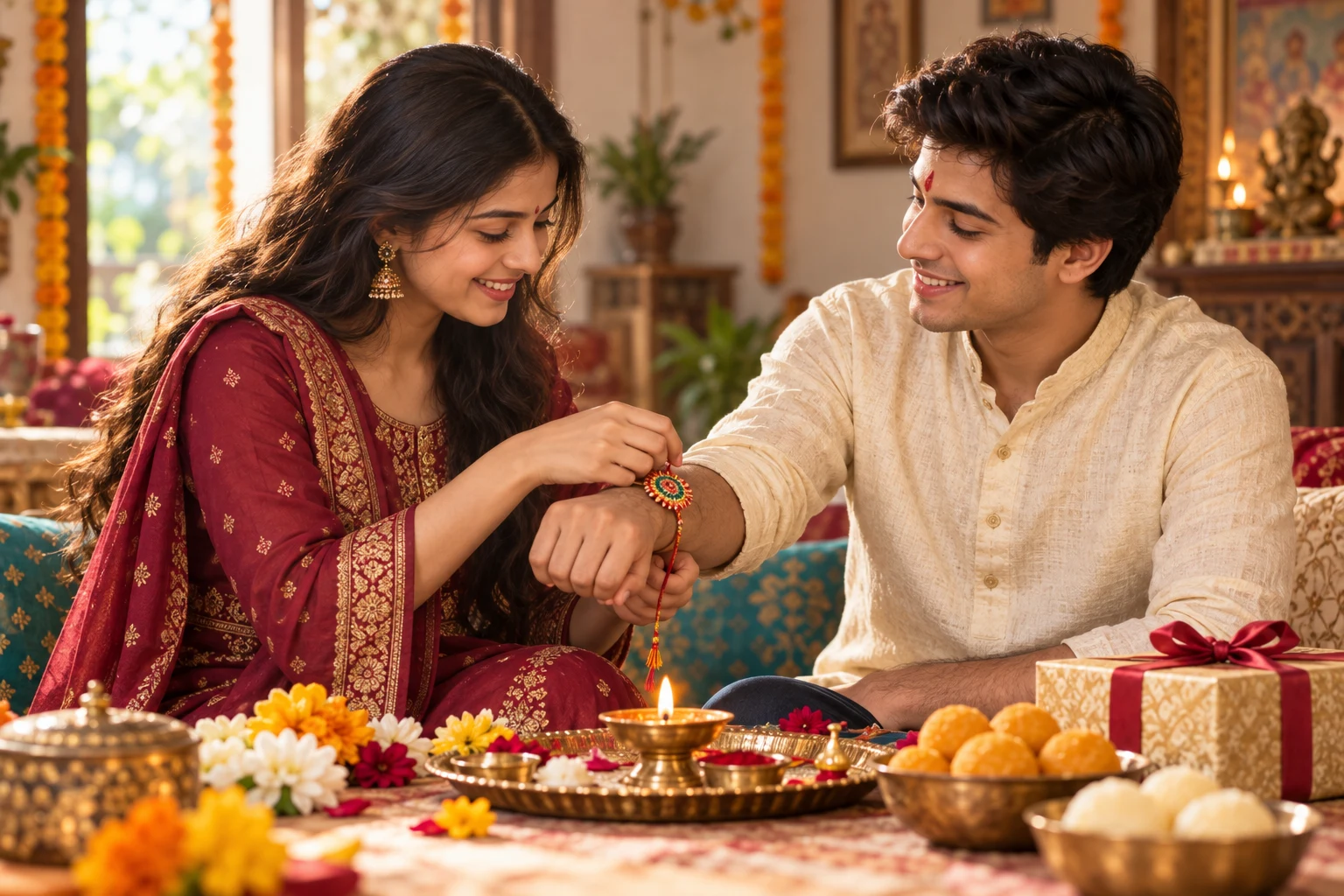
Raksha Bandhan means “the bond of protection.” On this festival, a sister traditionally ties a rakhi around her brother’s wrist, offers a blessing, and shares sweets. He responds with affection, a gift, and a promise of care. Contemporary celebrations often include cousins, sisters, friends, mentors, service members, and chosen family.
The ritual is simple, but its healthiest meaning is demanding: protection must include dignity, listening, and respect for another person’s freedom. A rakhi should never be used to justify control or unequal expectations.
When Raksha Bandhan is celebrated
Raksha Bandhan is generally observed on the full-moon day of the lunar month of Shravana, so its civil date changes each year. The auspicious time may also depend on local panchang calculations. Families undertaking a time-specific ritual should follow their regional calendar or temple rather than relying on a date graphic made for another city.
The festival is part of a wider full-moon observance with distinct regional forms, including Narali Purnima in coastal Maharashtra and other community traditions. This diversity is a reminder that one household’s sequence is not universal.
Krishna and Draupadi: a popular Raksha Bandhan story
One popular retelling says that when Krishna injured his finger, Draupadi tore a strip from her garment and tied it around the wound. Krishna remembered the spontaneous act of care and later protected her during her humiliation in the Kuru court.
The story is widely shared during Raksha Bandhan, although versions and their connection to the annual festival developed through tradition. Its moral force comes from reciprocity: a small, compassionate response establishes a responsibility that is remembered when another person is vulnerable. Read more about Krishna’s role in the Mahabharata in these stories of Lord Krishna.
Indrani’s protective thread
Another tradition is associated with Indra and Indrani. Before a difficult battle, Indrani prepares a sacred protective thread, empowered through prayer, and ties it to Indra. This strand of the tradition helps explain why older references to raksha concern a consecrated thread for protection and are not limited to a brother-sister relationship.
Lakshmi and King Bali
A Vaishnava story links the festival with King Bali, Vishnu, and Lakshmi. When Vishnu remains with the generous king, Lakshmi approaches Bali, establishes a sibling bond by tying a thread, and asks that Vishnu return with her. The episode highlights hospitality, kinship, and obligation. As with other festival stories, regional tellings differ, and it is best presented as a devotional tradition rather than the sole historical origin.
What the rakhi symbolizes today
The thread makes an invisible commitment visible. Protection can mean checking on a sibling’s wellbeing, supporting education, speaking honestly, sharing care for older relatives, respecting boundaries, or showing up during illness. A gift has meaning when it expresses knowledge of the person; its price is secondary.
The promise is mutual even when the ritual roles are traditional. Sisters are not merely recipients of protection, and brothers are not valued only as providers. Both participants can name how they will care for the relationship in the coming year.
A simple, respectful Raksha Bandhan ceremony
- Prepare a clean place with a rakhi, a sweet or fruit, and roli and rice if these belong to your custom.
- Light a diya only in a stable, supervised place; an electric lamp is a safe alternative.
- Offer a short prayer or silently express gratitude for the relationship.
- Apply tilak if customary, tie the rakhi comfortably, and share a sweet.
- Exchange blessings and one practical promise that can genuinely be kept.
A short Vishnu mantra or family prayer may accompany the ritual. Ask before tying a rakhi, respect dietary restrictions when sharing sweets, and do not pressure anyone to participate or give an expensive present.
Carry the bond beyond one day
The best celebration continues after the thread comes off. Schedule a regular call, repair an old misunderstanding, share family responsibilities fairly, or support someone through a difficult transition. Raksha Bandhan becomes spiritually meaningful when the visible thread leads to dependable action, mutual freedom, and care that lasts through the year.
Frequently Asked Questions
What is the meaning of Raksha Bandhan?
Raksha Bandhan means a bond of protection. The rakhi represents affection, trust, and a commitment to care for one another rather than permission to control another person's choices.
What is the story behind Raksha Bandhan?
Several stories are associated with the festival, including traditions about Indra and Indrani, Krishna and Draupadi, and Lakshmi and King Bali. Their prominence varies by region and community, so there is no single universal origin story.
Who can tie a rakhi?
Traditionally a sister ties a rakhi to her brother, but many families include cousins, sisters, friends, mentors, service members, and chosen family. The meaning should remain mutual respect and freely offered care.
What is needed for a simple Raksha Bandhan ceremony?
A rakhi, a safe lamp if desired, a small sweet or fruit, and a sincere blessing are enough. Family customs may add roli, rice, or aarti, but an elaborate setup is not required.