
🧘 Practice Guides
Padmasana: Meaning, Steps, and Benefits of the Lotus Pose
Padmasana, the lotus pose, is one of the most recognizable meditation postures in yoga — and one of the most commonly attempted before the body is ready for it.
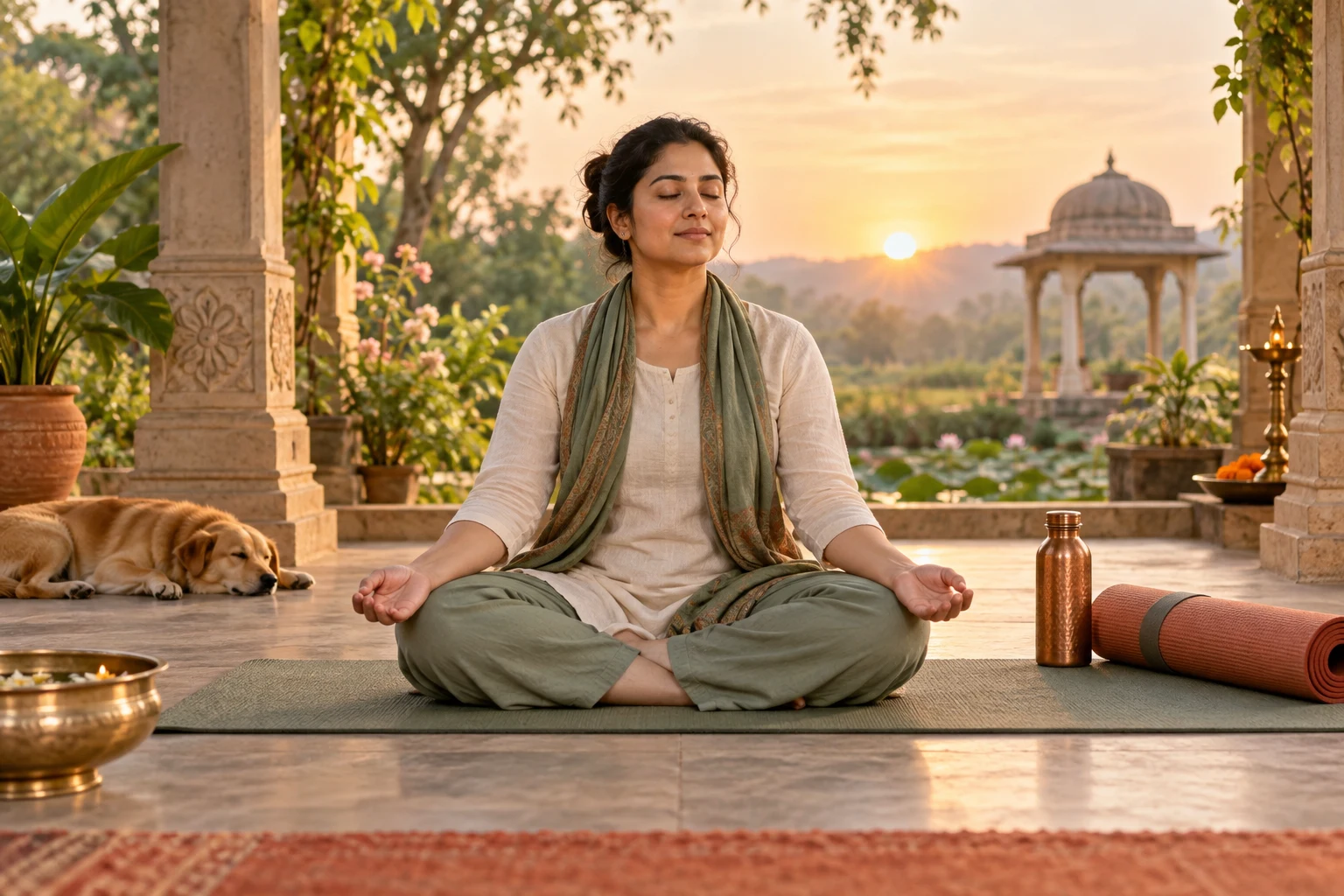
Padmasana, the “lotus pose,” is one of the most recognizable postures in yoga — a cross-legged seated position traditionally used as a stable base for meditation and pranayama, named for its resemblance to a blooming lotus flower.
How it’s practiced
Sit on the floor with the legs extended. Bend the right knee and place the right foot on the left thigh, sole facing upward, then bend the left knee and place the left foot on the right thigh in the same way, so both feet rest on opposite thighs. Keep the spine straight and the hands resting on the knees, and breathe naturally. Full Padmasana requires significant hip flexibility, and a half version — one foot on the opposite thigh, the other tucked beneath the opposite leg — is a common and perfectly valid alternative for those who aren’t ready for the full pose.
Why it’s used for meditation
Padmasana is traditionally valued as a meditation seat because the crossed-leg structure creates a stable, self-supporting base that can be held for extended periods without needing external support, allowing attention to settle inward rather than being managed by ongoing physical adjustment. Many pranayama practices, including Anulom Vilom and Bhramari, are traditionally practiced seated in Padmasana or a similar cross-legged posture.
Precautions
Padmasana requires considerable flexibility in the hips, knees, and ankles, and attempting the full pose before the body is ready is a common cause of knee strain. Beginners should use the half version, or a simple comfortable cross-legged seat (Sukhasana), rather than forcing the full lotus. Those with knee or hip injuries should approach the pose cautiously or avoid it.
Common questions
What does “Padmasana” mean?
“Lotus pose” — named for its resemblance to a blooming lotus flower, a common symbol in Hindu and Buddhist tradition.
Do I need to be very flexible to do Padmasana?
For the full pose, yes — considerable hip and knee flexibility is needed. Beginners should use a half version or a simple cross-legged seat instead of forcing the full posture.
Is Padmasana only for meditation?
It’s most closely associated with meditation and pranayama as a stable seated base, though it’s also practiced as a posture in its own right within a broader asana sequence.
What’s a safer alternative to full Padmasana?
Ardha Padmasana (half lotus, one foot on the opposite thigh) or Sukhasana (a simple comfortable cross-legged seat) are both safe, commonly used alternatives for those without the flexibility for the full pose.