
🤲 Practice Guides
Gyan Mudra: Meaning, How to Do It, Benefits, and Precautions
Last updated: October 10, 2026
Gyan Mudra joins the thumb and index finger in a familiar meditation gesture associated with knowledge, attention, and calm.
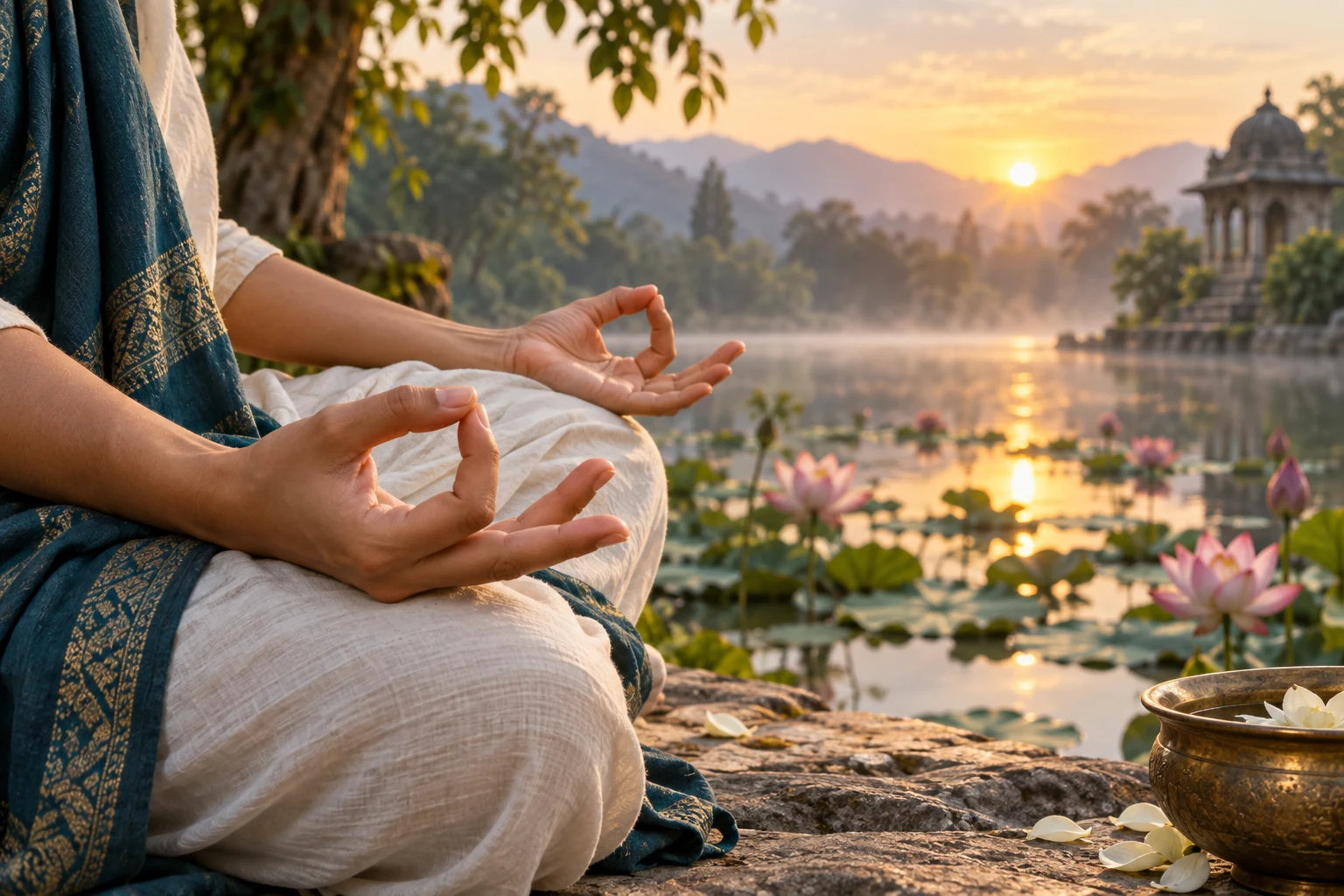
Gyan Mudra (also written Jnana Mudra, ज्ञान मुद्रा) is the “gesture of knowledge”: a hand position in which the tip of the index finger touches the tip of the thumb while the other three fingers stay extended. It is the most widely used mudra in yoga and meditation, traditionally associated with wisdom, concentration, and a calm, steady mind.
The thumb and index finger meet while the remaining fingers extend softly. Its name connects it with jnana—knowledge, understanding, or wisdom—so the gesture is often used as a quiet symbol of attentive learning. The mudra is simple, but it is not a magic switch for concentration or health. It can provide the hands with a stable resting position and remind a practitioner to return to the breath. Read what mudras are for the wider context in which hand mudras are taught, and a list of other common mudras.
Gyan Mudra meaning
The Sanskrit word gyan or jnana means knowledge — especially the inner, direct knowledge of one’s true Self (atman). Mudra means “seal” or “gesture.” So the Gyan Mudra meaning is literally “the seal of knowledge.”
In the elemental system of hand mudras, the thumb represents fire and the index finger represents air; joining them is traditionally said to balance the air element and steady the mind. In Hindu iconography, Lord Shiva as Dakshinamurti, the teacher of wisdom, is often shown with his right hand in this gesture, called Chin Mudra or Jnana Mudra — a visual reminder that the gesture represents teaching and understanding.
| Sanskrit name | Jnana Mudra / Gyan Mudra (ज्ञान मुद्रा) |
| Meaning | Gesture or seal of knowledge |
| Fingers | Index fingertip touches thumb tip; middle, ring, little fingers extended |
| Element | Air (index) joined with fire (thumb) |
| Used with | Meditation, pranayama, mantra japa, seated asanas such as Padmasana and Vajrasana |
| Duration | 5 minutes to start; 15–30 minutes with practice |
How to do Gyan Mudra step by step
- Sit on a chair, cushion, or mat in a position you can maintain without strain.
- Lengthen the spine naturally rather than forcing the chest upward.
- Bring the tip of each index finger to the tip of its thumb.
- Keep the contact light. Let the middle, ring, and little fingers extend in a relaxed curve.
- Rest the hands on the thighs or knees so the shoulders can soften.
- Breathe normally and place attention on the physical sensation of each breath.
Five quiet minutes is enough for a first practice. When finished, separate the fingers, move the wrists, and notice the body before standing. You can form the gesture with one hand if using both is uncomfortable.
Gyan Mudra vs. Chin Mudra
The finger position is the same. Many teachers use Gyan Mudra for the palms-up version and Chin Mudra (from chit, consciousness) for the palms-down version, though some lineages reverse the names or use them interchangeably.
Palms up or palms down?
Both versions appear in contemporary teaching. With the palms facing up, the gesture is often described as open or receptive. With the palms resting down, it may feel steadier or more grounded. These descriptions are experiential rather than strict physiological rules.
Choose the orientation that allows the elbows, wrists, and shoulders to relax. If you are following a teacher or lineage, use the form taught in that practice. Beginners do not need to worry that one palm direction is “wrong.”
Meaning and symbolism
A familiar symbolic explanation links the index finger with individual awareness and the thumb with universal awareness. Their meeting represents the relationship between personal understanding and a larger reality. The other three fingers are interpreted differently across teachings, which is a useful reminder that mudra symbolism is not one universal code.
The gesture can also be understood practically: the gentle fingertip contact gives attention a clear sensory anchor. When the mind wanders, feel that contact, notice one breath, and begin again. This approach fits naturally with the Gita’s view that mental steadiness develops through patient practice rather than self-criticism; the Bhagavad Gita Chapter 6 summary gives that meditation context.
Using Gyan Mudra in meditation
Try a short routine:
- sit comfortably and form the mudra;
- notice three points of support—the seat, feet or legs, and hands;
- follow ten natural breaths without changing their depth;
- when distracted, acknowledge it and return to the fingertips;
- end with one practical intention for the day.
Gyan Mudra can accompany silent meditation, mantra repetition, or gentle pranayama. Do not combine it with forceful breath retention merely because the hand position feels easy. Breath techniques deserve their own careful instruction.
Traditional benefits and realistic expectations
Teachers traditionally associate Gyan Mudra with wisdom, concentration, memory, and calm. These themes explain why it appears in meditation imagery and contemplative practice. They should not be turned into guarantees that a hand gesture will treat anxiety, insomnia, cognitive decline, or another medical condition.
A realistic benefit is the structure the gesture brings: hands settle, posture becomes intentional, and wandering attention has a place to return. The effect may be subtle, and some practitioners may simply prefer another comfortable hand position.
Traditionally cited benefits of Gyan Mudra include:
- Focus and concentration during study or meditation.
- Calm — a settled resting position for the hands that helps the breath slow down.
- Memory and learning — the “knowledge” association makes it popular with students alongside the Gayatri Mantra for students.
- Better meditation posture — the hands rest symmetrically, which helps the shoulders relax.
When and how long to practise
Early morning is the traditional time, but any quiet moment works. Start with five minutes, and build up to 15–30 minutes, either in one sitting or split across the day. Gyan Mudra pairs well with Om chanting, Bhramari pranayama, or Anulom Vilom.
Precautions and common mistakes
Avoid pressing the fingertips together, splaying the other fingers, or holding the arms away from the body. Support the forearms with a cushion if the shoulders become tired. Stop if you develop pain, tingling, numbness, or cramping, especially if you have a hand injury or nerve condition.
Gyan Mudra is accessible because it requires no flexibility goal or special equipment. Its deeper lesson is equally straightforward: knowledge grows through steady attention. For another gentle mudra often used in wellness practice, explore Prana Mudra, while keeping the same distinction between tradition and medical evidence.
Related mudras
- Prana Mudra — ring and little fingers to thumb, for vitality.
- Prithvi Mudra — ring finger to thumb, for grounding.
- Vayu Mudra — index finger folded under the thumb.
- Apana Mudra — middle and ring fingers to thumb.
- Surya Mudra — ring finger folded under the thumb.
- All hand mudras and their meanings
Frequently Asked Questions
How do you form Gyan Mudra?
Touch the tip of the index finger lightly to the tip of the thumb, allow the other fingers to extend without stiffness, and rest the hands comfortably on the thighs or knees.
Should the palms face up or down in Gyan Mudra?
Both positions are commonly taught. Palms upward are often described as receptive, while palms downward may feel more grounded; comfort and the instructions of your tradition can guide the choice.
How long can a beginner practise Gyan Mudra?
Begin with five minutes during natural breathing or meditation and extend the time only if the hands remain comfortable. No universal duration is required for the practice to be meaningful.
Does Gyan Mudra medically improve memory or anxiety?
It is traditionally associated with knowledge and calm, but it should not be presented as a proven treatment for memory problems, anxiety, or another condition. Seek appropriate professional care when symptoms affect daily life.
What is the meaning of Gyan Mudra?
Gyan Mudra means the 'gesture of knowledge'. Gyan (jnana) is Sanskrit for knowledge or wisdom and mudra means seal or gesture. The joined thumb and index finger are often said to symbolise individual awareness meeting universal awareness.
What is the difference between Gyan Mudra and Chin Mudra?
The finger position is the same. Many teachers call it Gyan Mudra when the palms face up and Chin Mudra when the palms face down, though usage varies between traditions.
What is the best time to do Gyan Mudra?
Early morning meditation is traditional, but Gyan Mudra can be practised at any time you sit quietly — during meditation, pranayama, mantra japa, or a short break in the day.