
🧘 Practice Guides
Pashchimottanasana: Meaning, Steps, and Benefits
Pashchimottanasana, the seated forward bend, is one of the most commonly practiced yoga stretches — and one of the most commonly forced. Here's how to do it well.
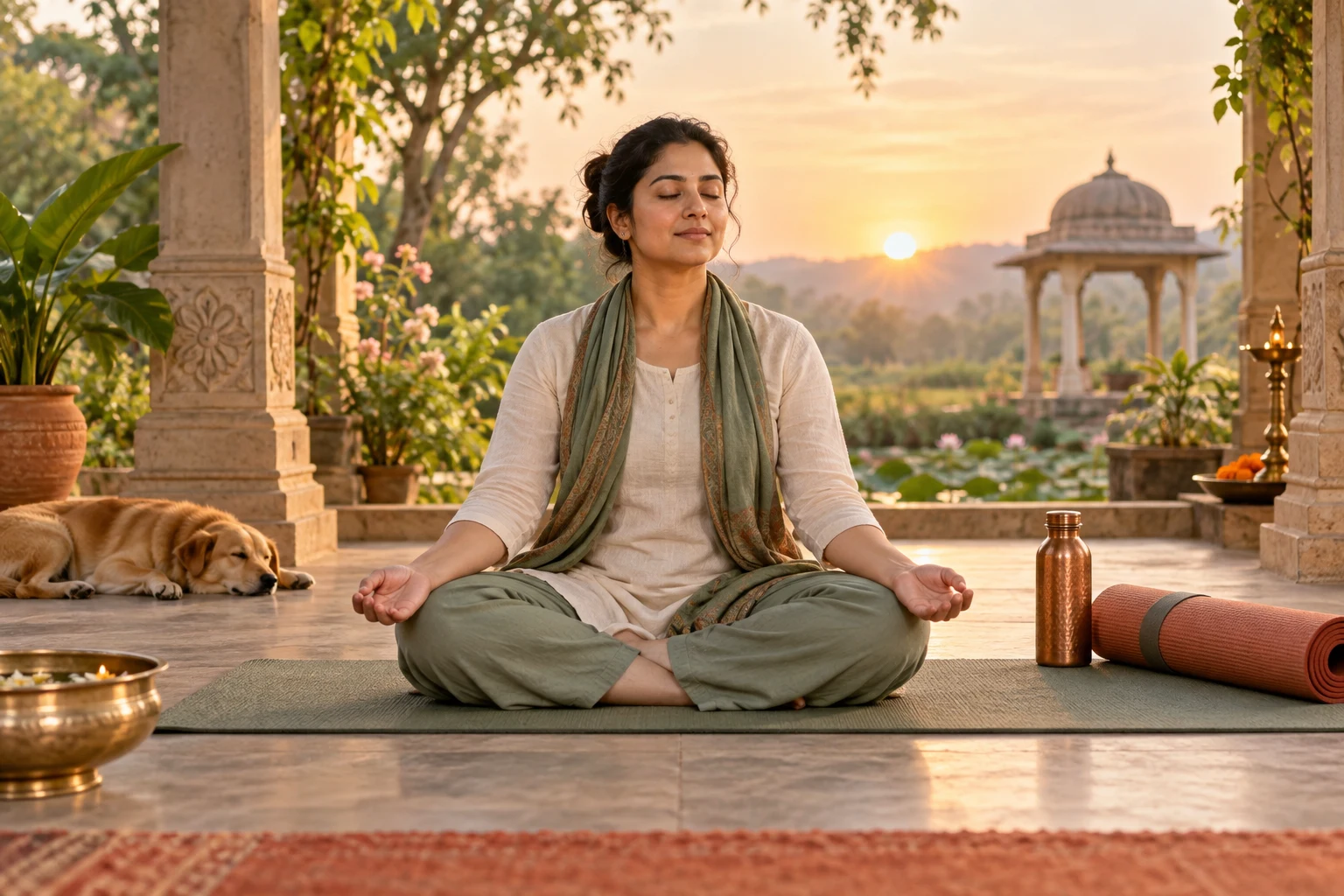
Pashchimottanasana, the “seated forward bend,” is one of the most commonly practiced stretches in yoga — a full-body forward fold from a seated position, named from Sanskrit words referring to stretching the entire back side of the body (paschima).
How it’s practiced
Sit with the legs extended straight in front, feet flexed. Inhale to lengthen the spine, then exhale and hinge forward from the hips, reaching toward the feet, shins, or wherever comfortably reaches, rather than forcing the hands to the toes. The back can round gently rather than staying perfectly flat, especially for beginners — the point is a steady stretch through the back of the legs and spine, not a dramatic fold. Hold for several breaths, releasing further into the stretch gradually rather than bouncing or forcing.
Traditional benefits
Pashchimottanasana is traditionally associated with stretching the hamstrings, lower back, and spine, calming the nervous system as a forward fold, and gently stimulating the abdominal organs through the compression involved. It’s frequently used as a counterpose after backbends like Bhujangasana or Dhanurasana, and pairs well after a core pose such as Navasana (boat pose).
A common mistake
The most common error is forcing the reach toward the toes by rounding aggressively from the lower back rather than hinging from the hips — this can strain the lower back without actually deepening the stretch where it’s meant to happen. Using a strap around the feet, or simply reaching only as far as comfortable with bent knees if needed, is a better approach than forcing a “full” version of the pose.
Common questions
What does “Pashchimottanasana” mean?
Roughly “stretch of the west (back) side” in Sanskrit, referring to the stretch through the entire back of the body from head to heels.
Do I need to touch my toes in Pashchimottanasana?
No — reaching the shins, ankles, or using a strap around the feet is a perfectly valid version of the pose; forcing the reach can strain the back without added benefit.
Is it okay to bend the knees in this pose?
Yes, especially for beginners or those with tight hamstrings — a slight bend in the knees allows the spine to lengthen properly rather than rounding excessively.
When is Pashchimottanasana typically practiced?
Often as a counterpose after backbends, or as part of a general stretching sequence for the hamstrings and back.