
🧘 Practice Guides
Dhanurasana: Meaning, Steps, and Benefits of Bow Pose
Last updated: September 26, 2026
Dhanurasana, bow pose, is a deeper backbend than Bhujangasana, engaging the whole body at once. Here's how it's practiced, and who should approach it carefully.
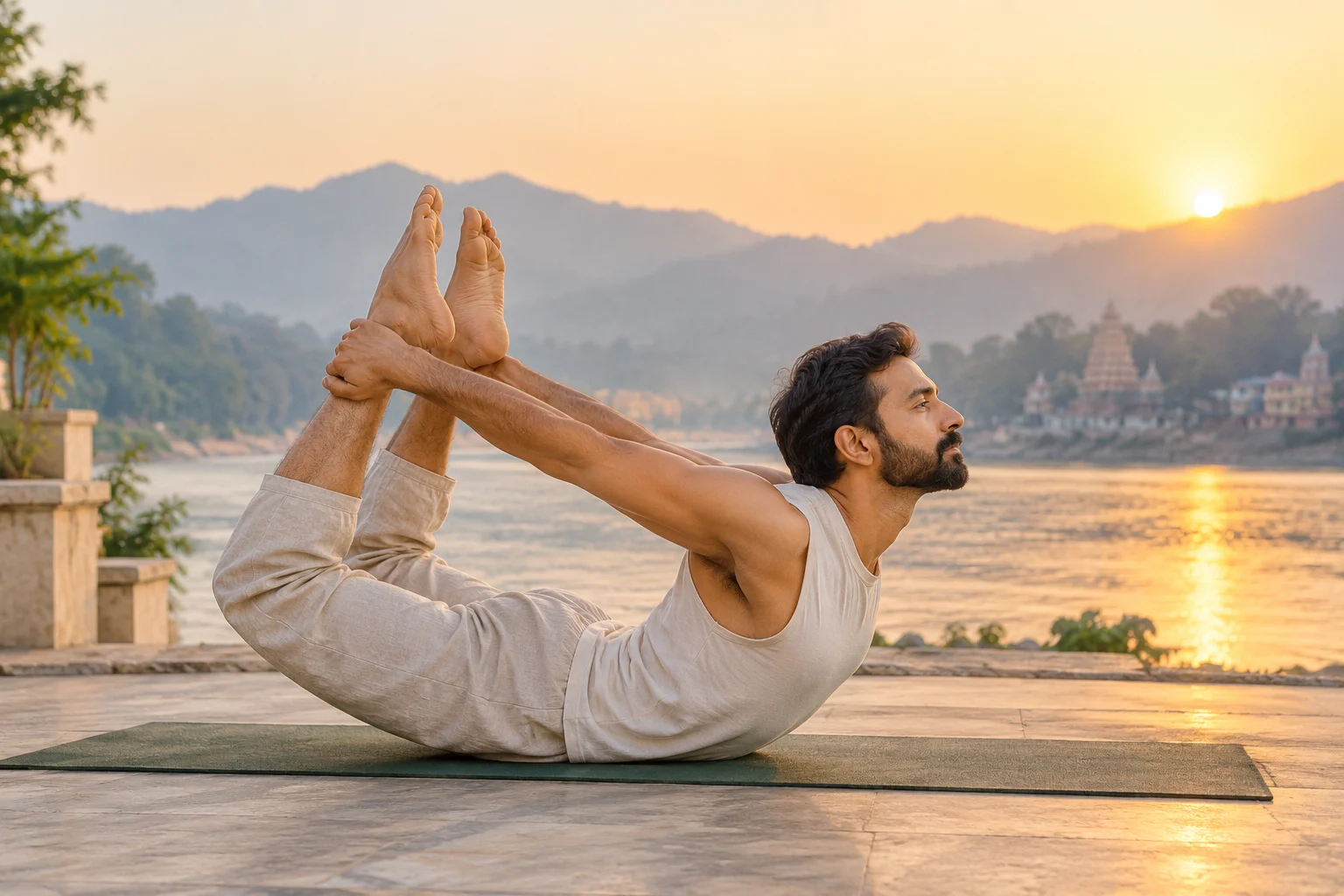
Dhanurasana, or bow pose, is a prone backbend in which the hands hold the ankles and the lifted torso and thighs form an archer’s bow. It combines spinal extension, shoulder opening, hip extension, and active legs, making it more demanding than Bhujangasana. The aim is not to force the highest possible arc. A useful version is one in which the breath remains steady and the lower back and neck feel supported rather than compressed.
Before you begin
Practise on a firm, padded surface after a general warm-up and not immediately after a large meal. Prepare with gentle shoulder movements, low cobra, and a quadriceps stretch. If reaching both ankles causes the knees to spread widely or the back to pinch, use a strap around the ankles or practise one side at a time. Props do not make the pose less valid; they help preserve its actions safely.
How it’s practiced
- Lie on the abdomen with the legs about hip-width apart and the forehead resting down. Bend both knees and bring the heels toward the sitting bones.
- Reach back and hold the ankles, not the tops of the feet. If the ankles are inaccessible, loop a strap around each one and hold the ends.
- On an inhalation, press the ankles back into the hands. Let that action lift the chest and, if comfortable, the thighs. Keep the knees from splaying much wider than the hips.
- Lengthen through the crown of the head and gaze forward or slightly down. Avoid throwing the head back. Let the abdomen and front pelvis provide a broad base.
- Stay for two or three easy breaths at first. To exit, exhale, lower the thighs and chest with control, release the feet, and rest with the head turned to one side.
Rocking is sometimes taught, but it is optional and can encourage momentum. Develop a steady static pose before considering it. Follow with a neutral rest or a comfortable child’s pose if that feels good; no single counterpose is mandatory.
Common alignment problems
If the knees flare apart, reduce the height and actively press the feet back. If all sensation lands in the lumbar spine, think of lengthening the tailbone toward the heels and lifting through the breastbone rather than cranking upward. Shoulders crowding the ears often mean the grip is too tight; soften the upper trapezius and broaden the collarbones. Never ask another person to pull the feet or push the back deeper.
Breath-holding is a clear reason to reduce intensity. The belly is compressed against the floor, so breathing may feel different, but it should not feel panicked or obstructed. Come out immediately if there is sharp pain, tingling, dizziness, nausea, or unusual shortness of breath.
Traditional benefits
Dhanurasana actively uses the back-body and leg muscles while lengthening the chest, shoulders, abdomen, hip flexors, and thighs. Many practitioners use it to explore upright posture and energetic effort. These are general movement aims, not guaranteed therapeutic outcomes. Flexibility and comfort vary with anatomy, training history, fatigue, and injury.
Precautions
Avoid this prone pose during pregnancy. Seek individual guidance if you have a current back, neck, shoulder, knee, abdominal, or hip injury; recent abdominal surgery; a hernia; uncontrolled blood pressure; glaucoma; or symptoms worsened by backbending. People with migraine or vertigo should be cautious. A qualified teacher or clinician can help decide whether a supported alternative is appropriate. Yoga should not be used to diagnose or treat a condition.
Beginner options and progression
Try half bow pose: keep one forearm forward, bend the opposite knee, hold that ankle, and lift only as far as breathing stays smooth. Repeat evenly. Another option is locust pose without holding the feet. Build strength and shoulder mobility over time rather than repeatedly forcing the end range. Practising Tadasana can also develop the sense of length and active legs that this backbend needs.
Common questions
What does “Dhanurasana” mean?
“Bow pose” — named for the curved shape the body forms, resembling an archer’s bow.
How is Dhanurasana different from Bhujangasana?
Dhanurasana is a deeper, full-body backbend engaging the arms, legs, and back together; Bhujangasana is a gentler backbend using only the upper body while the legs stay on the floor.
Is Dhanurasana safe for beginners?
Beginners can use straps or half bow and keep the lift low. Personal instruction is helpful if the pose causes uncertainty, pain, or breath-holding.
Who should avoid Dhanurasana?
Pregnant practitioners should avoid the prone position. People with the conditions listed in the precautions section should seek qualified individual advice before attempting it.