
🧘 Practice Guides
Shavasana: Meaning, How to Practice It, and Why It Matters
Shavasana looks like the simplest pose in yoga — lying still — but it's traditionally considered one of the hardest to do well. Here's why it matters.
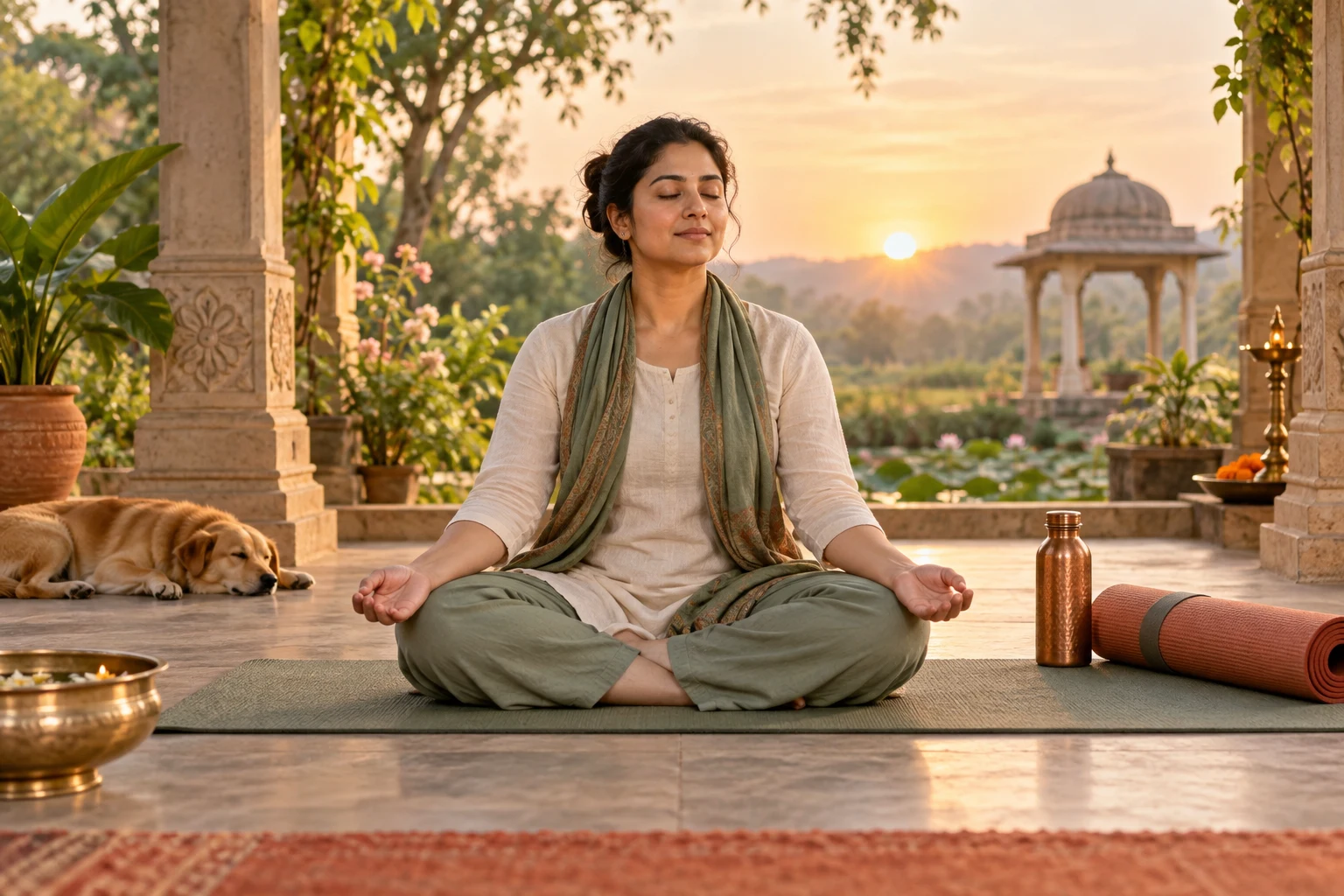
Shavasana, the “corpse pose,” is the posture of complete stillness traditionally practiced at the end of a yoga session — lying flat on the back, consciously relaxing the entire body. It looks like the simplest pose in yoga, and is often treated that way, but many teachers consider it one of the most difficult to do well.
How it’s practiced
Lie flat on the back with the legs slightly apart and the arms resting a short distance from the body, palms facing upward. Close the eyes and consciously release tension through the body, often working from the feet upward — relaxing the toes, ankles, calves, and so on, all the way to the face and scalp. The breath is allowed to settle into its own natural rhythm rather than being controlled. Shavasana is typically held for five to ten minutes, though it can be practiced for longer.
Why it’s considered difficult
Unlike active postures, Shavasana asks for something many people find genuinely hard: doing nothing, without falling asleep or letting the mind wander into planning and worry. Full physical stillness combined with alert, relaxed awareness is a specific skill that takes practice, which is part of why some traditions describe Shavasana as the most challenging asana despite its outward simplicity.
Why it matters
Shavasana is traditionally treated as an essential closing practice, not an optional add-on — it gives the body and nervous system time to integrate the effects of the preceding practice, whether that’s physical postures, pranayama, or both. Skipping it is often compared to leaving a meal half-digested: the practice technically happened, but its effects haven’t had time to settle. On days when you want a longer rest, a supported pose such as Supta Baddha Konasana can come just before it.
Common questions
What does “Shavasana” mean?
“Corpse pose” — referring to the complete physical stillness of the posture, resembling a body at rest.
Why is Shavasana considered difficult if you’re just lying down?
Because true stillness combined with alert, relaxed awareness — without falling asleep or the mind wandering into distraction — is a specific skill that takes practice, unlike simply resting.
How long should Shavasana be practiced?
Commonly five to ten minutes at the end of a session, though it can be extended, especially when practiced on its own as a relaxation technique.
Is Shavasana only practiced at the end of a yoga session?
Most commonly, yes, as a closing pose, though it can also be practiced independently as a standalone relaxation and stress-relief technique.